
There’s a special quiet that settles over you when you lose yourself in a simple, rhythmic task—counting stitches, shaping clay, or coaxing a line of paint into a curve. That quiet isn’t empty; it’s busy with focused attention, small sensory details, and a steadying beat that puts the nervous system into a gentler rhythm.
In this article I’ll explore how handcrafts and mindfulness work together to soothe anxiety, sharpen attention, and build resilience. I’ll share practical ways to get started, how to choose projects, and examples from my own life to show how making can be as restorative as it is productive.
Why making with your hands calms us
Human beings evolved as makers. Long before screens, the body learned to regulate emotion through repetitive, goal-directed actions—tending a fire, weaving a basket, or shaping stone. Those activities required attention, rhythm, and touch, the same elements that help modern crafting slow a racing mind.
When you perform a repetitive manual task, the brain shifts from anxious, future-oriented thinking to present-moment focus. That shift reduces rumination and the mental loops that amplify stress. At the same time, small rewards—completing a row, softening clay—release dopamine in manageable doses, giving a sense of accomplishment without overstimulation.
Sensory engagement matters. The feel of yarn sliding through fingers, the weight of a hammer, or the scent of wet clay anchors attention in the body. Those sensory cues act like an anchor in the sailing of your awareness, helping you stay grounded rather than drifting into worry or distraction.
How mindfulness deepens the craft experience
Mindfulness is not a set of rules; it’s a way of noticing without judgment. When you bring that quality of attention to a craft, you notice subtle details—how the thread behaves, how a stroke of paint dries—and that noticing improves both skill and calm. The act of observing becomes part of the making.
Combining mindful attention with skilled movement creates a feedback loop: mindful noticing improves technique, and improved technique reduces frustration. That loop encourages a patient, curious attitude rather than a hurried, self-critical one. Over time, this cultivates not just a better product but a steadier inner climate.
Mindfulness also changes the meaning of mistakes. In a mindful approach, a dropped stitch or a slip of the brush becomes information rather than failure. This perspective reduces the stress associated with perfectionism and opens the door to playful experimentation.
Attention, flow, and the gentle art of losing track of time
The experience often described as “flow” is closely related to mindful immersion. Flow happens when skills match challenge and attention narrows pleasantly to the task at hand. In craftwork, flow is accessible because the activity demands attention but not constant high-stakes decision-making.
Flow isn’t about time distortion for its own sake; it’s valuable because it lets the mind rest from anxious narrative. During these periods your parasympathetic nervous system—responsible for rest and digestion—has room to act. That’s one reason people emerge from an hour of knitting or pottery feeling refreshed rather than drained.
Sensory grounding and slow rhythms
Mindfulness practices often use sensory anchors—breath, sounds, or body sensations—to stabilize attention. Handcrafts supply a rich array of such anchors: the texture under fingertips, the click of needles, the scent of linseed oil. These details provide immediate entry points for attention, which is especially helpful when verbal mindfulness feels hard or abstract.
Rhythm is another calming ingredient. Repetitive motions create predictable physical patterns that the nervous system can sync to. That synchrony lowers heart rate and breathing over time, translating into a subjective sense of calm that’s both physiological and psychological.
Types of crafts and what they offer
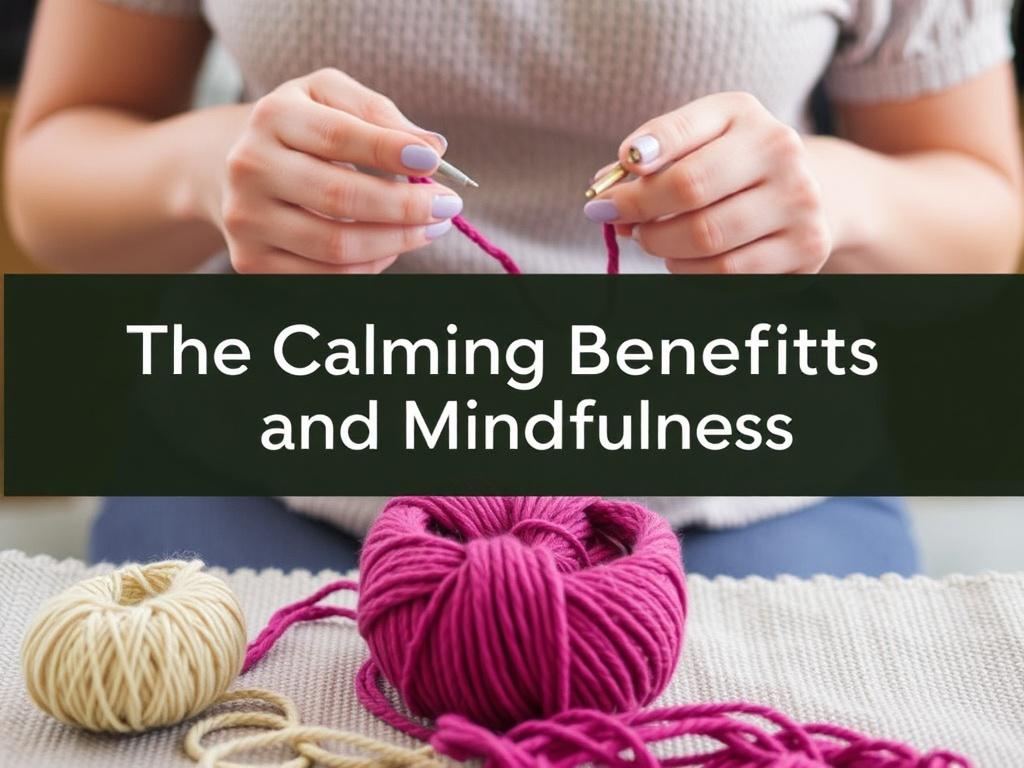
No single craft is universally best for calming; different activities suit different people and moods. Some crafts emphasize rhythm and repetition, others sensory exploration or problem-solving. Choosing a craft that matches your temperament and goals increases the likelihood that it will comfort rather than frustrate.
Below is a concise comparison to help you match a craft to what you want—portable calm, sensory immersion, social making, or cognitive challenge. Think of this table as a starting point rather than a prescription.
| Craft | Sensory focus | Ease of learning | Portability | Social potential |
|---|---|---|---|---|
| Knitting/crochet | Texture, rhythm | Easy starter | High | Knitting circles, online groups |
| Pottery/ceramics | Touch, weight, temperature | Moderate | Low | Studio classes |
| Woodworking | Weight, grain, sound | Moderate–advanced | Low | Workshops, maker spaces |
| Embroidery/sewing | Fine touch, visual pattern | Easy | Medium | Community sewing bees |
| Painting/drawing | Color, visual texture | Variable | High | Classes, plein air groups |
| Gardening | Touch, smell, growth cycles | Easy | Varies | Community gardens |
Matching craft to intent
If your goal is quick, portable calm during a commute or while watching TV, knitting or embroidery fits well. If you want deep sensory immersion and a new physical skill, pottery or woodworking invites full-body attention. For social connection, group classes or community gardens create shared rhythms and conversation.
Don’t be afraid to rotate between crafts depending on your needs. I keep a small crochet project for waiting rooms, and a larger tapestry project at home for evenings when I can linger. Both serve different flavors of calm.
Practical ways to combine mindfulness with handcrafts
Bringing mindfulness into a craft doesn’t require formal meditation training. A few simple practices can fold mindful attention into making right away, turning any session into a mini retreat from worry.
Start sessions with a short ritual: three mindful breaths, choosing materials with intention, or setting a gentle timer. Rituals mark the transition from “doing tasks” to “making for presence,” helping your brain let go of other obligations for the duration.
Mindful techniques to try
- Box breathing: inhale for four counts, hold four, exhale four, hold four between cycles. Use it to steady before you begin.
- Sensory sweep: name five things you can see, four you can touch, three you can hear, two you can smell, one you can taste (or mentally imagine). Then return to the craft.
- Single-point attention: choose one element—the weight of a stitch, the sound of scissors—and keep returning your attention there when your mind drifts.
- Nonjudgmental noticing: whenever self-criticism arises, acknowledge the thought and redirect to curiosity about what’s happening physically.
Structuring a mindful crafting session
Decide on a realistic time block—15, 30, or 60 minutes—and protect it. Short, regular sessions often lead to more benefit than infrequent, long ones. Ending with brief reflection—what felt different, what senses surprised you—extends awareness beyond the making itself.
A timer can be a gentle ally: set it and commit to staying present for that period. Use the alarm as an invitation to notice how your body and mind have shifted, not as a judgment that you weren’t present enough.
Creating a calm space for making
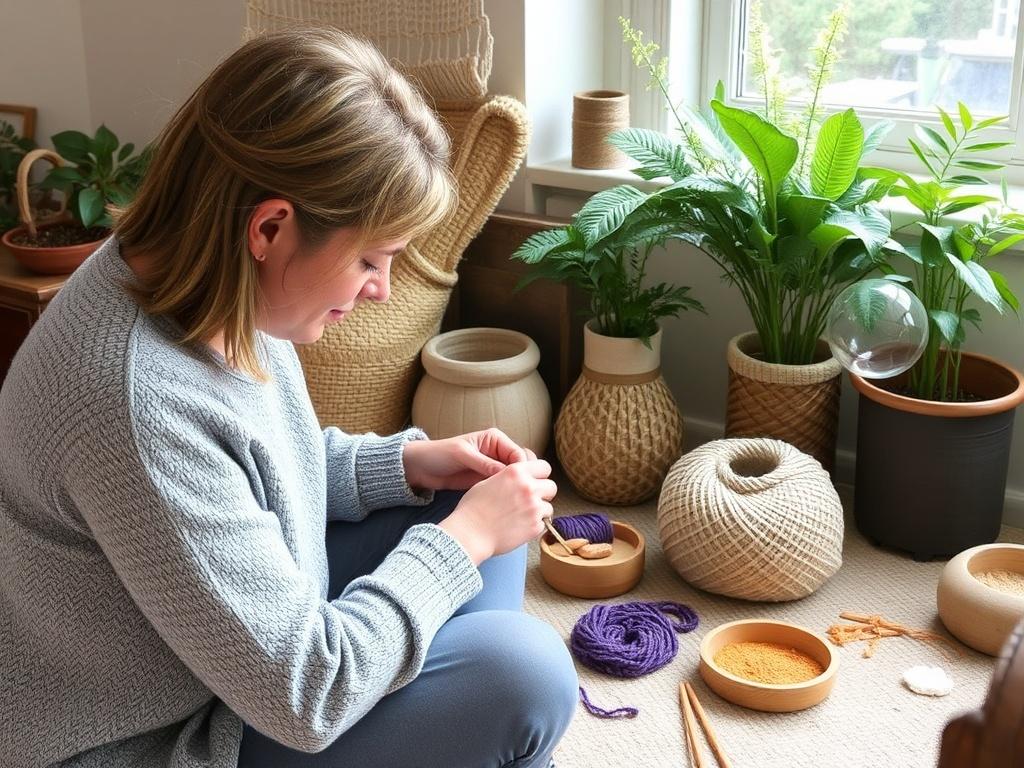
Physical space affects the quality of attention. A messy, rushed table tends to keep the mind in a similar state. Conversely, a small, tidy corner with the tools you need signals care and makes it easier to enter a calm state.
Light and comfort matter. Natural light encourages slower rhythms and reduces eye strain, while a comfortable chair supports longer sessions. Consider a small tray for tools so you don’t have to hunt for things once you’ve begun—minimal friction creates maximal ease.
Design elements that support mindfulness
Choose materials that delight your senses and are forgiving enough to allow mistakes. Soft yarns, tactile clays, and forgiving paints reduce the pressure of perfection. Keep a small box for mistakes that turned into something unexpected; this reinforces the idea that imperfections are part of the process.
Finally, mark a consistent time of day. A morning making practice can be a centering start; an evening practice can help the mind unwind from work. Experiment and notice which timing best stabilizes your day.
Troubleshooting common barriers
Perfectionism is a frequent obstacle. When a project feels like it must look a certain way, it becomes a source of stress instead of calm. Reframe: make one part of your project a “practice” piece where no outcome matters, and another where you try something you care about.
Time constraints also derail making. Use the “micro-session” approach: five to fifteen minutes of focused work is enough to shift your nervous system. Keep tiny projects or modular parts so that small blocks of time still feel productive.
Skills anxiety and the myth of needing talent
Many people assume they need innate talent to benefit from handcrafts; that’s not true. The skills you want are developed through repeated, attentive practice. The calming effects come from the practice itself, not from producing gallery-quality objects.
Find beginner-friendly patterns or classes that scaffold learning. Clear steps reduce cognitive load and free you to experience the sensory grounding and rhythm of making without constant problem-solving stress.
Community making: social benefits of shared craft
Making in community amplifies calm by adding shared attention and mutual encouragement. Sitting in a circle with others who are quietly creating creates a soft social rhythm—conversation happens in pauses, skills are exchanged, and companionship reduces isolation.
Community can be in-person or virtual. Online groups provide connection and accountability, while local workshops offer hands-on feedback. Both can reduce feelings of loneliness and provide a supportive environment for experimentation.
How group making supports mental health
Group sessions combine gentle social exposure with meaningful activity. That mix is especially helpful for people who find direct socializing stressful but still crave connection. The shared focus on an object—mending, quilting, carving—redirects attention from social evaluation to a collaborative task.
Community repair events, sewing bees, and maker nights often foster generosity: people bring materials, swap tips, and celebrate mistakes. That culture of shared learning reduces stigma around imperfection and encourages a compassionate mindset.
What the research suggests (in plain terms)
Scientific studies have found links between manual arts and improved mood, reduced stress, and increased wellbeing. Researchers point to mechanisms such as reduced physiological arousal, the benefits of attainable goals, and the positive social aspects of group craft.
It’s important to recognize the limits of research: effects vary by individual, context, and the type of craft. Still, the consistent message across studies is that focused, purposeful making tends to help people regulate emotion and feel more capable in daily life.
Why the science aligns with lived experience
Theoretical frameworks from psychology explain these benefits. Repetitive manual tasks reduce activation in brain regions tied to rumination. Reward pathways reinforce small achievements, and social making activates networks involved in trust and cooperation.
In short, what crafts do for us is both physiological—slowing breath and heart rate—and psychological—changing narrative, increasing agency, and creating social bonds. Those layers combine to produce the calming effects many makers report.
Adaptations for different ages and abilities
Handcrafts are adaptable. For children, simple repetitive tasks like beading or finger painting teach focus and fine motor skills while providing immediate sensory feedback. For older adults, crafts that emphasize memory, rhythm, and manageable physical demand—knitting, simple woodworking—can preserve cognitive function and dexterity.
For people with sensory sensitivities or mobility challenges, modify materials and repetition. Softer textures, larger tools, and seated or supported positions make making accessible. Assistive devices, like ergonomic scissors or adapted grips, reduce strain and keep attention on the sensory experience rather than bodily discomfort.
Designing accessible craft sessions
Keep instructions simple and visual. Use large-print patterns and color-coded steps. Offer choices in materials so participants can opt out of textures or scents that feel overwhelming. A flexible pace and permission to rest reduce stress and encourage sustained engagement.
For neurodivergent makers, predictable routines and clear transitions are calming. A short checklist, a set amount of time, and a visible progress marker (a finished block, a completed motif) give structure that supports focus without rigid demands.
Stories from the workbench: real-life examples
When I first learned to knit, nights were the hardest time for me—thoughts raced and sleep was elusive. I picked up a simple scarf project and promised myself I would do nothing but follow the rhythm of the stitches for fifteen minutes before bed. The first week I was skeptical; by the second week I noticed my breathing slowed the moment the needles began to click.
One neighbor I taught to crochet after a layoff described the process as “reassembling myself.” The repetitive pattern gave her small, measurable wins when other parts of life felt unpredictable. She still had tough days, but the craft provided a consistent place to land.
I’ve also seen community repair nights change the tone of a neighborhood. People bring broken pots or torn jackets and leave with repaired goods and brighter moods. The combination of practical problem-solving and conviviality seems to relieve shame and replace it with shared competence.
How crafting supports long-term resilience
Regular making builds a repertoire of coping strategies. When stress spikes, having a practiced activity that reliably calms you is like having an emergency valve. Over time, the patterns of attention you form during craft sessions carry over into daily life—more patience, better tolerance for frustration, and a capacity for steady focus.
Resilience doesn’t mean never feeling stressed. It means having routines and tools that help you recover. Crafts are low-tech, portable tools that strengthen emotional recovery through repeated, embodied practice.
How to start today: a simple plan
Beginning doesn’t require a big investment or innate talent. Start small, pick one approachable project, and commit to short, regular sessions. The primary aim is presence, not mastery.
- Choose a craft that appeals to you and is manageable—yarn for knitting, a beginner watercolor set, a small potted plant.
- Set aside 15–30 minutes and create a small ritual: three breaths, gather materials, and set a timer.
- Focus on sensory details and gentle repetition. Notice the rhythm and return to it when your mind wanders.
- Reflect briefly when you finish: what shifted in your body or mood?
- Repeat regularly. Adjust materials and time as needed to keep it enjoyable.
Resources to get you started
Look for beginner kits that include tools, materials, and simple instructions. Local community centers and libraries often run low-cost classes. Online tutorials can be helpful, but pairing them with in-person feedback speeds learning and reduces frustration.
Consider joining a local maker group or online forum where you can ask questions and share small successes. Social reinforcement increases the likelihood you’ll stick with the habit until it becomes a dependable calming resource.
When craft becomes work: keeping making restorative
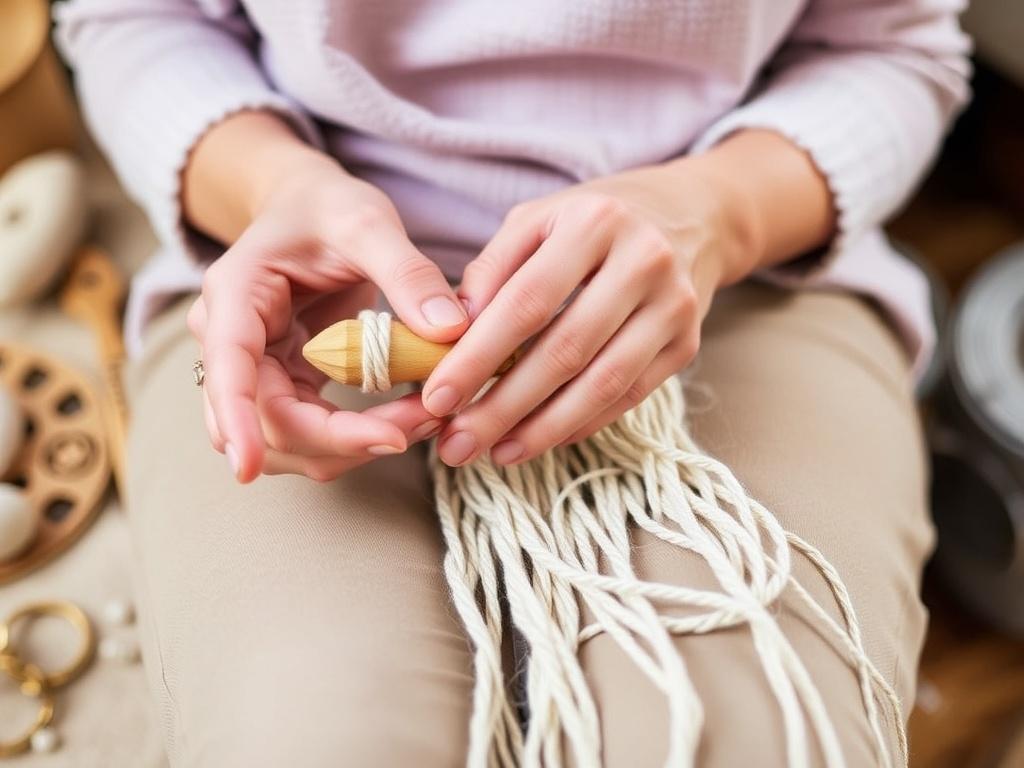
There’s a difference between making for presence and making as another task on a long to-do list. If crafting becomes productivity-driven—finishing commissions, posting for likes—it can stop being restorative. Keep at least some projects purely for play or practice.
Set boundaries around public sharing and deadlines. Allow certain projects to be private, for the sake of calm rather than audience approval. That privacy protects the practice from performance anxiety and preserves its meditative value.
Integrating craft-based mindfulness into daily life
Small rituals woven into daily routines extend the benefits of mindful making beyond the dedicated session. Mending a pair of socks during tea time, doodling for ten minutes after lunch, or tending a single plant each morning integrates day-to-day presence with the larger skill of regulated attention.
These micro-practices create frequent opportunities for recalibration. When stress accumulates, having many small resets scattered through the day keeps reactivity from building into overwhelm.
Final thoughts on practice and patience
Calm isn’t something you flip on like a light switch; it’s a skill cultivated through repeated, attentive actions. Handcrafts give us a practical, embodied way to practice that skill, and mindfulness makes the practice richer and more sustainable. Together they create a habit that changes how you meet yourself in moments of stress.
Start with curiosity, not mastery. Let projects be a laboratory for noticing how your body and mind respond. Over time, you’ll gather a toolkit of making practices that steady you, connect you to others, and remind you that presence can be crafted as deliberately as any object.