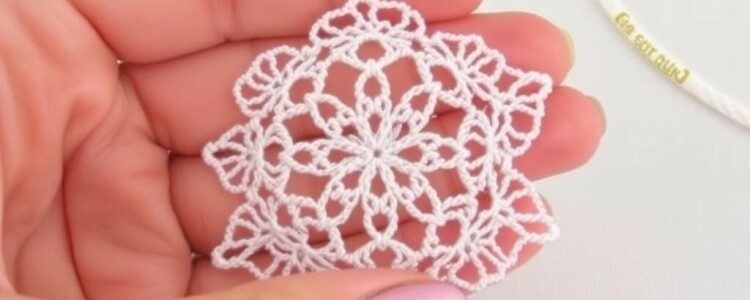
Tatting is a quiet, almost private craft that yields strikingly light, durable lace. This article serves as an introduction to tatting for delicate lace, explaining tools, basic techniques, and subtle habits that make the difference between a clumsy loop and a refined motif. Whether you are a curious beginner or someone returning to lacework after years away, you’ll find practical steps and gentle encouragement here.
What tatting is and why it matters
Tatting is a method of making lace by forming a series of knots and loops, traditionally using a shuttle or a needle. The resulting motifs—rings, chains, and picots—create a stable, geometric lace that can be both decorative and functional. Unlike crochet or bobbin lace, tatting builds structure mainly through the double stitch, giving the lace a crisp, slightly raised profile.
Its importance is understated. Tatting preserves centuries of handcraft knowledge and offers a compact, portable way to make heirloom-quality pieces. Small motifs can become collars, edgings, bookmarks, and jewelry; larger assembled pieces can form doilies, panels, and even modern garments. The craft combines patience, precision, and a tactile satisfaction that few machine-made textiles can match.
Brief history: how tatting found its shape
The origins of tatting are layered and a little contested among historians. Elements resembling tatting appear in 17th- and 18th-century knotting arts, and by the 19th century, tatting as we recognize it—work done with a shuttle—was gaining popularity in Europe and America. It became a fashionable pastime in parlors, and patterns circulated in magazines and pattern books.
Over time, techniques evolved and different regional styles emerged. Needle tatting arrived later, offering a variation more approachable to some crafters. Today, tatting has a vibrant global community with both traditionalists and contemporary designers reinterpreting the craft for jewelry, mixed-media art, and couture detailing.
Essential tools: what you really need to begin
You don’t need a lot to begin tatting, but the right tools will save frustration and speed learning. At minimum, pick a shuttle or a tatting needle, a spool of thread suited for your planned project, and a small pair of sharp scissors. A crochet hook sized for tiny joins, a threader, and a fine-point pair of tweezers will round out your basic kit.
Here’s a concise list of items that I consider essential for a beginner’s starter kit:
- Shuttle or tatting needle
- Thread in sizes 20–80 (cotton or mercerized)
- Small sharp scissors
- Fine crochet hook (0.75–1.5 mm)
- Needle threader and tapestry needle for weaving ends
- Light blocking board and rust-proof pins
My first shuttle was an inexpensive plastic model, and it taught me more than any video. Beginners often worry that they need expensive or exotic tools; they don’t. Gradually upgrading as your techniques and tastes develop is both sensible and satisfying.
Shuttle vs. needle: choosing your first method
Shuttle tatting and needle tatting are two main approaches, and each has distinct feels and advantages. Shuttle tatting uses a small, handheld tool around which the thread is wound; knots are made by manipulating loops and passing the shuttle through them. This method is compact and produces very stable knots and fine picots with distinctive geometry.
Needle tatting uses a long, blunt needle threaded with a single length of thread, and stitches are formed on the needle then slid into position. Many find needle tatting easier to learn because it resembles other needlework techniques and it’s forgiving when reversing or joining. I recommend trying both if possible; one may click with your hand in a way the other doesn’t.
Understanding thread and gauge for delicate lace
Thread choice determines the look and scale of your lace. Tatting thread ranges widely in thickness—from size 3 (thick, used for rugs and coarse edgings) to size 100 (very fine, used for jewelry and microscopy-like lace). For most delicate lace projects, sizes 40 to 80 are commonly preferred, depending on desired fineness and pattern detail.
Choose cotton or mercerized cotton for crisp, stable results; silk and synthetic threads can add sheen or drape but behave differently under tension. Your needle or shuttle size should suit the thread: too large a shuttle can distort fine work, while too fine a needle can be harder to handle. Below is a simple reference table to help match thread sizes to common project uses.
| Thread size | Typical uses |
|---|---|
| 20–30 | Edgings, sturdy doilies, visible trims |
| 40 | General-purpose lace, medium-fine edgings |
| 50–80 | Delicate jewelry, fine motifs, heirloom trims |
| 100+ | Ultra-fine lacework, museum-quality micro motifs |
Thread gauge also affects tension and how tightly the knots sit together. When practicing, experiment with different sizes until you find a balance between comfort and the look you want. In delicate lace, a slightly looser tension can make motifs more supple for blocking, while tighter tension creates crisp, sculpted rings.
Basic stitches: double stitch, picot, and join
The foundation of tatting is surprisingly simple: one stitch, the double stitch, repeated and combined into structures. The double stitch itself is two half-hitches (often called the first and second half of the double stitch). Learning the rhythm of forming these half-hitches is the single largest leap toward consistent lace.
Picots—tiny loops left between stitches—serve both decorative and functional roles. They create the lacey gaps and provide places to make joins between motifs. A join is made by connecting a picot or a thread loop to another element, effectively linking separate rings and chains into a unified piece. Mastering joins transforms floating motifs into lace fabric.
Step-by-step: first tatting exercises
Begin with a small practice regimen to build muscle memory and timing. Start by winding thread onto a shuttle or threading your needle, then practice making a row of double stitches until the motion feels automatic. Don’t concern yourself with perfect shapes at first; focus on consistent stitch formation and a steady rhythm.
Next, practice forming a ring: make a small number of double stitches, add picots as needed, then close the ring by sliding the stitches together. Repeat this several times until rings close cleanly and picots are even. Finally, practice chains, which are created with the same double stitch but worked on a length of thread and later pulled into shape.
A simple exercise sequence I recommend is: 1) 20 double stitches in a row, 2) 6 double stitches + picot + 6 double stitches, 3) form a ring with that sequence and close, 4) make three linked rings. This progression builds control and confidence without overwhelming you with pattern complexity.
Rings and chains: building blocks of motifs
Rings and chains are the vocabulary of tatting motifs. Rings are closed loops of double stitches; chains are curved lines of stitches that remain open on one side until anchored by rings or joins. Motifs are combinations of these elements, organized into floral, geometric, or linear patterns.
Pay attention to symmetry when you form motifs. Small variations in stitch count, picot spacing, or tension become visually obvious in delicate lace. Use pins and a blocking board early in the process to shape motifs consistently. Over time you’ll develop an eye for balancing elements so a motif looks intentional rather than accidental.
Reading patterns and charts
Tatting patterns typically use concise notation: numbers represent stitch counts, p indicates a picot, and + or j indicates a join. For example, the notation R 6 p 6 means a ring with 6 double stitches, a picot, and 6 more stitches before closing. Chains may be listed similarly, often with spaces indicating where joins are made to earlier picots.
Charts and diagrams are also common, showing motif layouts and join points visually. If you’re new to reading patterns, select simple designs with clear notation and practice following them slowly. Pattern reading is partly a vocabulary skill and partly practical—sometimes a brief sketch or a test motif on scrap thread clarifies what the instructions mean.
A note on reversing and split rings
Split rings and reverse work expand the shapes you can achieve in tatting, producing symmetrical motifs or stacked rings. A split ring divides the stitches between two passes of the shuttle, allowing alternating directions without cutting thread. Reverse work involves rotating the work to continue making shapes that would otherwise twist uncomfortable or strain the wrist.
These techniques can look intimidating at first, but they are logical extensions of the double stitch rhythm. Learn them once basic rings and chains feel natural. I remember the first time I tried a split ring—my fingers were clumsy and I made awkward joins—but persistence quickly turned that awkwardness into a neat, repeatable motion.
Tension and rhythm: the subtleties that refine lace
Tension is the quiet controller of lace appearance. Too tight and the lace puckers and loses its airy quality; too loose and it will sag and lack definition. Consistent tension across a piece makes the difference between a homemade look and something that could pass for shop-bought, or better, heirloom-grade.
Develop a rhythm. The double stitch has a cadence: pull, slide, set, and repeat. Many crafters find that breathing evenly helps keep their hands steady. If your wrists or fingers ache, pause and adjust your grip or tool; discomfort is a signal to change ergonomics rather than push through with erratic tension.
Blocking and finishing for delicate pieces
Blocking is essential for delicate tatting. After completing motifs, wet-block them and pin them to shape on a foam or cork board using rust-proof pins. Allow pieces to dry fully; this sets the thread and opens the lace where necessary. Blocking refines picot spacing, straightens curves, and brings motifs into crisp alignment.
Finishing techniques include weaving in ends carefully to avoid lumps and using tiny dabs of diluted starch or fabric stiffener when appropriate. For jewelry, consider a light coat of clear jewelry lacquer to protect fine threads from oils and wear. Always test finishers on a scrap motif before applying them to your final piece.
Joining motifs into larger pieces
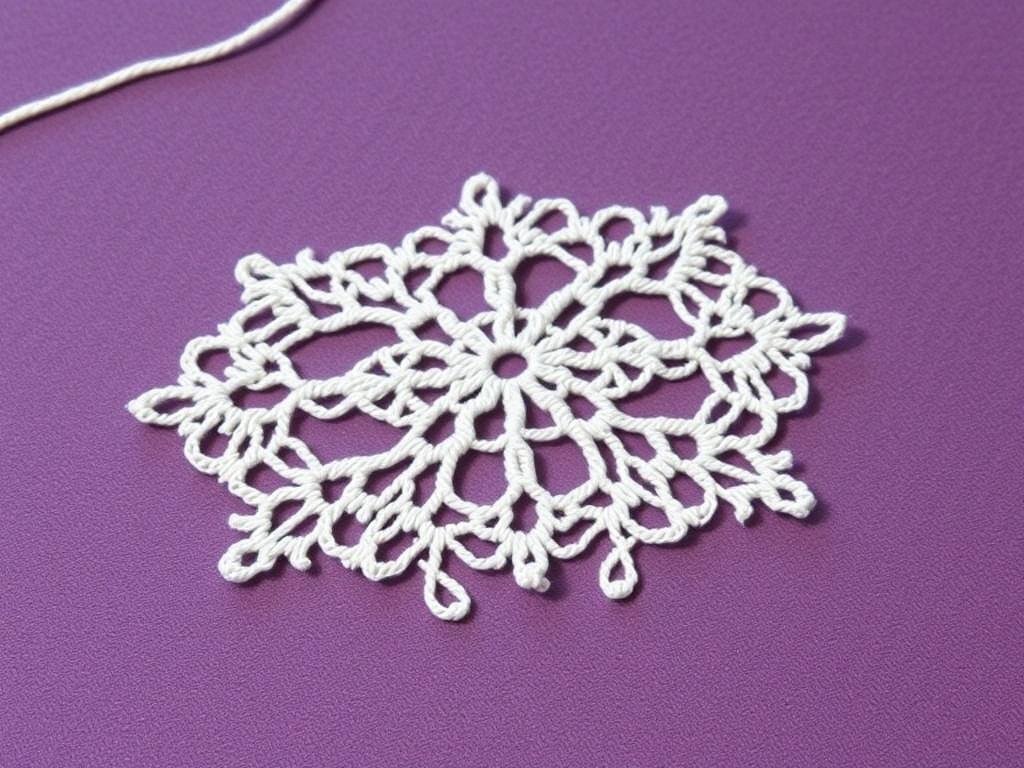
Once you can make consistent motifs, the next step is assembly. Joins can be made by using a small crochet hook to pull a loop through a picot, or by working the join directly with the shuttle or needle. Accurate joins make lace appear seamless; rushed or misaligned joins look like visible repairs.
Design a joining sequence before you start connecting multiple motifs. Work from the center outward for rosettes, or plan rows and columns for edgings. If you’re piecing a garment panel, mark guidelines on the blocking board so motifs line up neatly, and always check symmetry as you proceed to avoid cumulative drift.
Practical projects for beginners
Short, focused projects teach skills without demanding a major time investment. Try a simple coaster made from six small rings joined in a circle, or a narrow edging to sew on a napkin. Bookmarks and earrings provide immediate gratification and let you practice different thread weights and finishing methods.
A starter project I enjoy recommending is a small snowflake: it’s a compact motif with rings, chains, and joins, and it allows practice of both shuttle and join techniques. Working a few snowflakes, blocking them uniformly, and stringing them together as a garland is a satisfying way to see progress in a single evening.
Troubleshooting common problems
Every beginner hits similar roadblocks: uneven picots, twisted chains, and slipped joins. If picots are inconsistent, mark the picot spacing on your fingers with a small removable sticker until the spacing becomes natural. For twisted chains, check that you are letting the chain sit on the thread naturally before shaping, rather than forcing it into place.
When joins refuse to sit flush, open them carefully with the tiniest crochet hook and reposition before tightening. If a ring opens while you work, secure it with a temporary clip and redo the closure more slowly. Patience is the most reliable troubleshooting tool; frustration tends to produce hurried stitches that create new problems.
Common mistakes and how to fix them
One common error is miscounting stitches in mirrored rings, which results in asymmetry. Keep a small scrap of paper to notch progress through repetitive counts, or use a pen to tick off segments on the pattern as you complete them. Recounting before joining can save hours of undoing later.
Another frequent issue is inconsistent tension when switching hands or tools. If you must switch between shuttle and needle, do a few practice passes to regain rhythm before continuing the project. Also, avoid cutting long tail ends too soon; it’s easier to trim excess after a secure join than to reattach a piece of thread mid-motif.
Advanced techniques: beads, colors, and mixed media
Tatting adapts beautifully to embellishment. Adding beads into rings or chains gives sparkle and weight for jewelry. Color changes—either within a single motif by switching threads or across motifs by using contrasting shades—introduce depth and pattern. Combining tatting with embroidery or lace insertion creates hybrid pieces that feel contemporary and handcrafted.
I once made a bracelet by incorporating seed beads into every third picot and alternating two thread colors; the result looked far more complex than the techniques involved. Advanced work often involves planning how motifs will drape and interact under gravity, a consideration less prominent in flat edgings but crucial in wearable pieces.
Designing your own patterns
After making several patterns, you’ll see the grammar behind motifs and can begin designing your own. Start small: sketch a motif, translate it to rings and chains on paper, then write out the stitch counts and test a prototype. Iteration is key; rarely is a first draft perfect. Each prototype teaches which picots need to be longer, where tension relaxes, and how joins affect the final silhouette.
Keep a notebook of small motifs and their stitch counts. Over time you’ll assemble a library of elements that can be recombined. This archival process is practical and deeply rewarding—unique designs often arise from unexpected recombinations of familiar pieces.
Care, storage, and preservation of tatting
Proper care preserves the fine edges and prevents discoloration. Store tatting flat or gently folded, in acid-free tissue if possible. Avoid humid storage and protect pieces from prolonged sunlight, which can weaken and fade fibers. For heirloom pieces, consider acid-free mounting or archival boxes to reduce long-term degradation.
Washing should be gentle: a brief soak in lukewarm water with a mild soap followed by careful rinsing and blocking usually suffices. Avoid wringing; press excess water between towels instead. If a piece is fragile or contains special fibers, consult a textile conservator for guidance before attempting cleaning.
Sharing work and joining the community
Tatting communities are generous and welcoming, ranging from local guilds to online forums and social media groups. Sharing your work archives progress and attracts constructive feedback. If you feel hesitant, start by posting a small motif and asking a specific question—most groups are eager to help and will offer tips tailored to your photos and descriptions.
Teaching what you’ve learned is another way to deepen skill. Explaining a technique clarifies the steps in your own mind and often reveals gaps you can then address. I started a neighborhood tatting circle years ago, and the combination of teaching and learning accelerated my growth more than solitary practice ever did.
Recommended learning resources
Many excellent books, video tutorials, and pattern collections support tatting study. Classic texts cover shuttle techniques and historical patterns, while newer publications and YouTube channels provide step-by-step demonstrations for modern variations. Local craft shops occasionally offer in-person classes that are invaluable for hands-on correction.
Seek out resources that match your chosen method—needle or shuttle—and that include clear diagrams or photos. Pattern books with progressive difficulty help structure learning. When choosing videos, select those with steady camera work and slow, repeat demonstrations rather than quick highlight reels.
Final thoughts as you begin
Tatting for delicate lace rewards slow attention and small, steady improvements. Progress is rarely dramatic; instead it accumulates through consistent practice, careful observation, and occasional reworking of habits. Celebrate small wins: a neat picot, a completely symmetrical motif, or a clean invisible join are worthy milestones.
Keep projects small at first and choose materials that inspire you. The craft is both practical and poetic: you make functional trims and simultaneously preserve a tactile tradition. If you approach it with curiosity and patience, the quiet repetition will become a rhythm you look forward to each day, and delicate lace that once seemed inaccessible will emerge from your fingers.