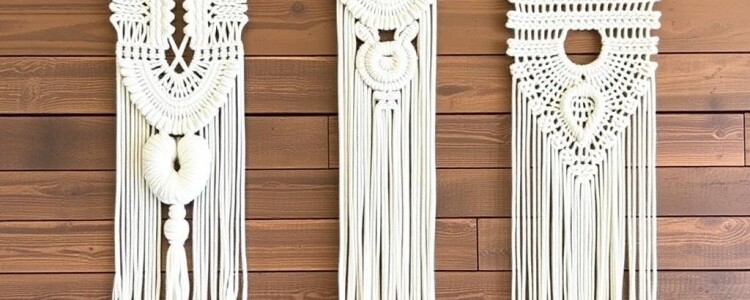
Macramé can turn a few lengths of cord into a piece of art that hangs proudly on your wall, and learning the basics is more approachable than it looks. In this Introduction to Macramé: Knot Your Way to Beautiful Wall Hangings, I’ll walk you through materials, core knots, planning, and a complete beginner project so you can move from curiosity to a finished hanging. Expect practical guidance, design ideas, and a few troubleshooting tips drawn from hands-on experience.
what is macramé and why it matters
Macramé is the craft of knotting cord or rope to create decorative patterns and functional items, primarily using only the hands and simple tools. Unlike weaving, which interlaces yarn on a loom, macramé builds texture and form through a vocabulary of knots that repeat and combine to define shape, density, and movement. That tactile, modular nature is why macramé remains popular: it’s flexible, portable, and expressive.
Because macramé relies on knots rather than stitches, it’s forgiving for beginners; you can loosen, rearrange, or re-knot sections without having to undo row after row. It also lends itself to immediate visual progress—after an afternoon you’ll often have a clear sense of pattern and rhythm in your piece. For makers who enjoy a hands-on, meditative process, it’s a satisfying way to create something both decorative and personal.
a brief history in a few knots
Macramé has roots across many cultures. Sailors used knotting techniques for utility and decoration—hanging bottles, repairing nets, or embellishing ship fittings—which helped spread styles around the world. Historical records and museum pieces show decorative knotting in Moorish Spain, Victorian England, and Asian craft traditions, each region adapting knots and aesthetics to local materials and tastes.
The craft experienced a major revival in the 1970s with bohemian decor trends, and it has reemerged again recently—refreshed by contemporary designers who bring cleaner lines, muted palettes, and hybrid techniques into play. Modern macramé borrows from that past while emphasizing sustainable fibers and interior-friendly scales, making wall hangings a perfect bridge between craft and home design.
essential tools and materials
You don’t need a lot of specialized gear to get started; a few thoughtfully chosen supplies will carry you through many projects. The right cord, a sturdy support for mounting, scissors, measuring tape, and a comb or brush for finishing are the backbone of most wall hangings. Optional items like beads, rings, and a macramé board can expand your creative possibilities without being mandatory.
Choosing cord is often where beginners pause. Natural fibers such as cotton are forgiving and knot neatly, synthetic blends can offer durability and color saturation, and jute or hemp introduce rustic texture. Thickness matters: thinner cords (1–3 mm) suit fine, delicate pieces, while 3–6 mm produces bolder statements and faster progress on large hangings.
Below is a compact reference table that summarizes common cord types and typical uses to help you decide.
| Material | Typical thickness | Best for |
|---|---|---|
| Single-ply cotton rope | 1–3 mm | Delicate patterns, small wall hangings |
| Twisted cotton cord | 3–6 mm | Classic wall hangings, textured pieces |
| Macramé cord (braided) | 4–8 mm | Bold, chunky hangings and plant hangers |
| Hemp/jute | 2–6 mm | Rustic decor, outdoor-friendly pieces |
setting up your workspace
A clear, comfortable workspace makes learning macramé less fussy and keeps your cords tidy. A simple setup includes a chair, a small table or lap board, and a mounting option—like a wooden dowel, branch, or metal ring—clamped or taped at eye level. Good lighting and a soft surface to lay finished sections on will reduce strain and prevent snags.
If you’ll be working on larger pieces, consider a dedicated macramé board or a sturdy clipboard with large clips to hold your dowel in place. For portable work, a key ring with clip and a small bundle of cord can let you knot on the sofa or while traveling. The point is flexibility: choose what keeps your hands free and your pattern visible.
basic knots you should learn first
Three or four foundational knots will unlock most wall-hanging designs. Invest time learning the lark’s head, square knot, half hitch, and double half hitch; they combine into countless patterns and variations. Each knot has a rhythm—repeat it a few times, and muscle memory will take over.
Below are short, clear descriptions and simple step lists for the essential knots. Practice each on a small swatch of cord before starting a project to build confidence and consistency.
lark’s head knot
The lark’s head is a primary starting knot that attaches cords to a support such as a dowel or ring. It’s fast, secure, and creates a neat top edge for your hanging. Many patterns begin by folding cords in half and securing them with lark’s head knots across the mounting bar.
- Fold the cord in half to form a loop.
- Place the loop under the dowel and bring the loop over the dowel.
- Pull the tails through the loop and tighten to secure against the dowel.
square knot
The square knot is one of the most versatile macramé knots and works well alone or in series to create flat panels. It’s symmetrical and stable, ideal for belts, rows, and banded sections of a wall hanging. A square knot uses four cords—two working cords and two filler cords—to form a compact unit.
- Cross the left working cord over the two center filler cords and under the right working cord.
- Bring the right working cord under the center cords and up through the loop on the left; tighten.
- Repeat on the opposite side: right over center and under left; then left under center and up through the loop; tighten to complete the square knot.
half hitch and double half hitch
Half hitch knots are the backbone of curved lines and diagonal patterns; they’re made by wrapping a working cord around a filler cord and pulling through. Double half hitch knots—two half hitches tied consecutively—create firm lines that hold angles well and are used to form chevrons, diagonals, and outlines within a piece.
- Bring the working cord behind the filler cord and over to form a loop.
- Pass the working cord through the loop and pull tight to make a half hitch.
- Tie a second half hitch in the same direction to make a double half hitch for added security.
spiral stitch (half knot spiral)
The spiral stitch is a decorative effect produced by repeating the same half of the square knot—essentially a string of half knots tied on the same side. The result is a twisted, rope-like column that adds movement and contrast to flat knot panels. It’s excellent as a border or feature column in a hanging.
- Use four cords as with a square knot, but only tie the first half of the square knot.
- Repeat the same half-knot direction repeatedly; the knot column will begin to twist.
- Stop when you reach the desired length, then tie a square knot or switch direction to halt the spiral.
planning your wall hanging: size, scale, and structure
Begin by deciding where the finished piece will hang; that location should determine size and proportion. A narrow hallway calls for a tall, slender hanging while a wide living room wall can carry broader, more elaborate pieces. Sketch a simple outline or mock it up on paper to visualize the scale before you cut cord.
Standard practice for calculating cord length is to allow four times the finished hanging length for basic patterns, and up to six times for complex knots or fringe-heavy designs. That gives you a working buffer for knotting, trimming, and finishing. For example, plan for 6–8 feet of cord for a 20-inch hanging when using medium-thickness cord.
Consider the structure: will the piece hang from a single dowel, multiple bars, or a wooden driftwood branch? Horizontal bars create a centered, linear top; multiple levels or rings let you build tiered compositions. The mount you choose should support the weight and complement the aesthetic of the finished piece.
color palettes and texture—making design choices
Color and texture determine the mood of your hanging as much as pattern and scale. Soft neutrals—creams, warm greys, and blush tones—create a calm, contemporary look, while saturated hues add bohemian energy. Combining a neutral base with one accent color is a reliable design move for balanced, modern results.
Texture comes from cord type and knot density. Open patterns with negative space feel airy, while tight rows of square knots create structure and weight. Mixing cord thicknesses within the same piece introduces layers: pair a chunky braided cord with thin cotton strands to make depth without complicating the knot vocabulary.
step-by-step beginner wall hanging project
Here’s a straightforward project that teaches you basic attachment, rows of square knots, and a simple chevron created with double half hitches. It’s an approachable first hanging that yields a polished result and covers the techniques you’ll use again and again. The following steps assume a finished width of about 12 inches and a hanging length of around 18–20 inches.
Supply list:
- One wooden dowel, 12–14 inches
- Sixteen strands of 4 mm macramé cord, each about 8 feet long
- Sharp scissors, tape measure, comb
- Optional beads or wooden rings for accent
Step-by-step directions:
- Attach each cord to the dowel using a lark’s head knot, spacing them evenly so you have eight knots across the dowel.
- Form a top row of square knots across the first two sets of four cords. Repeat this for the whole width to create a horizontal band.
- Create a chevron by dividing your cords into narrower groups and using double half hitch knots to form diagonal lines that meet in the center. Mirror the diagonal on both sides for symmetry.
- Finish with a row of square knots and trim the fringe to an even or slightly angled shape. Comb the fringe for a soft finish.
Troubleshooting during the project is normal: if knots sit unevenly, pull them gently to redistribute tension rather than untying large sections. Keep a scrap of tape nearby to temporarily hold cords in place while you adjust the pattern. With patience, this small piece will teach more about spacing and rhythm than a dozen short practice swatches.
embellishments and finishing techniques
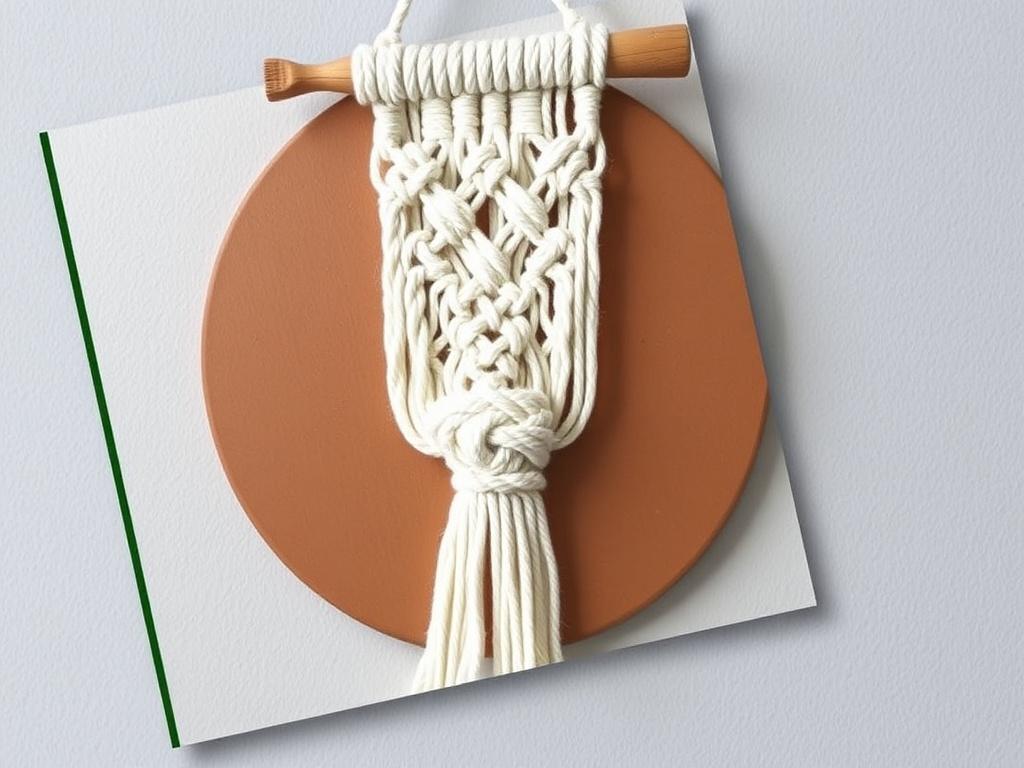
Beads, wooden rings, and metal accents can turn a simple hanging into something more distinctive. Slide a bead onto a working cord before tying a knot to lock it in place, or secure rings at key junctions to create negative space and shape. Subtle metal or brass caps at the ends of cords can elevate a minimalist piece.
Fringe finishing requires attention to make it look intentional. Trim fringe into geometric shapes—triangles, angled edges, or rounded hems—or leave it organic for a bohemian feel. To create a polished edge, use a comb to separate fibers, then trim with sharp scissors; for more sculptural finishes, dip ends in diluted fabric glue to prevent fraying without a stiff look.
mounting and display options
How you hang the final piece affects how it reads in a room. A single central nail is simple and clean, but consider a picture rail hook, ceiling-mounted macramé bracket, or floating shelf to create more presence. The hanging height matters: center the piece at eye level or slightly above furnishings, and allow enough negative space around it so the knots and texture can breathe.
For larger installations, pair multiple hangings at staggered heights or align a series of small hangings into a grid. These arrangements work well above sofas, beds, or a long console table. Try different orientations—vertical versus horizontal—to see which best complements the furniture and wall proportions.
care and maintenance
Macramé wall hangings are generally low maintenance, but their fibers can collect dust and oils over time. Lightly vacuum with a soft-brush attachment or use a lint roller for surface dust. For deeper cleaning, spot wash cotton cords with mild detergent and cool water, then let air-dry flat to avoid stretching or misshaping knots.
Be cautious with humidity and sunlight. Natural fibers can yellow or weaken under direct sun, so rotate or move pieces that live in bright windows. If a hanging gets water-stained or wrinkled, mist lightly with water and reshape the knots by hand while the fibers are damp, then allow the piece to dry fully on the dowel to preserve its form.
common mistakes and how to fix them
Beginners often encounter a few recurring issues: uneven tension in knots, cords that are too short, and top rows that shift on the dowel. The easiest preventative step is consistent measuring and leaving extra cord length. Measure twice and cut once—and when in doubt, add a foot of extra cord rather than cutting exactly to the projected length.
If knots look uneven, stop and unpick only the affected area; you rarely need to redo the whole hanging. For a wavy or asymmetrical edge, add a few balancing knots at strategic positions to even the weight. Small adjustments, made intentionally, can correct many visual imbalances without significant rework.
progressing beyond basics: patterns and variations
Once you’re comfortable with foundational knots, explore pattern combinations like diamond nets, laced panels, and layered fringes. Incorporate negative space intentionally; patterns that alternate dense knotting with open areas read as modern and sophisticated. You can also mix macramé with other fiber techniques—small woven inserts or knitted cords add an unexpected texture contrast.
Another way to expand is by experimenting with asymmetry: offset a large spiral column to one side, or create a cascading waterfall of fringe that tapers diagonally. These decisions are less about new knots and more about confident composition—placing known elements in new relationships to one another.
project ideas for practice
Practice projects that build one new skill at a time: a short fringe sample to master combing and trimming, a narrow panel focusing solely on square knots, or a diagonal chevron sampler made from double half hitches. These bite-sized exercises are quick wins that build technique without the time commitment of a full hanging.
- Mini wall sampler: 6–8 cords, 12 inches long; practice lark’s head, square knots, and spiral stitch.
- Boho plant hanger: use longer cords and basic square knots to practice length and weight distribution.
- Tiered mobile: small rings and short cords for learning attachment points and asymmetry.
resources, learning communities, and where to find inspiration
Beginner tutorials abound across video platforms and craft blogs; search for reputable instructors who demonstrate knots slowly and from multiple angles. Many local yarn shops and community centers also offer hands-on classes, which are invaluable for real-time feedback. Social platforms like Instagram and Pinterest are useful for visual inspiration—look for hashtags and follow makers whose proportions and color sense resonate with your taste.
If you want structured learning, consider a short course or workshop that focuses on wall hangings specifically; these often include printed diagrams and guided practice that help cement technique. Pattern books and downloadable PDFs are helpful too, but prioritize resources that show knot sequences clearly and provide cord-length guidance to avoid frustrating guesswork.
where macramé fits in modern interiors
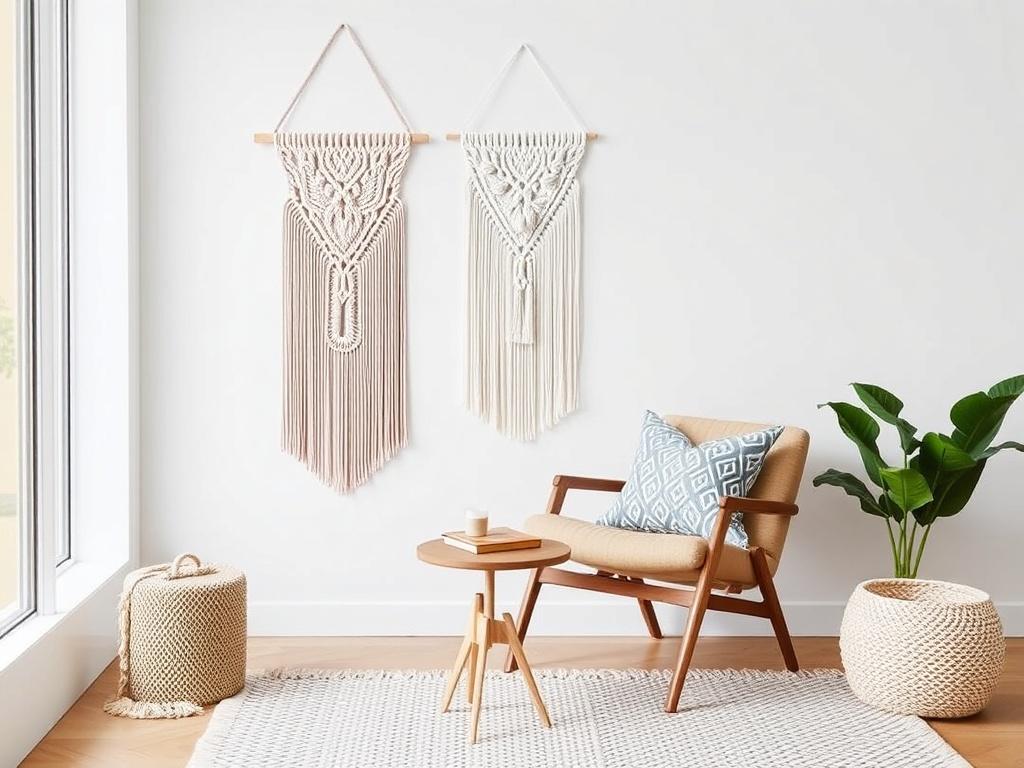
Macramé wall hangings bridge handmade craft and interior design. Their tactile surfaces and calming rhythms offer contrast against hard architectural lines, and their scale can be tailored to any room. In modern interiors, a well-executed macramé piece often reads as an intentional textural element—equally at home in Scandinavian-minimal spaces as in eclectic, layered rooms.
Think of a hanging as you would a textile: it can warm a white wall, anchor a seating area, or act as a focal point above a bed. The key is proportion and restraint—choose one thoughtfully curated piece over several competing hangings to avoid visual clutter unless you’re aiming for a gallery-like cluster.
my first wall hanging and what I learned
My earliest wall hanging was an awkward, wonderfully educational mess: I used too-short cords, tied uneven square knots, and trimmed the fringe like a beginner. Despite the imperfections, it taught me more about tension and composition than practice swatches ever did. The next piece benefited directly from those mistakes—I left extra cord, slowed down on the knotting, and used a small comb to tease the fringe into a clean line.
That early experience also shaped how I approach new designs: I now sketch a simple grid, test color combinations on small samples, and allow myself to revise sections rather than feeling locked into a single pass. Making a hanging that you love is rarely about flawless technique on the first try; it’s about iteration, patience, and letting the process inform the outcome.
sourcing sustainable materials
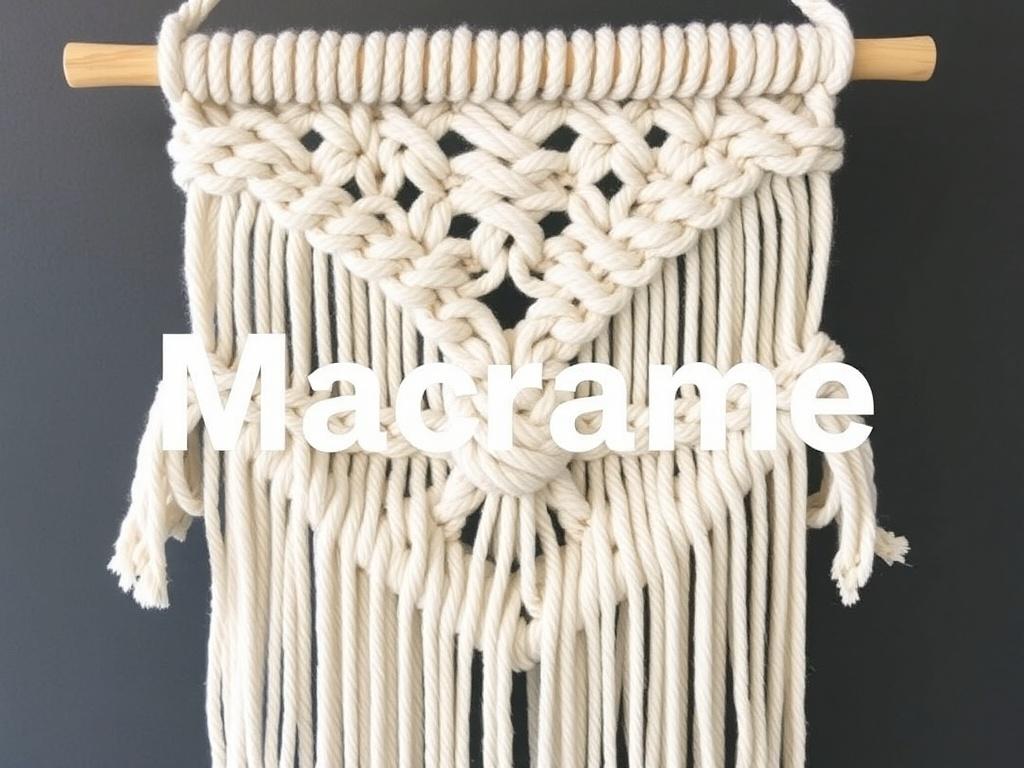
If environmental impact matters to you, prioritize natural fibers harvested responsibly and avoid heavily processed synthetic cords. Organic cotton, linen blends, and reclaimed rope offer lower-carbon alternatives, and many suppliers now provide certifications or transparent sourcing information. Buying from local suppliers when possible reduces shipping impact and supports small businesses.
Don’t shy away from reusing materials: an old cotton sheet can be cut into strips for practice, and reclaimed driftwood makes an ideal dowel with character. Repurposing not only lowers material costs but also adds a narrative element to your work, which many viewers appreciate when a hanging is displayed in a home.
teaching macramé to others
Sharing macramé is a rewarding way to build community and reinforce your own skills. When teaching, break the process into small, focused exercises: start with lark’s head attachments, then introduce square knots, followed by half hitches. Encourage students to complete short, satisfying projects in a single session so they leave with confidence and a finished piece.
Use clear visual cues and slow demonstrations, and prepare simple handouts with knot diagrams and cord-length suggestions. Most learners benefit from verbal reminders about consistent tension and from seeing several finished examples that illustrate different ways to finish a fringe or incorporate an accent bead.
where to go from here
Once the basics feel comfortable, expand by combining macramé with other fiber crafts—add small woven panels, incorporate dyed cords, or stitch in beads and metal accents for a mixed-media approach. Seek out local markets or online maker communities where you can sell small hangings or swap supplies; real feedback from viewers helps refine your sense of proportion and marketable styles. Above all, keep experimenting—macramé rewards curiosity.
This craft folds easily into everyday life: knot during a podcast, experiment between meetings, or prepare a hanging as a thoughtful handmade gift. With a few knots and a consistent habit of practice, you’ll find your aesthetic voice and create pieces that reflect your home and your hands.
Now that you have the tools, knots, and a step-by-step project to try, gather your cords and give it a go. The first hanging will teach you more than any list of rules, and the next one will already feel more deliberate. Enjoy the quiet rhythm of the knots and the small, honest pleasure of turning cord into a wall-worthy object.