Wreaths are small, circular stages where flowers, foliage, and imagination take turns performing. They signal holidays, mark the passage of seasons, and quietly announce that someone at this door cares about the details. This article walks you through practical techniques, design principles, and step-by-step projects so you can make wreaths that suit any time of year.
Why wreaths still matter
A well-made wreath is a concise story: a few materials arranged with intention tell visitors when you slow down to notice the year. The circle itself carries meaning—continuity, welcome, renewal—but the real magic happens in the choices you make about texture, color, and scale.
Beyond symbolism, wreaths are efficient design projects. They can be inexpensive to make, easy to store, and rapidly updated by swapping a few elements. Whether you prefer foraged finds or premium shop-bought botanicals, wreath-making rewards curiosity and experimentation.
Tools and materials you’ll want on hand
Start simple. A basic toolkit will serve almost every wreath you try: wire cutters, floral wire, hot glue gun, scissors, and a pair of pruning shears for live stems. These tools let you trim, secure, and shape materials cleanly and safely.
Stock a modest variety of bases so you can test what feels natural: grapevine, wire frame, straw, and foam each give different results. The base controls structure and often dictates technique, so match it to your chosen style before gathering foliage and accents.
Common bases: quick comparison
Choosing the right base is one of the first decisions you’ll make. Here’s a compact comparison to help you pick.
| Base type | Best for | Pros | Cons |
|---|---|---|---|
| Grapevine | Natural, rustic wreaths | Textured, holds materials well, no glue needed | Irregular shape, heavier |
| Wire frame | Wrap and attach styles | Lightweight, versatile, strong | Needs wrapping or foam for stability |
| Straw | Fresh greenery | Good for soak-and-insert techniques | Requires moisture, can be bulky |
| Foam | Floral pick-heavy designs | Secure insertion, neat finish | Less eco-friendly, needs covering |
Principles of design that make wreaths pop
Great wreaths are governed by a handful of design rules you can learn quickly and bend later. Start with scale: a large front door needs more mass or a bolder silhouette than a narrow interior door. If the wreath is too small, its details disappear; too big, and it dominates the space.
Balance is different from symmetry. A perfectly symmetrical wreath feels formal, while an asymmetrical layout, with a strong focal cluster and balancing secondary elements, reads as modern and lively. Aim for a focal point, but let texture and rhythm guide the eye around the circle.
Color, contrast, and texture
Color choices can be literal or emotional. Spring begs for pastels and fresh greens; autumn is a study in warm neutrals with pops of rust and burgundy. Contrast—light against dark, matte against shiny—makes each element legible from a distance.
Texture keeps a wreath interesting when viewed up close. Combine crisp eucalyptus with soft cotton bolls or glossy berries with dried grasses. The interplay of textures creates depth without busyness.
Scale, repetition, and rhythm
Use repetition to create rhythm: repeat a motif or element in three or five places around the wreath. Small clusters repeated feel intentional and cohesive. Vary the size of blooms and accents so the arrangement has a visual pulse rather than a monotonous surface.
Think of the wreath as a stage where the eye moves. A well-placed element will pause the gaze, then lead it along a trail of supporting materials. That trail is rhythm—subtle, but essential.
Preparing materials: handling live, dried, and artificial botanicals
Each material type has its own handling rules. Live greenery breathes life into a wreath but requires hydration and sometimes a foam base. Dried materials are lightweight and long-lasting, though fragile. Artificial florals offer durability and repeatability but need good styling to avoid a plastic look.
When working with live stems, keep them hydrated until the last possible moment and clean any damaged leaves to lengthen their appearance. For dried stems, handle gently and secure with thin wire instead of excessive glue. When using artificial, crop stems cleanly and conceal the mechanical joints with ribbon or foliage.
Preparing live foliage
Strip the lower leaves on stems before wiring or inserting into a base; leaves that sit inside a foam or against the wreath base rot quickly and invite pests. Condition fresh greens by cutting stems at an angle and placing them in water for several hours before assembly.
For straw or foam bases, you can use water tubes on delicate flowers or keep the entire wreath misted daily if outdoors. These small rituals let you build looser, more natural arrangements without sacrificing longevity.
Prepping dried and preserved elements
Dried botanicals sometimes require a light spray of sealer to reduce shedding. Work over a sheet or tray to catch fragments and make cleanup easier. Thin florists’ wire wrapped with floral tape helps secure brittle stems without breaking them.
Preserved mosses and eucalyptus are excellent for textured backdrops; attach them with hot glue or wire and avoid compressing them too tightly, which can ruin their tactile quality. Treat these elements with the same respect you give living materials.
Spring wreaths: bright starts and soft textures
Spring is about emergence—tender shoots, blossoms, and the first lively colors after winter’s hush. Wreaths for this season can be light, airy, and layered with small blooms and soft greens that suggest new growth rather than full bloom.
Choose a grapevine or light wire base and pair it with ranunculus, tulips, forsythia branches, and sprigs of baby’s breath. If you use live bulbs like hyacinths or small tulips, consider a shallow foam ring that can hold moisture.
Step-by-step spring wreath: a breezy tulip and forsythia design
Materials: one 14-inch grapevine base, 6–8 tulips (fresh), three forsythia branches, handful of lemon leaf or eucalyptus, floral wire, hot glue, ribbon for hanging.
Step 1: Trim forsythia to manageable lengths and weave two branches into one side of the grapevine base, tucking ends into the vines so they anchor without wire. Step 2: Create a small cluster of tulips and greenery; wrap stems together with floral wire and angle the group so the blossoms point slightly outward.
Step 3: Secure the tulip cluster to the base over the forsythia using floral wire hidden beneath leaves. Step 4: Add two smaller greenery picks opposite the focal cluster to balance visually without creating symmetry. Finish with a thin ribbon loop for hanging and mist lightly daily if placed outdoors.
Summer wreaths: saturated colors and relaxed shapes
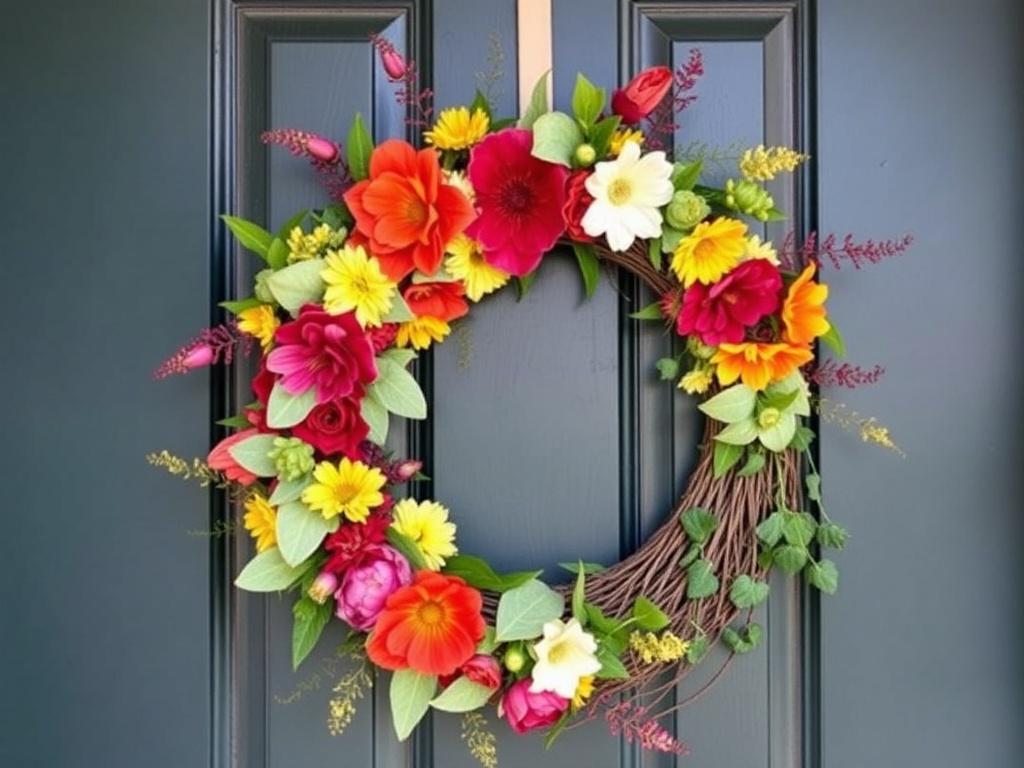
Summer encourages bolder colors, lush foliage, and an easy, relaxed silhouette. Think sun-warmed hues—sunflowers, zinnias, and bold geraniums—or Mediterranean blues and olives for a cooler palette. Use a lighter, airier wreath base to avoid a dense, heavy look.
Combine durable flowers like lavender and roses with textural accents such as wheat or dried hydrangea. Summer wreaths tolerate bright contrasts, so don’t be afraid to pair saturated blooms with pale grasses for relief.
Step-by-step summer wreath: sunflower and lavender cluster
Materials: 16-inch wire frame wrapped in natural burlap or linen, three to four sunflowers (faux or fresh), four lavender bunches, three eucalyptus stems, floral wire, hot glue gun.
Step 1: Wrap the frame in burlap to create a soft background and to hide the wire. Step 2: Arrange lavender in small bundles and wire each bundle; attach them in groups of two or three spaced around the lower half for rhythm.
Step 3: Position sunflowers as bold focal points, staggering heights slightly and wiring stems to the frame securely. Step 4: Tuck eucalyptus around the flowers to soften transitions and use hot glue sparingly to anchor any loose tips. Hang on a sunlit door and refresh lavender scent by gently crushing the stems now and then.
Autumn wreaths: warm tones and layered textures
Fall wreaths celebrate abundance—seed pods, dried leaves, mini pumpkins, and acorns work beautifully here. Aim for layered textures and a cozy, collected feel rather than a polished arrangement. This season rewards foraging and thrift-store finds.
Use straw or a thick grapevine base for a rustic foundation and lean into color: burnt orange, deep gold, mossy green, and burgundy create a classic palette. Accent with metallic touches for a modern twist if you like.
Step-by-step autumn wreath: mixed natural harvest
Materials: 18-inch grapevine base, bunches of dried hydrangea, small faux pumpkins, cinnamon sticks, sprigs of preserved oak leaves, wire, hot glue, optional metallic berries.
Step 1: Secure large clusters of dried hydrangea to one quadrant of the grapevine for a lush focal area. Step 2: Add pumpkins and cinnamon sticks in groupings of two or three, wiring them firmly and burying the wire in the vines for a clean look.
Step 3: Weave preserved oak leaves through the wreath to add movement and attach metallic berries sparingly for reflective pops. Step 4: Step back and adjust spacing so no element competes for attention; fall wreaths often look better with breathing room between accents.
Winter and holiday wreaths: elegance through restraint
Winter wreaths can swing from minimalist to opulent. Evergreens—spruce, fir, cedar—offer both fragrance and structure; pair them with cones, white berries, or velvet ribbon for a classic look. For a modern approach, use monochrome palettes or metallic accents.
Consider the climate where the wreath will hang. In freezing conditions, use hardy evergreens and wire that won’t become brittle. Indoors, combine delicate elements like dried citrus slices with preserved moss for a hygge effect.
Step-by-step winter wreath: classic evergreen with a modern twist
Materials: foam ring (5-inch depth) wrapped in green moss, fresh mixed evergreen clippings, 12 small pinecones, white berries (preserved or faux), copper ribbon, floral pins.
Step 1: Wrap the foam base with moss, securing it with floral pins to create a soft, even foundation. Step 2: Insert evergreen clippings into the foam at a slight angle, overlapping like roof shingles, and cover the entire ring for a full, lush look.
Step 3: Cluster pinecones and berries asymmetrically on one side and secure with floral wire. Step 4: Add a single copper ribbon loop or bow to introduce a modern metallic accent and hang where its contrast will catch light.
Special occasions and holiday variations
When a wreath is meant to celebrate a particular holiday, nominate one clear motif and build everything around it. For example, for Halloween use dramatic black mesh, dried seed pods, and sparse orange accents. For Easter, emphasize pale pastels and delicate ribbons.
Don’t overcrowd a holiday wreath with too many symbols; a single strong motif—bunnies, stars, small ornaments—communicates the message without feeling kitschy. Use layered textures and quality materials to keep seasonal pieces from looking cheap.
Christmas wreath tips
For Christmas, consider integrating small lights for a soft glow that reads beautifully at dusk. Battery-operated micro LED strings are unobtrusive and safe for outdoor use. Anchor lights near the base and weave wiring toward the back to keep the front uncluttered.
Balance ornaments, pinecones, and ribbon. If you use large ornaments, keep their number small and distribute them so the wreath retains a sense of rhythm and avoids top-heaviness.
Easter and spring holidays
For Easter, use soft textures—cotton, small faux eggs, and gentle ribbons. A light-colored grapevine base works nicely because it feels organic and not overly refined. Consider a miniature nest as a focal point for a charming, subtle statement.
Keep elements perched lightly rather than embedded deeply; the Easter look benefits from a playful, floating composition rather than heavy anchoring.
All-season wreaths and adaptable designs
All-season wreaths give you flexibility: choose a neutral base and elements that can be swapped quickly as seasons change. Reusable foundations like a plain grapevine or simple linen-wrapped wire frame are excellent investments, and you can refresh with small seasonal bundles.
Think modularly. Create a few interchangeable clusters—spring flowers, summer citrus, autumn leaves, winter evergreens—that attach by hidden wire loops or small clips. This approach saves storage space and lets you update your door in a single afternoon.
Modular system: how to build interchangeable clusters
Make four or five small bundles on separate pieces of floral wire, each feature-focused and relatively compact. Attach wire loops or small clips to each bundle so they slip over the frame and lock in place. Keep the base visible enough to look intentional rather than patched together.
Label or photograph the clusters before storage so you can find matching sets next season. Modular wreaths free you to experiment and reduce the temptation to buy a new base every holiday.
Caring for wreaths: outdoor vs. indoor considerations
Where you hang a wreath affects its longevity dramatically. Direct sun fades petals quickly; wind can strip delicate elements. Front doors under eaves are ideal because they offer protection and visibility. For exposed locations, prioritize durable and artificial materials.
Maintaining a fresh-wreath means occasional misting, especially for live greens, and removing faded blooms as they appear. For indoor wreaths, keep them away from heat sources which speed drying and discoloration.
Storage tips for longevity
Store wreaths flat in a cool, dry place inside labeled boxes or specially designed wreath storage bins. When stacking, place tissue paper or bubble wrap between wreaths to avoid crushed materials and crushed bows. Preserve fragile components separately and reattach them when you’re ready to display.
For dried or artificial wreaths with delicate glazes or glitter, wrap loosely in acid-free tissue to prevent transfer of color or sheen. A little gentle care in storage preserves months of work and keeps designs vibrant year after year.
Troubleshooting and repair techniques
Wreaths eventually need minor repairs: a loose cluster, a drooping ribbon, or a faded bloom. Keep a small repair kit with matching wire, hot glue, spare berries, and a pair of snips so you can make quick fixes. Often a single touch-up restores the wreath’s visual balance.
If a focal element is ruined, remove the damaged piece cleanly and build a replacement cluster that matches the wreath’s original rhythm rather than trying to recreate it exactly. A repaired asymmetry often looks more intentional than a patched attempt at perfection.
Fixing saggy or flattened sections
For flattened areas, insert small bunches of greenery at different angles and use wire to anchor them, creating loft and depth. If a base has become misshapen, reinforce it from the back with thin wire threaded across the ring to pull the shape back into place.
When dealing with delicate dried flowers that shed, apply a very light mist of matte hairspray as a stabilizer; test on a small piece first to ensure it doesn’t darken the material.
Working with live greenery: hydration and longevity
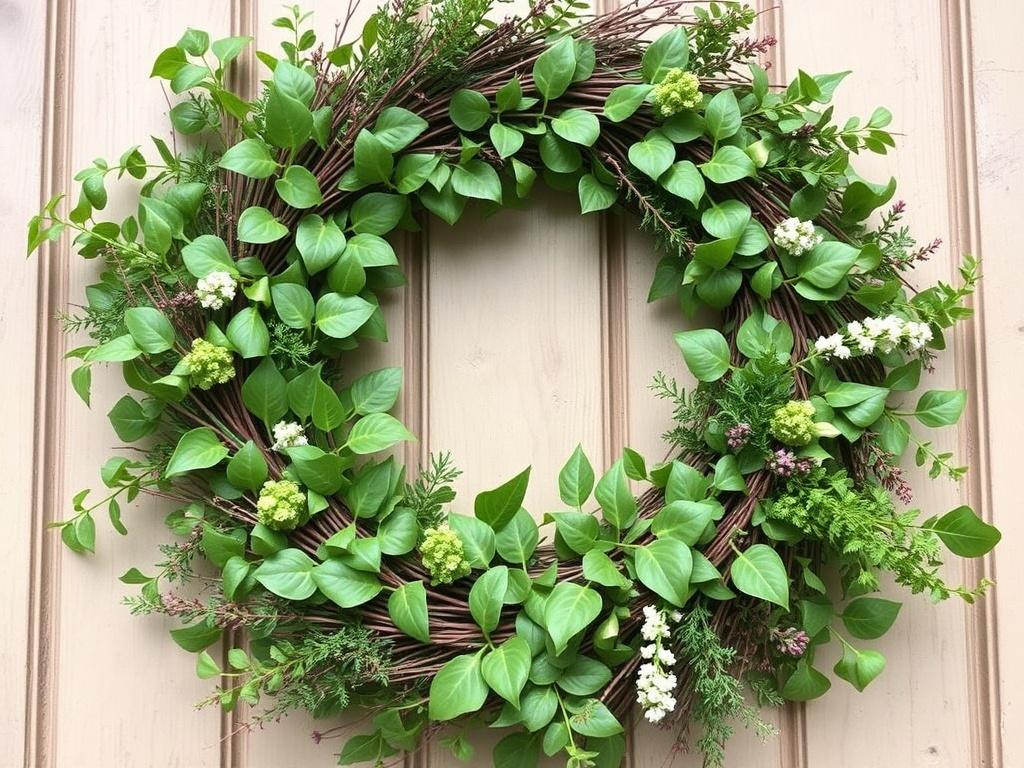
Live greenery makes a wreath breathe and smell wonderful, but it demands attention. Use water-holding techniques when appropriate: soak a straw base or use floral foam rings for long displays. When that’s impractical, select hardy evergreen varieties that maintain color without continuous moisture.
Trim stems cleanly and make angled cuts to maximize water uptake before assembly. If you can, assemble on the day you display the wreath or one day prior and store in a cool space until installation to preserve freshness.
Refreshing a live-wreath mid-season
To refresh a live wreath, replace the most desiccated stems first and add a few new sprigs to the back of the wreath so the front keeps its original look. Lightly misting the back can also revive moisture without wetting the front-facing decorations excessively.
Rotate the wreath out of direct sun during the hottest part of the day and avoid pinning ornaments that trap moisture next to greenery, which can hasten decay.
Working with artificial and preserved materials
Artificial elements are the easiest to care for and excellent for exposed locations or multi-year use. High-quality preserved florals keep tactile richness without the need for water, but they require gentle handling to avoid crushed petals.
Conceal attachment points with small sprigs or ribbon to create a seamless finish. When mixing artificial and natural elements, match scale and color temperature so the contrast reads intentional and not accidental.
Styling tips for the best artificial look
Trim stems at a natural angle and bend them slightly to mimic living growth. Pull petals and leaves outward gently to add dimension and break any factory-uniform stiffness. Shadows create realism, so layer darker leaves behind lighter ones to simulate depth.
If your artificial piece has a visible plastic sheen, dull it slightly with a light spray of matte sealer; test on an unseen area first. Strategic distressing can help integrate it into a natural-looking composition.
My own experiments and mistakes—and what they taught me
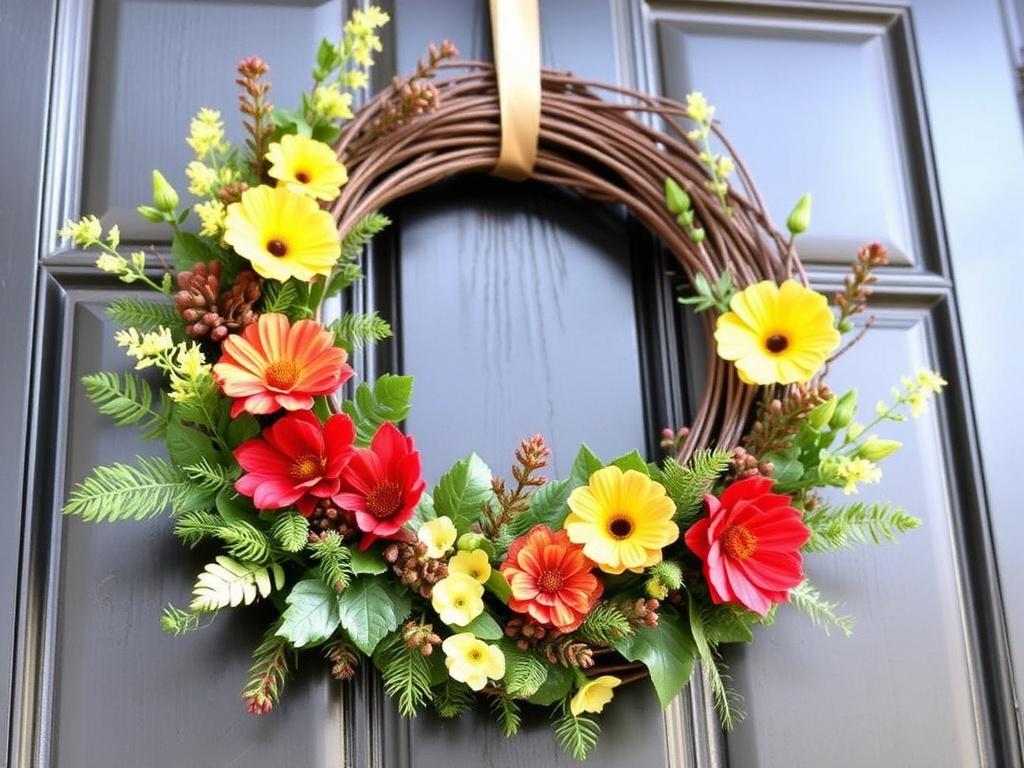
Early on, I made the common mistake of over-embellishing every wreath. Too many small accents competed for attention, and the final effect felt noisy rather than inviting. I learned to pick a single focal idea and support it with simpler textures.
I also once designed a grapevine wreath loaded with fresh tulips for a late-spring party and hung it directly in the sun. The flowers faded within a day and the wreath looked tired by evening. That taught me to test new designs in the spot where they’ll live and to respect the environment’s demands.
One small triumph came from a modular system I built using a neutral base and interchangeable seasonal clusters. It reduced waste, saved time, and encouraged me to be more creative with fewer materials. Sharing that system with friends led to an informal wreath swap that became a neighborhood tradition.
Step-by-step checklist for your first seasonal wreath
Before you begin, gather everything on this checklist so the assembly flows smoothly: base, primary focal elements, secondary fillers, greenery, wire, glue gun, cutting tools, and hanging hardware. Having everything at hand prevents rushed decisions and untidy fixes.
- Choose your base and set it on clean workspace
- Prepare and condition live stems or pre-trim dried/artificial stems
- Design a focal cluster and secondary accents
- Attach focal cluster first, then fill and balance
- Secure loose pieces and create a hanging loop
- Photograph and store instructions for future reference
Practical tips for shopping and sourcing materials
Look beyond craft stores. Farmer’s markets, floral wholesalers, and even your own yard yield excellent material. Seasonal sales and end-of-day market bargains can supply premium stems at low cost—consider splitting larger bundles with friends to reduce waste and expense.
Thrift shops and antique markets are treasure troves for unique accents: brooches, key chains, and old ornaments can be repurposed as focal elements. When buying artificial florals, inspect stems for quality; wired stems and realistic petal textures are worth the extra cost.
Foraging ethically
If you forage, know where it’s legal and avoid taking from protected areas or private property without permission. Take only what you need, and favor fallen branches, seed heads, and sustainably pruned cuttings. Foraged pieces add authenticity and a story to your wreaths that store-bought items can’t match.
Keep a small foraging kit—gloves, clippers, labels—to note locations and conditions. This habit helps you recreate favorite finds and avoid overharvesting local populations.
Adapting designs for different doors and spaces
Measure the door and consider sightlines before committing to a size. Narrow doors benefit from taller, slimmer wreaths, while double doors can handle large, statement rings. For interior spaces, lightweight designs work better and allow creative placement above mantels or on gallery walls.
Remember the background. A dark door pairs well with brighter wreaths for contrast, while a pale door invites richer, deeper colors. Your goal is to make the wreath readable from a distance without competing with its surroundings.
Alternative placements and creative displays
Wreaths don’t have to hang on doors. Try them flat on a table as a centerpiece with a candle in the middle, or prop smaller wreaths on easels in windows. Cluster a few miniature wreaths on a wall for a modern gallery effect that changes with the seasons.
For ceilings or above-door placements, attach a clear fishing line loop to create a floating illusion. Ensure secure anchoring and balance to prevent accidental falls in high-traffic areas.
Final creative prompts to keep you making
If you’re unsure where to begin, pick one motif and run with variations: one wreath using a single flower type in three colorways, or a series that explores texture—feathers, moss, burlap. Limitations often spark the most interesting designs.
Try a themed swap with friends where each person creates a wreath for the next season and trades. It’s a low-pressure way to see different approaches and expand your material library without buying everything yourself.
Wreath-making blends practical skill with the freedom to improvise. As you practice the techniques and follow the step-by-step projects here, you’ll develop a visual language that suits your style and your home. Keep an eye on balance, texture, and seasonal appropriateness, and you’ll find that Creating Beautiful Wreaths for Every Season becomes less a chore and more a delightful rhythm in the year.