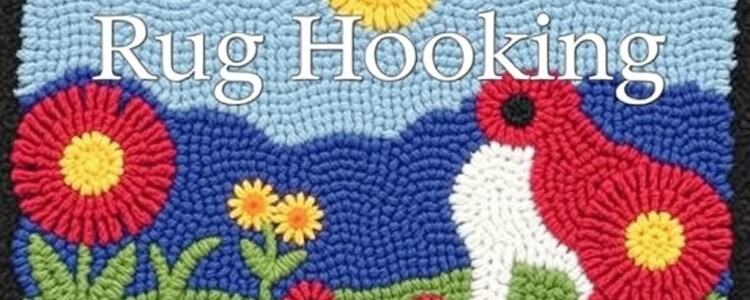
Rug hooking arrives like the kind of craft that keeps you thinking with your hands and your eyes at once. The Joy of Rug Hooking: Techniques and Materials is not only a phrase; it describes a practice that mixes patience, color sense, and a satisfying, rhythmic motion. In this article I’ll walk you through how rug hooking works, what you’ll need, and how to grow from a first coaster to pieces you’ll be proud to display.
What rug hooking is and where it came from
Rug hooking began as a practical way to recycle worn clothing into warm floor coverings, and it has kept that resourceful spirit while evolving into a fine art. Early North American settlers and British households used hooked rugs as affordable insulation and decoration. Over generations the technique migrated from necessity to a celebrated folk art form commonly associated with New England and Nova Scotia traditions.
The craft’s basic idea is simple: pull loops of fabric or yarn through a foundation cloth to create a pile. Different tools, patterns, and fibers produce distinct textures and styles, from primitive, bold shapes to highly detailed pictorial rugs. That range is part of what keeps people returning to the craft; it welcomes both quick, cozy projects and long, intricate works.
Why rug hooking brings joy
There’s a particular pleasure in watching an image come alive stitch by stitch. Hooking is tactile and forgiving, so mistakes can often be altered without wrecking the whole piece. That accessibility makes it both a creative outlet and a quiet, meditative practice.
Beyond the immediate satisfaction, rug hooking connects you to material culture and lineage. When you work with recycled wool or inherited textiles, you’re literally stitching into an ongoing narrative. I’ve found that rug hooking sessions frequently generate memories; conversations with family or thoughts about a place appear in the motifs I choose.
Finally, the social element grows a lot of joy. Local guild meetings, online groups, and rug-hooking retreats turn solitary craft into a community activity. People swap patterns, critique color choices, and cheer each other on when a challenging shading technique clicks.
Essential tools: hooks, frames, and accessories
Choosing the right tools makes the process more enjoyable and your work cleaner. The three basic tool categories are hooks, frames/hoops, and finishing tools. Each category contains options suited to different styles, hand strengths, and project sizes.
Hooks are the core implement. Traditional rug hooks have a straight shank with a pointed tip and a hook on the end, while latch hooks and punch needles are distinct styles that create different textures and speed. I prefer a medium-sized traditional hook for most projects because it balances control with speed.
Frames and hoops hold your backing taut and steady. A simple embroidery hoop is fine for small pieces, but a floor frame or a fitted stretcher frame is better for large rugs. Stability affects tension and loop uniformity, so invest in a frame if you plan to work beyond coasters and small mats.
Finally, finishing tools include strong scissors, an awl for mending, a rug binding tool or whipping twine, and a good light source. I always keep a magnifier and a small ruler nearby for checking loop height and neatness as I work.
Types of hooks explained
Traditional rug hooks come in fixed and interchangeable-handle styles and offer a range of throat sizes for different strip widths. A finer throat helps with narrow strips and detailed work, while a larger throat makes fast work of broad areas and coarse materials. Metal hooks offer durability, while some artisans prefer wooden handles for comfort.
Punch needles and rug punch tools operate on a different principle, pushing yarn through the foundation and creating a pile on the reverse side. Punching offers speed and is favored for painterly, tufted textures. Latch hooks are used primarily with pre-cut yarn for latch-hook rugs; they produce a shaggy, geometric look more often associated with novices and quick projects.
Frames and hoops
An embroidery hoop is the cheapest way to get started and can hold a piece of monk’s cloth or linen easily for small projects. For medium to large rugs, I recommend a wooden or metal frame that clamps the fabric taut and evenly across the working area. Floor frames let you set up a rug and return to it repeatedly without loosening the tension.
Some hookers prefer portable lap frames for travel and social gatherings, while others install an adjustable stand that positions the frame at eye level to reduce back strain. Choose a frame that suits your working style and storage space.
Backing fabrics: the foundation of your rug
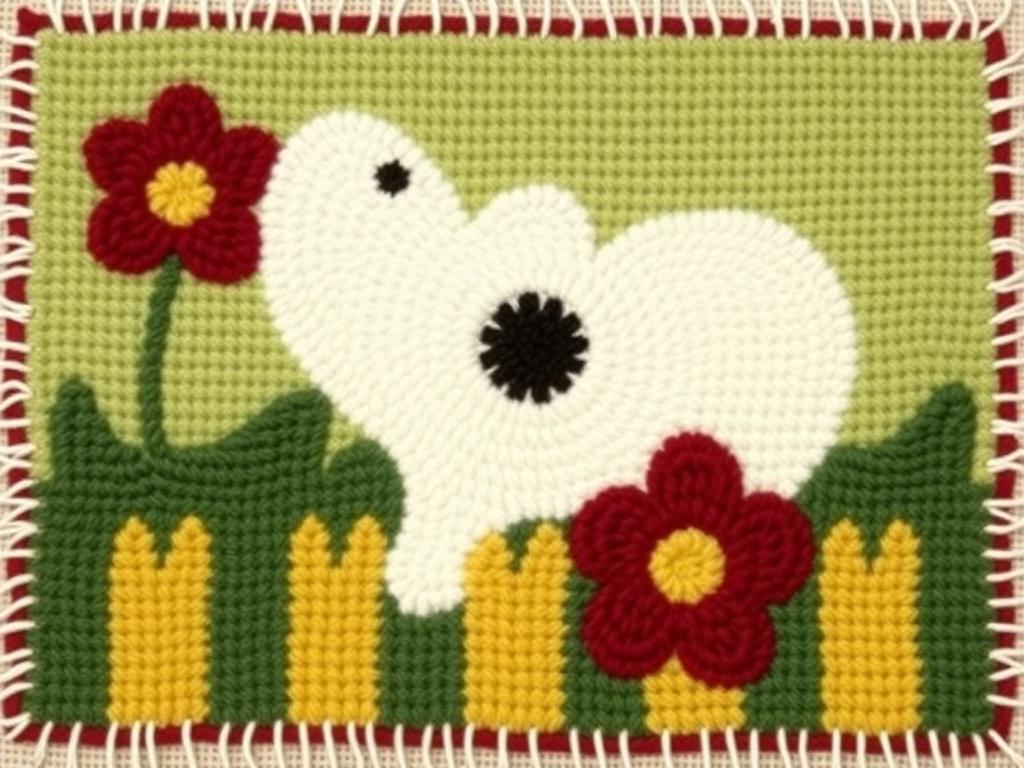
The backing fabric determines stability, loop support, and final look. Common choices include burlap (gunny cloth), monk’s cloth, linen, and rug warp. Each fabric has a specific weave, durability level, and visual effect. Learn their properties before you commit to a large project.
Burlap is strong and inexpensive, but it can shed and is quite coarse; it shows tack holes if you later stretch the rug. Monk’s cloth has a looser weave with regular, easy-to-find holes, which many beginners find forgiving. Linen and rug warp are tighter, more durable, and favored for fine work and rugs expected to see heavy foot traffic.
| Backing | Pros | Cons |
|---|---|---|
| Burlap | Inexpensive, sturdy, warm texture | Coarse, sheds, visible weave |
| Monk’s cloth | Easy to hook, forgiving holes, good for decorative pieces | Less durable for heavy wear |
| Linen / rug warp | Durable, refined look, professional finish | More expensive, requires precision |
When I first switched from burlap to linen, the improvement in detail was dramatic. The tighter weave forced me to slow down and consider each strip width, but the finished pieces looked more polished and lasted longer underfoot.
Fibers and materials: wool, yarn, and creative substitutes
Wool is the traditional choice because it hooks well, wears beautifully, and holds color. Wool strips cut from thrifted sweaters or woven wool yardage form the bulk of most hooked rugs. Quality and weight vary, so test samples to see how a fiber behaves in your chosen hook and backing.
Yarn—especially rug yarns or bulky wool blends—works well for punch needle and latch-hook pieces. Some artisans mix yarn with wool strips to create combined textures. Cotton, silk, and synthetic fibers are used occasionally for accents, but they don’t always provide the wear properties of wool.
Recycling clothing is a popular, eco-friendly approach. I’ve turned a worn wool coat into brilliant marled strips that bring depth to a landscape rug. When you cut your own strips, aim for consistency in width for an even surface, but purposeful variation can create expressive texture.
Preparing wool strips
Wool can be stripped from yardage or cut from garment seams. A rotary cutter and mat speed the process and reduce hand fatigue. Cut strips on the straight of grain when possible for a neat edge that resists fraying; bias cuts can give a softer, drapier edge but may distort under tension.
Pre-washing wool can remove oils and shrinkage, though some hookers prefer unwashed wool for better grip and a richer finish. If your wool has a nap or directionality, consider how that affects color play and light reflection in the finished rug.
Basic techniques: making consistent loops
Loop uniformity is the first technical skill every hooker learns. Consistent loop height gives a smooth visual field and makes later shading and detail work more predictable. To practice, fill a small square of backing with uniform rows and measure your loop heights periodically.
Work rhythm matters: map out vertical or horizontal rows and maintain the same tension. Tight loops create a dense, durable surface, while loose loops produce a fluffier, more pliable pile. Your choice depends on the rug’s use and desired aesthetic.
How to hold the hook and position the backing
Grip the hook like a pencil or a small screwdriver—find what feels stable for your hand. Some people wrap a soft cloth around the hook handle for comfort during long sessions. Always secure the backing on a frame so the fabric is evenly taut; inconsistent tension yields uneven loops.
Eye placement and posture matter too. Keep the piece at a comfortable height and angle to avoid neck and wrist strain. I adjusted my mattress of work a few times before realizing that even a small tilt reduced the stress on my wrist and let me work longer without fatigue.
Punch needle versus traditional hooking
Punch needle and traditional hooking both create looped surface textures but with different approaches and results. Punch needle works from the front, pushing yarn through the cloth to form loops on the surface; it is fast and suited to large color areas. Traditional hooking pulls strips through from the front to the back and generally allows finer detail with strips of differing widths.
If you enjoy painterly blending and quick coverage, try a punch needle. If you want layered textures and the ability to change strip widths mid-row, traditional hooking might suit you better. You can also combine methods for hybrid textures.
Design planning: from simple motifs to complex compositions
Start with a clear design concept and adapt it to your experience level. Simple geometric motifs and floral repeats make excellent beginner projects because they teach stripe work, color balance, and edge finishing. Gradually progress to landscapes, portraits, or narrative rugs as your control and confidence increase.
I often begin a design with rough thumbnail sketches. These help visualize value relationships—light, mid, and dark areas—before committing to color. A successful rug reads well at a distance, so test a small swatch to confirm your value plan.
Transferring patterns
Patterns can be transferred by tracing, pricking and pouncing, or using heat-transfer pens for washable inks. Tracing over light tables works well for linen and monk’s cloth. For rustic burlap, pricking and pouncing yields clearer guide lines that won’t rub off during hooking.
Consider the end use when you transfer lines. Heavy transfer lines may show through thin fibers, so keep transfer marks light or plan to cover them with dense hooking. Some makers hook freehand from a sketch, letting the material guide final lines and contours.
Color selection and shading
Color choice is where many rugs find their personality. Work with groups of values first, then choose hues that give the mood you want—vibrant and contrasting for punchy folk pieces, muted and analogous for a softer, antique vibe. Layering adjacent values creates gentle transitions and a sense of depth.
For subtle shading, use several shades of the same hue or marled strips combining two fibers. Gradual value shifts will read as volume and form. I use small swatches pinned to a foam board to preview combinations in different lights before committing to several yards of a color.
Advanced techniques: texture, sculpting, and embellishment
Once you’ve mastered basic loops, explore surface sculpting, varying pile heights, and combining hooked and tufted sections. Sculpting involves cutting some loops to create a shag or pile, while leaving adjacent loops uncut to emphasize contrast and form. These techniques can make animals look fluffy or create realistic foliage in a landscape.
Incorporate embroidery, applique, or beading to add detail and mixed-media interest. Metallic threads or hand-stitched outlines sharpen edges and provide a handmade signature. I once used button eyes and silk lashes on a hooked portrait, and the result felt vividly alive compared to a purely hooked surface.
Working with multiple pile heights
Using more than one loop height gives dimensionality. For example, short loops can form ground planes while taller loops make grasses or sheep. Plan transitions between heights to avoid abrupt, awkward edges; blending heights across a few rows creates a more natural shift.
Tools like adjustable-height hooks or simply measuring loop lengths and snipping selectively can accomplish these effects. Keep safety in mind when cutting loops on larger rugs—use a sharp pair of shears and follow a controlled pattern to maintain symmetry.
Finishing touches: binding, backing, and display
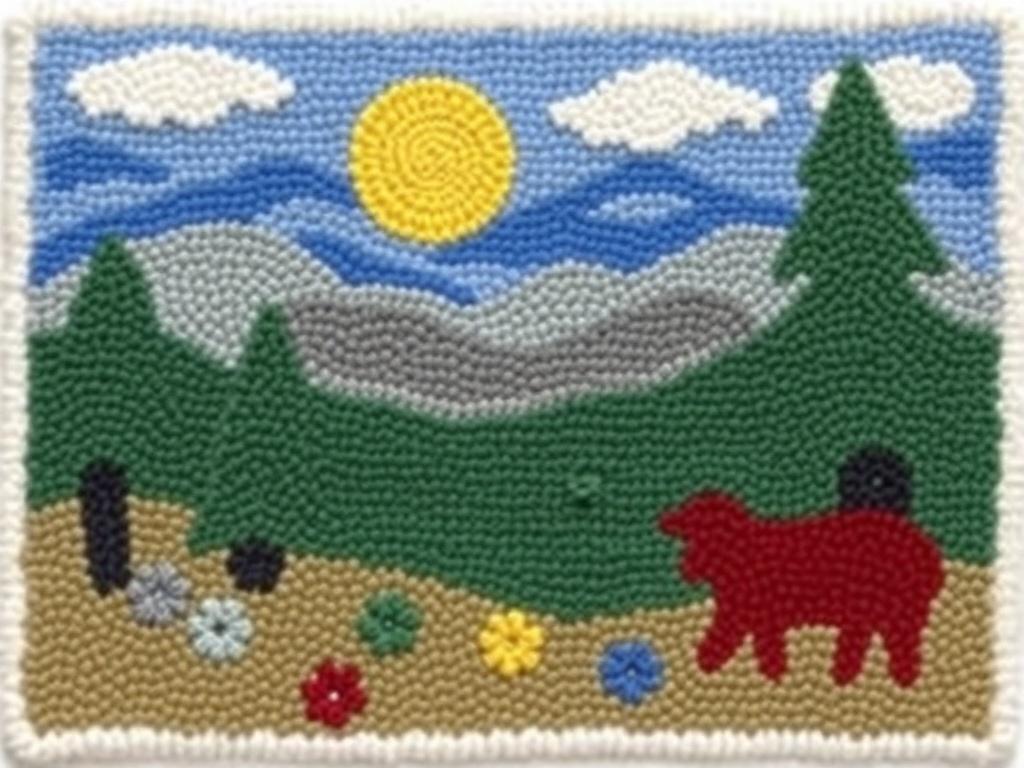
A finishing edge makes a rug durable and attractive. Options include whip-stitch binding, sewing on a leather or wool binding, or couching a decorative yarn around the perimeter. The method you choose depends on the rug’s expected use and desired look.
Backing a rug can increase longevity. Many hookers apply a layer of cotton duck or linen to the back with fabric glue or hand-stitching to keep loops secure. For rugs that will be walked on, consider adding rug padding when displayed on hard floors to reduce wear and prevent slipping.
Washing and care
Wool rugs are surprisingly robust but need appropriate care. Spot-clean spills immediately with a blotting motion, not rubbing. For full cleaning, hand wash gently or use a professional service that understands hooked textiles.
Store rugs rolled with acid-free tissue to prevent creasing and protect the pile. Avoid folding, which can damage loops and create permanent creases. If moths are a concern, use cedar or lavender sachets and inspect storage periodically.
Projects for beginners and step-by-step starter guide
Begin with projects that teach core techniques without overwhelming detail. Coasters, small mats, and pillow covers are excellent starting points. They let you practice tension, loop consistency, and simple color blocking without the time commitment of a floor rug.
Here’s a compact starter checklist that I recommend for first-timers. Keep it nearby as you begin so you don’t forget essentials when excitement makes you rush out the door for supplies.
- Small frame or embroidery hoop
- Monk’s cloth or a small piece of burlap
- Medium traditional rug hook
- Assorted wool strips or rug yarn
- Sharp scissors, ruler, and a transfer pen
- Transfer a simple design onto your backing.
- Secure the backing in your hoop or frame with even tension.
- Begin at the center or a corner and hook consistent loops along one axis.
- Check loop height periodically and adjust tension or strip width as needed.
- Finish edges with a whip stitch and apply a backing if desired.
As a teacher I used this exact path for students and watched their confidence grow quickly. Finishing that first coaster is the moment many crafters realize they can create functional art.
Troubleshooting common problems
Uneven loops, skipping holes, and snagging are common frustrations that have simple fixes once you know the causes. For uneven loops, check the tension of your backing and the consistency of strip widths. If holes are skipped, mark your row spacing with a washable pen and work methodically in rows.
If a loop pulls out, remediate immediately by re-hooking the strip and securing the surrounding area. Small repairs are part of the craft; they don’t ruin the piece, and learning to fix them builds your confidence. I keep a repair kit with spare strips and a curved needle for mending small sections.
Edge problems and gaps
Gaps at the edges often result from loosening tension as you approach the frame border. To avoid this, reduce the distance between clamp and fabric or use an inner clamp bar to hold the edge taut. For existing gaps, add a narrow border of dense, dark hooking to hide irregularities and secure the perimeter.
Community, classes, and learning resources
Guilds, workshops, and online communities offer invaluable feedback and inspiration. Local rug-hooking guilds often host workshops with master hookers who teach specialized techniques like pictorial shading and fine-thread work. These tactile lessons cannot be fully replaced by watching videos.
Online forums and social media groups are terrific for sharing progress photos and getting quick troubleshooting tips. I’ve learned color palettes and finishing tricks from people on three different continents this way. If you join online, share clear photos and specific questions to get the best advice.
Sourcing materials ethically and sustainably
Rug hooking naturally lends itself to sustainability because it historically used recycled fabric. Thrift stores, estate sales, and friends’ cast-off wool garments are treasure troves for unique textures and colors. Buying secondhand reduces waste and gives your rug a story embedded in the fibers.
When purchasing new wool or yarn, look for mills that practice ethical labor and low-impact dye processes. Some artisans specialize in reclaimed mill ends, which are both economical and environmentally sensible. I avoid single-use synthetics for floor rugs because they don’t breathe and they release microfibers during cleaning.
Pricing, selling, and valuing your work
Deciding how to price a hooked rug combines materials, labor, reputation, and market. A straightforward formula multiplies material cost by a factor for labor hours and skill level, but market demand can increase or decrease that baseline. Consider the uniqueness of the design and any time-intensive techniques when setting a price.
If you plan to sell, document the process with photos to show buyers the care involved. Consider limited editions or custom commissions to attract collectors. I once priced a medium pictorial rug based on the hours I logged and the rarity of the wool colors I used; it sold to someone who appreciated the narrative and was willing to pay for the story.
Expanding your practice: shows, competitions, and teaching
Exhibiting your rugs in craft shows or entering them in competitions raises your profile and connects you with buyers and other makers. Many regions host annual textile fairs with categories for hooked rugs, which can propel a maker’s visibility. If teaching appeals to you, start with small classes and lead with accessible projects to build confidence in students.
Teaching sharpens your own skills because you must articulate technique and problem-solve on the fly. After my first teaching series, my work tightened up—explaining loop tension to students forced me to scrutinize and refine my own methods.
Creative variations and cross-disciplinary approaches
Rug hooking sits comfortably alongside quilting, weaving, and needlework. Combine techniques for mixed-media pieces: hook a central motif and quilt a fabric border, or attach woven strips to create a graphic frame. These hybrid works often attract attention because they break expectations of what a rug can be.
Artists have also scaled rug hooking into installations and wearable art, using hooked panels as wall hangings, cushion covers, or even jackets. If you’re exploring new territory, consider structural requirements like seam allowance and backing stability before converting a floor rug into a wearable piece.
Patterns and inspiration sources
Pattern books, historical rug archives, and flora and fauna field guides are rich sources of motifs. I keep a small folder of pattern clippings from vintage magazines and regional museums because older designs often include charming, unexpected detail. Use them as starting points rather than strict templates to make the design your own.
Nature is another steady well of inspiration. Observe light on leaves, the rhythm of fence posts, or the silhouette of rooftops to translate into hooked compositions. Small studies help translate three-dimensional scenes into manageable two-tone values suitable for hooking.
Final guidance for starting and sustaining the practice
Begin with modest expectations and consistent practice. The first projects teach essential skills; the next ones let you experiment with color and texture. Over time you’ll develop a visual language that becomes recognizably yours.
Keep a small project bag with essential tools for travel or social hooking. The convenience of having everything at hand makes it easy to fit in short, productive sessions that cumulatively build skill and momentum. Most of all, remember that rug hooking rewards patience and curiosity—you’ll get a lifetime of learning from loops and strips of cloth.
Enjoy the feel of wool under your fingers, the quiet of steady rhythm, and the pleasure of turning thrifted materials into objects of warmth and meaning. Whether you’re making a simple mat or an ambitious pictorial rug, rug hooking is a craft that welcomes repetition, rewards attention, and gives back in comfort and beauty.