
Felt is the kind of craft material that feels friendly the moment you touch it — soft, stable, and impossible to fray. In this article I’ll walk you through why felt is ideal for children, how to set up a safe, inviting workspace, and a long list of kid-tested projects that range from five-minute crafts to multi-session quiet-book pages.
You’ll find step-by-step techniques, safety tips, and ways to adapt projects for different ages and abilities. Whether you’re a parent, teacher, or caregiver, these ideas are meant to keep the mess manageable and the results proudly displayed.
Why felt belongs in every kid-friendly craft kit
Felt is forgiving. Unlike flimsy paper that tears or fabric that frays, craft felt keeps its shape and tolerates enthusiastic little hands. This stability makes it possible for young makers to practice cutting, gluing, and basic hand-stitching without constant frustration.
The material is also tactile, which matters for early childhood development. Pressing, pinching, and layering felt supports fine motor skills, sensory exploration, and early hand-eye coordination. Those small, repeated movements add up to measurable progress over weeks and months.
Another practical advantage: felt is inexpensive and comes in bright, consistent colors. You can buy sheets by the dozen and still spend less than you would on specialty papers or pre-made kits. That makes trying new ideas low-risk and easy to repeat when a child wants to make a dozen felt animals or a whole set of play food.
Safety and setup: making crafting easy and safe
Before the scissors come out, take a minute to think through the workspace and tools. A covered table, an apron or old T-shirt, and a small snack break planned into longer sessions keep energy and patience steady. Good lighting and a comfortable chair help kids focus and reduce accidental snips.
Decide which tools are appropriate for the child’s age. Blunt-tip scissors and glue sticks are perfect for preschoolers, while older kids can learn to use a basic hand-sewing needle and fabric glue. Keep sharp scissors, pins, and hot glue out of reach unless you’re supervising directly.
Label a small bin for used scraps and another for reusable offcuts. This keeps the table tidy and teaches cleanup as part of the project. I always include a simple timer when crafting with a group; it signals when to finish and clears the mental space for transitioning to the next activity.
Materials checklist
Below is a compact list of essentials and friendly alternatives to keep you prepared without overspending. Use the table to choose kid-safe options based on age and supervision level.
| Item | Why it helps | Kid-friendly alternative |
|---|---|---|
| Craft felt sheets | Stable, brightly colored, easy to cut | Pre-cut shapes for very young children |
| Blunt-tip scissors | Safer for little hands, decent cutting control | Safety scissors with spring action |
| Fabric glue or glue stick | Fast adhesion, less mess than hot glue | Double-sided tape for temporary bonds |
| Embroidery needles and yarn | Fine-motor practice and decorative stitching | Plastic needles and chunky yarn for beginners |
| Stuffing | Plumps plushies and sensory shapes | Scrap felt or cotton balls |
| Fabric markers | Add faces, details, and labels | Regular washable markers on paper tags |
Basic safety list
Keep the following practices in mind to minimize accidents and make cleanup a habit.
- Supervise needle or hot-glue use and store them out of reach.
- Use child-safe scissors for preschoolers and teach cutting away from the body.
- Establish a “no mouths” rule for small items and keep tiny parts away from children under three.
- Encourage hand washing after crafting, especially if glue or markers are involved.
Felt fundamentals: cutting, gluing, and simple stitching
Learning three core skills unlocks most felt projects: cutting shapes, gluing layers, and basic stitches. You don’t need to teach everything at once; introduce one skill per session and build confidence with small wins.
Cutting is the first skill to practice. Start with straight lines and large shapes, then progress to gentle curves. Teach kids to rotate the paper or felt while keeping the scissors steady — this makes curved cuts easier and reduces frustration.
Gluing is forgiving and fast. Fabric glue gives a stronger bond for toys and projects that will be handled a lot, while glue sticks are excellent for temporary displays and simpler collages. When using liquid glue, less is more; press pieces together and allow time to dry under a heavy book if needed.
Three beginner stitches
Hand-stitching adds durability and charm. For kids, keep stitches large and yarn chunky so they can see progress quickly. Introduce these stitches with a plastic needle and felt practice squares first.
The running stitch is the simplest: push the needle in and out at steady intervals. Use it to attach felt layers or outline shapes. The visible rhythm of the running stitch gives kids a sense of pace and control.
The blanket stitch secures raw edges and looks decorative. Show it slowly: push the needle from back to front, loop the thread under the needle before pulling tight, and repeat. Many children love how the edge becomes a neat, stitched frame.
The whip stitch wraps the yarn around the edge in a spiral. It’s fast and perfect for sewing two felt pieces together for plush toys. Demonstrate once, then let the child try with a thick yarn that’s easy to hold.
Project ideas for preschoolers (ages 3–5)
Preschool projects should prioritize big shapes, tactile rewards, and quick finishes. These activities solidify basic skills without demanding prolonged concentration.
Felt finger puppets
Finger puppets are a classic for a reason: instant imaginative play and minimal materials. Cut small rectangles, glue or stitch the long edge to form a tube, and add eyes, hair, and clothes with scraps of felt.
Encourage kids to create a cast of characters — a farmer, a cat, a dinosaur — and then stage short stories. Puppetry adds language practice, narrative structure, and social play to the craft session.
Variation: Pre-cut simple shapes for very young children and let them choose where to place facial features and accessories. This makes the project accessible while still allowing autonomy.
Shape matching boards
Cut a board-sized rectangle from a recycled cereal box and glue a felt sheet on top. Cut simple shapes from a second felt color and glue their outlines to the board. Children match loose felt shapes to their outlines, practicing shape recognition and spatial reasoning.
Make multiple boards with themes — animals, vehicles, fruits — and rotate them during circle time. This project is easy to refresh; swap the loose shapes and watch interest return.
Simple felt mosaics
Give kids a base felt square and a handful of tiny cut scraps in various colors. They arrange and glue the scraps to make a mosaic image — a sun, a tree, or an abstract pattern. The small pebbles of felt build patience and visual planning.
Limit the color palette for beginners to reduce overwhelm. For preschoolers, fewer choices often lead to more satisfying results and less hemming and hawing over color decisions.
Projects for early elementary (ages 6–8)
At this age children are ready to follow multistep instructions and tackle projects that require more precision. Introduce simple sewing and encourage personalized touches.
Felt food play sets
Felt food invites role play and language development while being sturdy enough for repeated use. Start with sandwiches, pizza slices, or fruit — large, easy-to-cut shapes that can be layered and stitched if desired.
For a sandwich, cut two bread shapes and smaller pieces for lettuce, cheese, and tomato. Attach the food layers with a few running stitches or glue dots so kids can assemble and disassemble the sandwich.
I once made a felt breakfast set with my daughter and she spent an entire afternoon serving family members. The play extended beyond crafting into counting eggs and deciding the “menu” — a small project that multiplied into hours of imaginative play.
Bookmarks and zipper pulls
Bookmarks are quick, useful gifts and a great project for practicing cutting and basic stitching. Cut a long rectangle, decorate with felt shapes, and add a tassel or ribbon. Personalize with names written in fabric markers.
Zipper pulls are tiny felt characters attached to a ribbon loop and then to a zipper. They teach precision and are instantly useful—kids love customizing their backpacks and jackets this way.
Seasonal ornaments
Holidays and seasonal changes are perfect prompts for felt crafts. Cut out pumpkins, snowflakes, hearts, or stars and decorate them with sequins, stitches, or small felt appliqué pieces. Add a loop of ribbon for hanging.
These ornaments become keepsakes. I’ve kept a collection of my children’s felt ornaments over the years; they’re worn at the edges and full of personality, and unpacking them each season feels like visiting an old friend.
Projects for older kids (ages 9–12)
Older children can handle more complexity, pattern-following, and precision. They also enjoy projects that result in functional items or allow creative expression comparable to art projects.
Simple plushies and soft toys
Plush projects teach measuring, symmetry, and controlled stitching. Start with a two-piece animal — front and back — cut from a pattern, sewn together around the edge, and stuffed lightly.
Introduce basic pattern alterations: change ear size for a different character or add pockets for a surprise. The sewing can be simple whip or blanket stitching; emphasize even spacing and consistent tension to make the result neater.
For kids mastering needles, provide a small hand-sewing kit and a pattern printed on paper. They get the thrill of making a toy that’s actually usable and uniquely theirs.
Felt collage portraits
Older children can create layered portraits using felt pieces as color fields instead of paint. This project blends design thinking and composition. Work from a photo or a simple sketch and build up the face, hair, and clothing with layered felt.
It encourages observation — choosing the right shade of felt, trimming a precise hair curl, and balancing negative space. Display the finished pieces in a classroom or hallway; they often draw compliments for their vivid, fabric-based style.
Wearables: brooches and hair clips
Small wearable crafts let kids make fashion statements. Cut a decorative shape, add felt layers and a simple stitch pattern, then glue a brooch pin or hair clip to the back. These pieces are quick to make and fantastic for gift-giving or swap days.
Be mindful of safety when attaching metal pins—check they’re secure and teach children not to wear them during rough play. Many communities find brooch swaps a charming way to celebrate creativity and exchange ideas.
Quiet books: a longer project that pays dividends
Quiet books are fabric-based activity books with interactive pages that children use independently. They can include buttoning practice, zippering, matching, lacing, and simple puzzles. Each page teaches a skill in a travel-friendly format.
Make a quiet-book page over several sessions: plan the skill, select colors, and assemble with glue or stitches. Combine durable felt, Velcro, and snap buttons to create engaging tactile experiences that last through years of handling.
I built a small quiet book for a sleepy toddler before a plane trip, and it became an essential travel companion. The child used the buttons and flaps to stay absorbed through long stretches, giving both of us a calmer journey.
Group projects and classroom ideas
Felt scales well for groups because it’s inexpensive and easy to pre-cut. Consider collaborative projects that let each child contribute a tile or character to a larger display.
A classroom “story wall” is a great option: each student creates a felt character or scene, then pieces are assembled into a collective story background. This pushes narrative skills and gives students pride in a shared outcome.
Another idea is a rotating craft station: cutting, gluing, sewing, and decorating can be separate tables that children visit in small groups. It keeps supplies organized and reduces chaos while letting different skills shine.
Troubleshooting common problems
Even felt projects can run into snags — glue that shows through, uneven stitches, or cut edges that look jagged. Most problems have simple fixes, and learning those fixes develops resilience and problem-solving in kids.
If glue is visible, cover the spot with another decorative piece or a small applique. For stitches that are too loose, gently re-thread and tighten a few stitches, tying a small knot hidden under a layer. Practice on scrap felt before working on a finished piece.
When cuts appear jagged, gently trim with sharp (adult-handled) scissors, or incorporate the jagged edge into the design by adding a scalloped border. Felt hides small imperfections well; a thoughtful embellishment often transforms a mistake into a purposeful detail.
Storage and care for felt projects
Store finished felt toys in breathable fabric bins to prevent crushing and static. For unfinished pieces, use zip-top bags labeled with the child’s name and a brief inventory so projects don’t get lost between sessions.
Felt can attract lint and dust; a quick lint roller or a gentle hand wash in cool water restores color and texture. Avoid hot water and vigorous agitation — they can deform the felt or cause color bleeding in low-quality sheets.
Advanced techniques and design tips
Older kids and adults can explore applique layering, embroidered shading, and pattern drafting. Felt accepts layered work beautifully: thin shapes on top of thicker backgrounds create depth without bulk.
Try combining felt with other materials like cork, leather scraps, or recycled denim to create texture contrasts. Embroidery threads add fine detail and shading. Teach children how to plan a color palette before cutting to reduce waste and make a cohesive design.
Pattern drafting is another step up. Show kids how to trace a simple sketch onto paper, add seam allowances, and cut mirrored pieces. This skill lets them scale designs to different sizes and create symmetrical toys and accessories.
Eco-friendly and budget-conscious tips
Felt doesn’t have to be brand-new. Upcycle old felt projects or use thrift-store wool sweaters to make a felted fabric—wash them in hot water to intentionally felt the fibers if you want a sturdier, denser material. Those homemade sheets can be cut into shapes or used as background material.
Buy larger rolls or multipacks of craft felt when you spot a sale; pooling purchases with another family can stretch a budget further. Keep a scrap bin specifically for small accents so nothing useful ends up in the trash.
Where to find patterns, templates, and inspiration
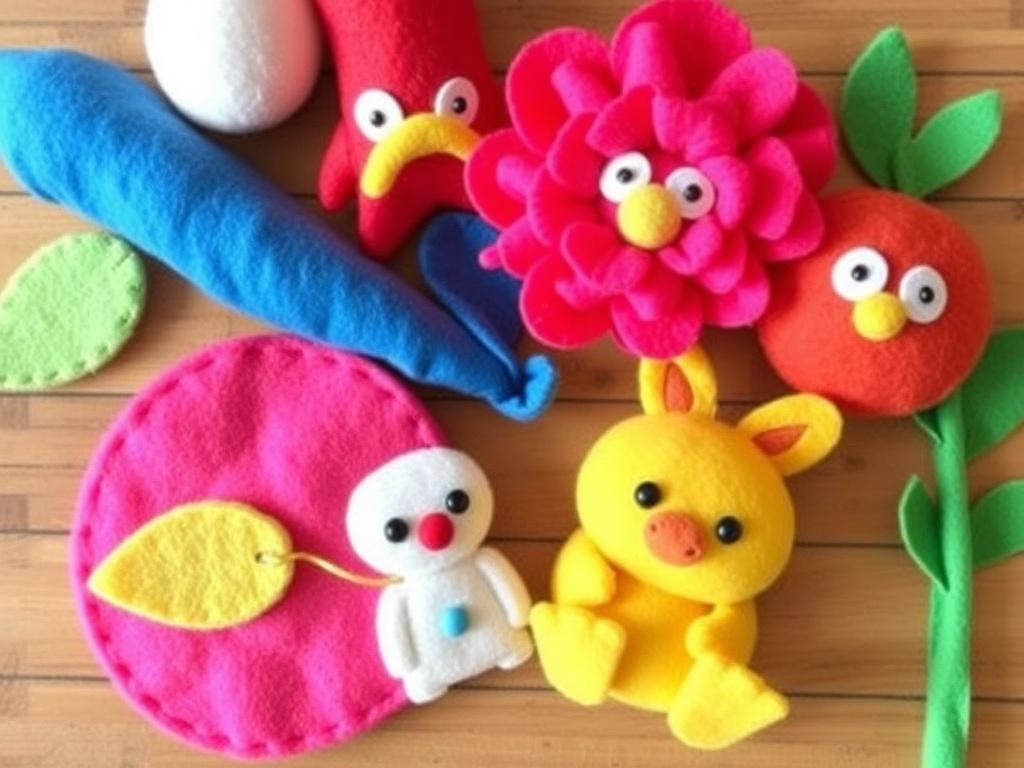
Many craft blogs, library pattern books, and community centers offer free templates for animals, food, and quiet-book pages. Start with simple outlines and let kids modify them — adding a hat, changing the color, or altering proportions leads to more original creations.
Pinterest and Instagram are full of visual ideas, but I recommend choosing a handful of reliable tutorial sources and testing one pattern before launching a larger project. This reduces digital overwhelm and gives you a sense of what works in practice.
Project timeline examples: fitting crafts into real life
Not every session needs to be a multi-hour affair. Here are a few realistic timelines to help you plan based on available time and attention spans.
- 15–20 minutes: Finger puppet or bookmark — quick cut, glue, and decorate for instant satisfaction.
- 45–60 minutes: Felt food set — cut pieces, glue layers, and sew one or two seams for a complete set.
- 2–4 sessions (20–45 minutes each): Quiet-book page or plushie — plan, cut, assemble, and add interactive elements across multiple days.
Breaking projects into chunks is especially useful for long-term engagement. Kids return excited to add the next piece, and you avoid a marathon session that wears everyone out.
Measuring progress and celebrating skills learned
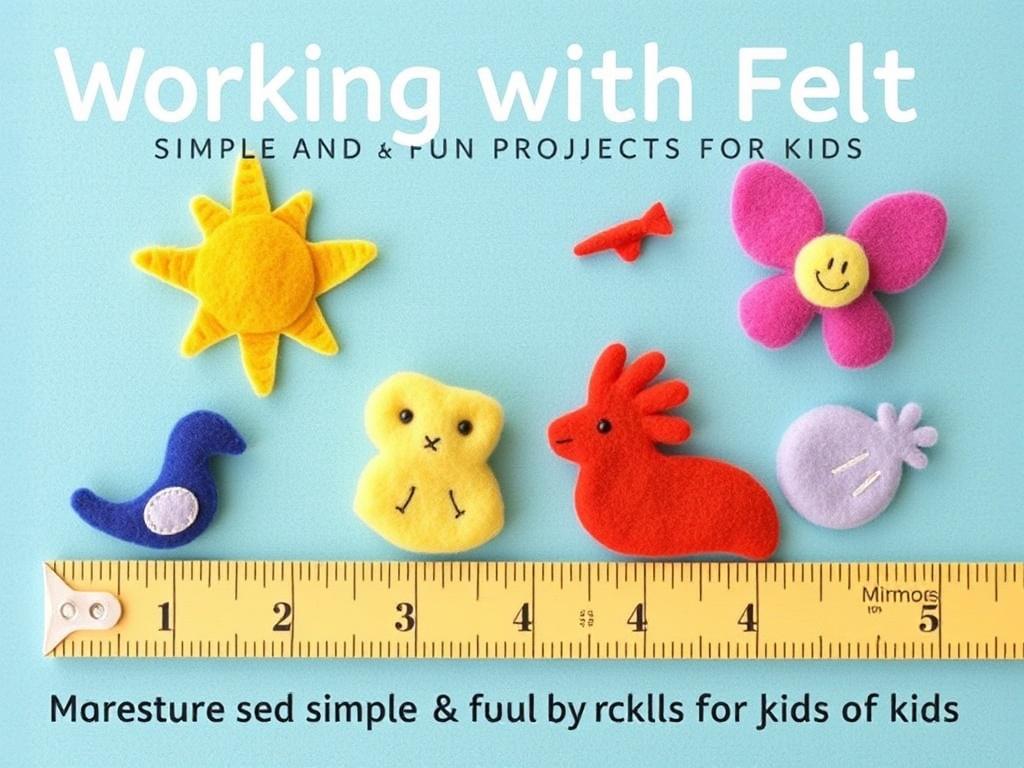
Felt projects offer concrete ways to see improvement. Track milestones like cutting a smooth curve, tying a secure knot, or completing a blanket stitch row. Celebrate these moments — a small sticker or a display area gives children visible recognition.
Documenting work with photos creates a record that shows skill progression over months and years. Kids enjoy flipping back through past projects and seeing how much neater their stitches or more confident their designs have become.
Ideas for gifting and selling kid-made felt items
Handmade felt items make thoughtful gifts for family members and can be packaged beautifully with recycled materials. For older children interested in entrepreneurship, simple felt ornaments or pins can be sold at school craft fairs under adult supervision.
Teach children how to price materials and labor fairly and how to present their items attractively. This experience introduces budgeting, customer interaction, and pride in making a product from start to finish.
Final encouragement and next steps
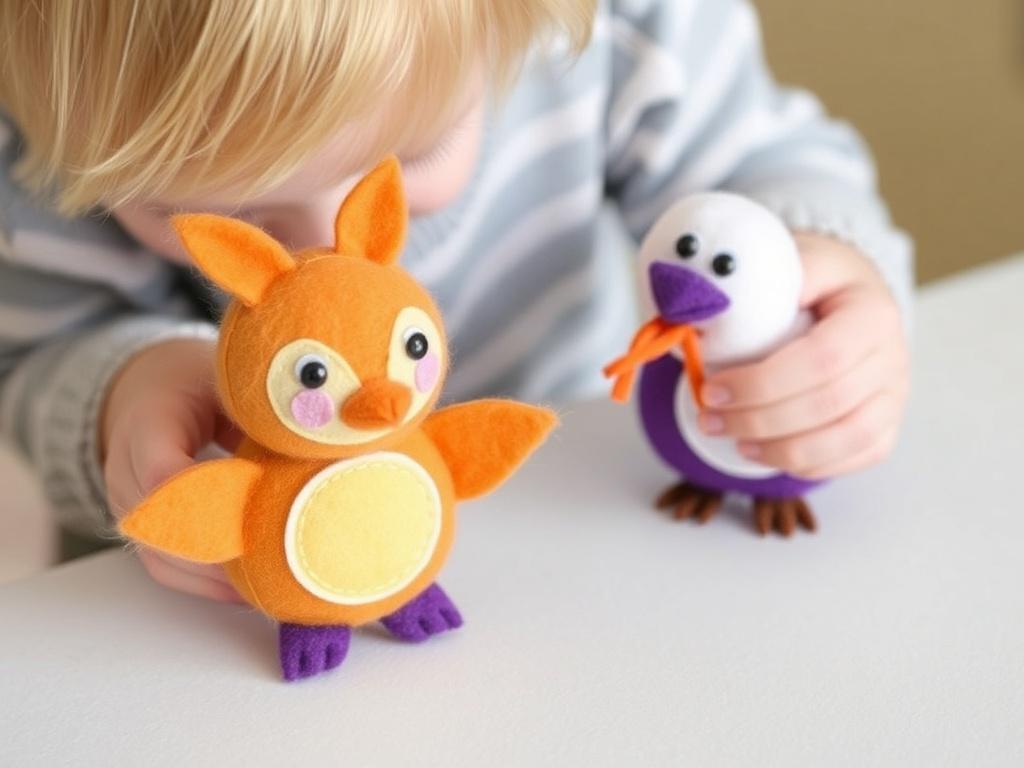
Felt is one of those materials that rewards trying. It’s inexpensive, low-mess, and flexible enough to suit a toddler’s glued collage or a tween’s embroidered portrait. Start small, build skills incrementally, and let the child’s curiosity steer the projects.
Gather a modest set of supplies, choose one project from this guide, and block a short window of time. You’ll be surprised how much imaginative play and skill-building can come from a few sheets of felt and a patient, encouraging voice beside a tiny maker’s chair.
When you’re ready for more, cycle through the projects here, adjust difficulty, and introduce a new technique. Felt keeps giving — and the crafts children make will become sweet tokens of time spent inventing and learning together.