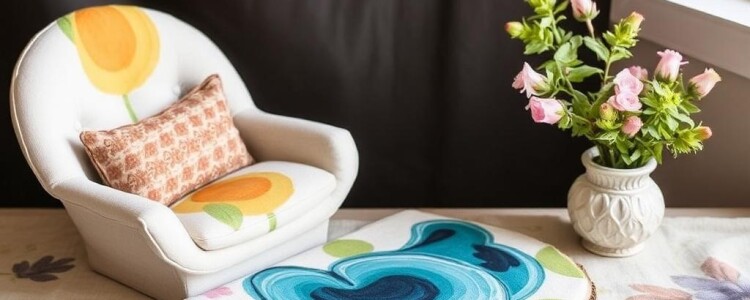
There’s a particular thrill in turning plain fabric into an object that feels uniquely yours, and painting textiles is one of the quickest, most rewarding ways to do that.
This article walks through practical methods, material choices, and creative approaches so you can refresh pillows, curtains, upholstery, and more with confidence and style.
Why paint fabric? The appeal and possibilities
Painting fabric lets you control color, pattern, and scale in ways store-bought textiles rarely do. You can match a color from a favorite piece of art, scale a motif to fit a large sofa, or repeat a small pattern across napkins and table runners.
Beyond aesthetics, painted details can mend or disguise wear, transform off-the-shelf items into bespoke pieces, and extend the life of fabrics you already own. The techniques range from quick, decorative touches to full-scale surface design, so the time and cost investment is flexible.
Because fabric responds differently than paper or wood, learning how paint behaves on fibers will improve results quickly. Skill grows fast: with a few projects under your belt you’ll be able to visualize a design, choose the right medium, and execute with fewer mistakes.
Essential supplies and how to choose them
Start with a basic kit that grows as your ambitions broaden. Key items include fabric paints or textile inks, a selection of brushes, an apron and gloves, masking supplies, sponges, and something to stretch the fabric over like an embroidery hoop or a wood frame.
Not all paints are created equal for textiles. Fabric paints are formulated to remain flexible after drying and to bond to fibers; acrylics need a textile medium mixed in, and dyes penetrate fibers rather than sit on the surface. Choose based on the project’s texture and how the piece will be used and laundered.
Quality tools make a difference. Invest in a few dependable brushes (round, flat, and liner), foam brushes for large areas, and a small palette or tray for mixing. For printing and repeat patterns, stencils, stamps, or screens become essential—buy or make tools that suit the scale and detail of your design.
| Paint type | Best for | Pros | Cons |
|---|---|---|---|
| Fabric paint | Pillows, clothes, curtains | Flexible, washable, many finishes | Can be pricier than acrylics |
| Acrylic + textile medium | Cost-effective home projects | Wide color range, easy to mix | Needs correct ratio and heat-setting |
| Fiber reactive dye | Vibrant, permanent color on natural fibers | Excellent wash-fastness | Requires precise chemistry and often heat |
| Textile ink | Screen printing, crisp designs | Thin, smooth, professional finish | May require curing and screens |
Preparing fabric and workspace
Preparation is often the difference between a nice result and a great one. Always prewash fabrics to remove finishes, sizing, or dirt that prevents paint from bonding. Even brand-new cotton curtains benefit from a rinse; chemicals from manufacturing can repel paint or alter color uptake.
Stretching fabric reduces distortion and makes brushwork and printing more predictable. Use an embroidery hoop for small pieces, clamps and a board for yardage, or staple fabric to a frame for larger items. Keeping the surface taut helps avoid uneven edges and paint pooling.
Protect your workspace with a plastic drop cloth or cardboard, and keep paper towels, a spray bottle of water, and wipes close at hand. If you plan to heat-set paint with an iron, use a heat-safe surface and follow manufacturer instructions to avoid scorching or melting synthetic fibers.
Basic brushwork and color mixing
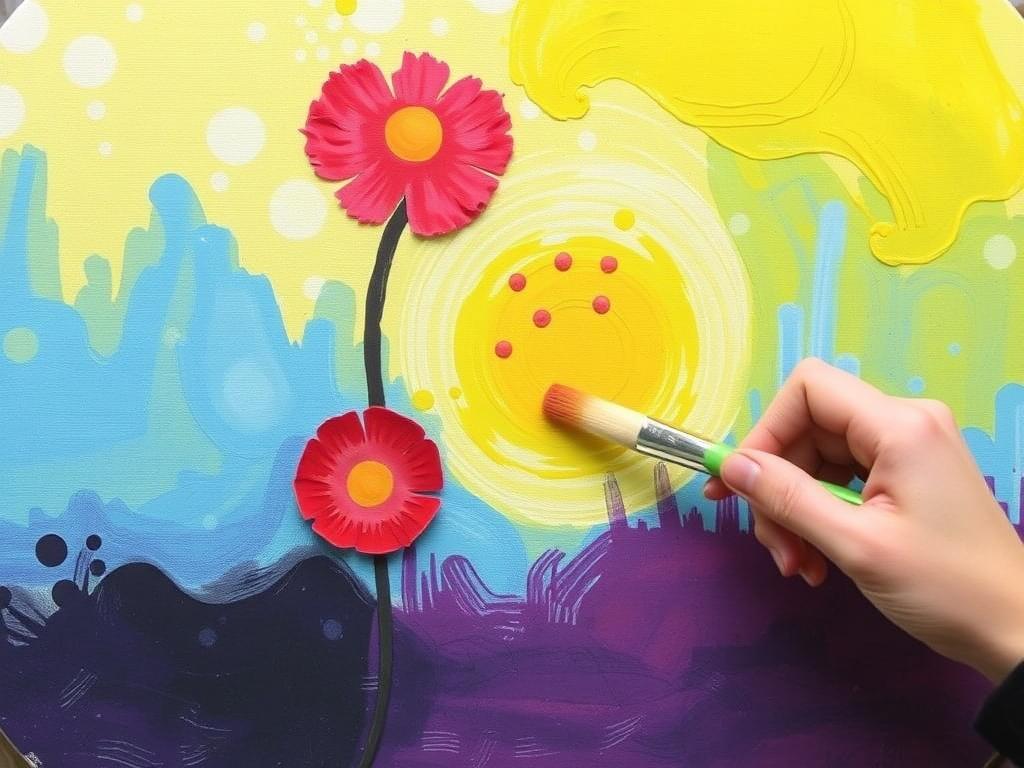
Brush technique determines whether a design looks deliberate or accidental. For smooth fills use flat brushes and long, even strokes; for detail work choose small round or liner brushes and practice consistent pressure for thin lines. Alternate between loaded and dry brushes to create texture.
Color mixing on fabric behaves differently than on paper because the weave affects saturation and value. Mix a slightly lighter shade than you think you need when painting directly onto a white or pale ground, and test colors on a scrap to see how they dry and how much the fabric absorbs.
Layering is your friend: allow a base color to dry before glazing or adding highlights. Thin washes built up in multiple layers produce depth without cracking, whereas single thick applications can remain brittle and flake with use.
Stenciling and masking methods
Stenciling is a fast way to repeat motifs with accuracy. Materials range from store-bought Mylar templates to custom-cut vinyl and freezer paper stencils you can make at home. Each has its advantages for durability, adhesion, and ease of cutting.
Use a pouncing motion with a foam brush or dab with a stipple brush to prevent paint slipping under the edges; spray adhesive works wonders for more intricate designs because it reduces bleeding without leaving residue when used sparingly. Test glues and adhesives on scrap fabric to ensure removability.
Layer multiple stencils to create complex designs and use registration marks to keep repeats aligned. Masking tape and low-tack painters’ tape can block off edges for crisp geometric patterns, while torn paper edges give a softer, handmade look.
Stamping, block printing and found-object printing
Block printing offers an organic, slightly imperfect repeat that reads as artisanal. Linoleum or rubber blocks can be carved with simple tools to produce custom stamps, while pre-made wooden or rubber stamps work well for faster projects.
For found-object printing, look for textured materials—bubble wrap, corrugated cardboard, lace, or carved potatoes. Ink or paint applied with a brayer yields the most consistent impression, but a sponge or foam can be just as effective for one-off prints.
Press evenly and remove the stamp with a straight lift to avoid smudging. For long runs, set up a registration board to align each print, and keep spare fabric to test prints as you move from piece to piece.
Freehand painting and brush techniques
Freehand painting gives the most expressive results and is ideal for large gestures, florals, or illustrative work. Begin with a pencil or washable fabric marker sketch to map composition, then block in large shapes with diluted paint before refining edges and adding detail.
Dry brushing creates texture by loading a brush lightly and sweeping it across the surface, leaving broken strokes that read as fabric grain or wear. Stippling—tapping the brush repeatedly—works well for organic textures like clouds or foliage.
For precise edges use a rigger or liner brush; for washes, a mop brush or wide flat brush covers ground quickly. Remember that a small, consistent amount of paint yields better control over gradation than continuously reloading a brush with heavy paint.
Shibori, tie-dye, and resist methods
Resist techniques rely on blocking dye or paint from parts of the fabric to create pattern. Traditional shibori uses folding, binding, and clamping to produce repeated motifs, and it can be adapted to work with paints by applying paint selectively to exposed areas.
Tie-dye with fabric paint is different from dye baths: when using paints, apply color to folded and bound fabric but anticipate higher opacity near folds and softer gradients outward. For sharper lines, use a resist like wax or gutta before painting.
Batik uses melted wax to prevent dye from penetrating areas you want preserved. Wax applications demand a steady hand and a heated tool or tjanting for controlled lines; the result is a distinct crackle and contrast that’s hard to replicate otherwise.
Screen printing at home
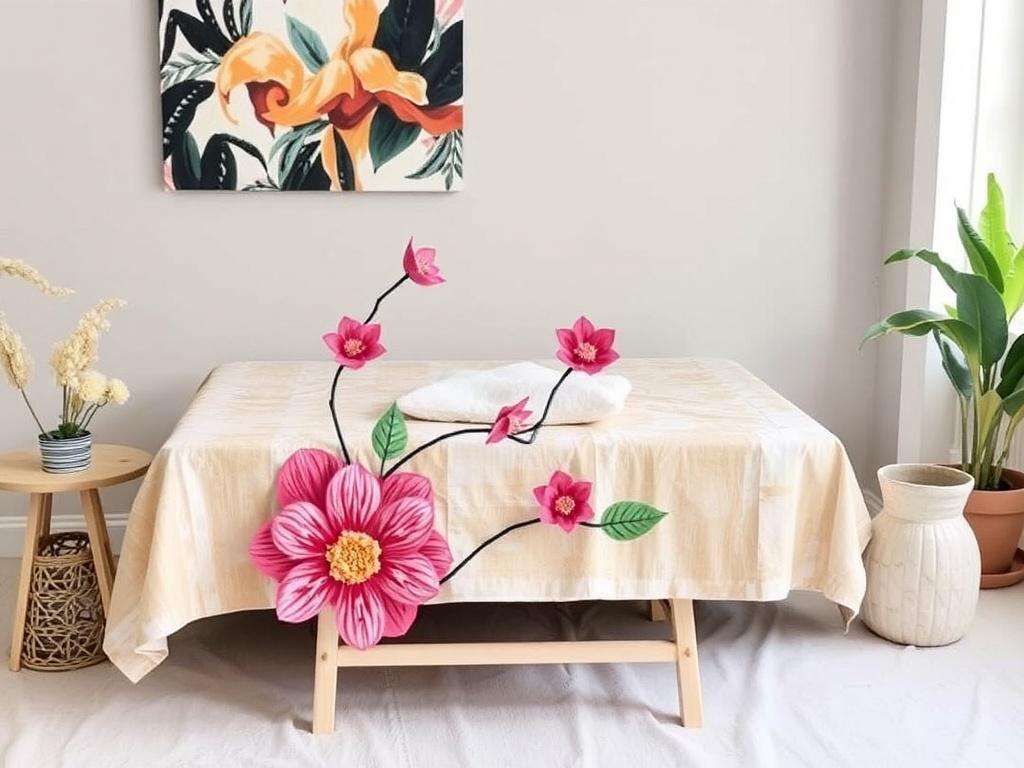
Screen printing gives crisp, repeatable results and is surprisingly accessible at home. A basic setup includes a mesh screen, squeegee, and fabric ink. You can create stencils for the screen using photo emulsion or simply block out areas with tape or paper for simple designs.
When using emulsion, work in low light to coat and expose the screen correctly, then wash out unexposed areas to reveal your stencil. Alternatively, adhesive vinyl stencils applied directly to the mesh make one-color prints quick without the chemistry of emulsion.
Control ink viscosity to avoid bleeding; fabric inks are formulated to sit on the surface and cure flexibly. Practice registration marks for multi-color prints to align layers precisely, and allow adequate drying time between passes to prevent smudging.
Using inks, sprays, and airbrush
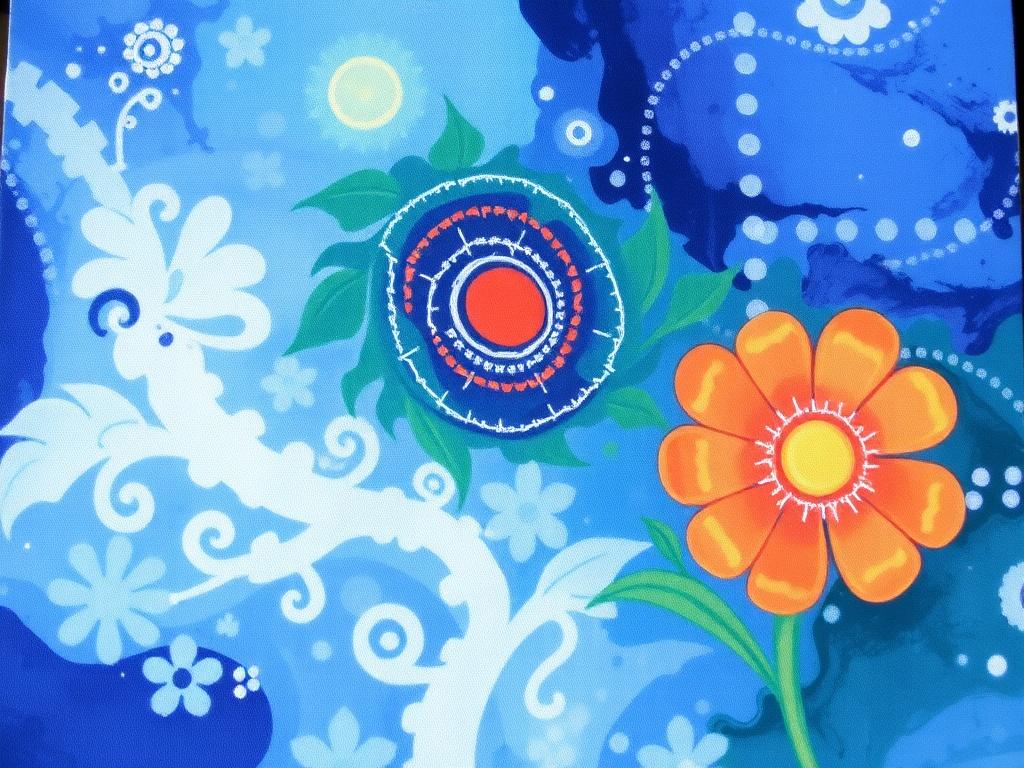
Inks and sprays offer unique finishes that brushes cannot reproduce. Textile inks are extremely thin and can be used for crisp screen prints or delicate wash effects. Aerosol textile sprays and fabric paints are convenient for ombre and large surface coverage but require careful masking.
Airbrushing produces smooth gradients and subtle shading on fabric. It excels at adding depth to painted florals or soft halo effects around stenciled shapes. Work in a well-ventilated area and use low-pressure settings to reduce overspray and splotches.
Test spray patterns and ink absorption on scrap first, especially with synthetic blends that resist penetration. Additives like flow improver or retarder can extend working time and smooth application when using water-based mediums.
Layering, texture, and metallics
Layering colors creates richness and allows you to correct or refine compositions. Begin with thin base layers and build up to thicker highlights, using translucent glazes to alter hue without covering the underlying texture of the fabric.
Textural effects—puff medium, sand additives, or dimensional fabric paint—add tactile interest but change the drape and hand of the fabric. Use these sparingly on items that need to remain soft and flexible, like throw pillow covers.
Metallics and pearlescent paints catch light and make small pieces feel luxurious. For subtlety, anchor them in small accents or borders; for dramatic effect, paint an entire lampshade or a set of napkins. Keep in mind metallics can emphasize the weave, so test how they look up close and from a distance.
Heat setting, washing, and aftercare
Most fabric paints require heat setting to reach full durability. Ironing on the reverse side for several minutes or using a dry heat press typically does the job, but follow the paint manufacturer’s instructions for temperature and time to avoid damage.
After curing, wash painted pieces gently the first few times. Turn items inside out, use cold water, and a mild detergent to reduce abrasion. Air drying preserves color longer, although many painted items tolerate low-heat machine drying once fully set.
Expect some stiffening after paint application; stretching, laundering, and time will soften the hand. For items that need to remain flexible, choose paints marketed as soft-hand or add a textile medium to acrylics to maintain suppleness.
Design ideas room by room
Living rooms respond well to painted accents that introduce pattern without overwhelming the space. Custom-painted throw pillows or a single painted ottoman can anchor a color scheme, and a fabric wall hanging allows you to showcase larger-scale motifs like botanicals or geometrics.
In dining areas, table runners, placemats, and cloth napkins are ideal canvases because they’re small, washable, and replaceable. Resist techniques and block printing lend themselves to repeat patterns that read beautifully at table scale.
For bedrooms, painted headboards on fabric panels or custom duvet covers create a tailored look. Use softer palettes and washed finishes to keep the sleep space calm, and save bold, high-contrast designs for accent pillows or a bench at the foot of the bed.
Bathrooms welcome small painted accessories—fabric shower curtains, makeup bag covers, or framed painted fabric art. Choose mildew-resistant paints and ensure adequate ventilation when painting and drying to prevent issues with damp environments.
Step-by-step project: painted throw pillow
Materials: plain cotton pillow cover, fabric paint, flat brush, stencil or pencil, masking tape, cardboard insert, iron or heat press. Prewash and iron the cover to remove sizing and wrinkles.
- Insert cardboard into the pillow cover to protect the reverse and create a firm painting surface.
- Sketch your design lightly with a pencil or place your stencil and secure with tape or spray adhesive.
- Use a foam brush or flat brush to apply paint in thin layers, dabbing with a stipple motion to avoid seepage under the stencil.
- Allow paint to dry completely, remove the stencil, and touch up edges with a small round brush if needed.
- Heat set on the reverse according to paint instructions, then wash gently before use to remove any dust or residue.
This method makes a single pillow feel custom without spending hours or money on upholstery. Once you’ve mastered a stencil or motif, repeat it across a set for a coordinated look.
Step-by-step project: custom curtains with ombre and stencils
Materials: plain cotton or linen curtains, textile dye or diluted fabric paint, spray bottle or sponge, large flat brush, stencils, masking tape, clothesline for hanging to dry. Prewash and iron curtains to remove finishes.
- Hang the curtain vertically and decide where the ombre should start and end; lightly mark with clips or pins.
- Mix a dilute paint or dye bath for the gradient and apply at the hem, working upward with a sponge or large brush to feather the color into the lighter area.
- Allow the ombre to dry slightly, then add additional passes for intensity toward the bottom, always working from wet into wet for smooth blending.
- Apply stencils to the dry upper area of the curtain and pounce paint into place for a contrasting pattern that complements the ombre gradient.
- Once finished, heat set if required, hang to cure fully, and then wash gently before installing rods to avoid drips or stuck pleats.
This hybrid technique creates drama with controlled patterning and soft color transitions suited to tall windows or sliding doors.
Troubleshooting common problems
Bleeding under stencils is the most frequent complaint. Prevent it by using less paint on the brush and dabbing in a perpendicular motion rather than brushing horizontally. Adhesive-backed or temporary spray adhesive stencils minimize seepage compared to loose templates.
Cracking or flaking usually arises from applying paint too thickly or using a non-flexible paint on a frequently handled area. Apply thinner coats, incorporate textile medium with acrylics, and test the painted swatch for flexibility before committing to the whole piece.
Uneven sheen or color shifts can result from inconsistent fabric absorption. Prewash and iron fabric, saturate fibers uniformly when using dyes, and always test on scraps to calibrate your expectations for final appearance after drying and setting.
Safety, sustainability and care tips
Work in a well-ventilated space and consider wearing a mask when using sprays, powdered dyes, or solvents. Read labels for toxicity warnings and dispose of waste responsibly to minimize environmental impact.
Choose water-based, low-VOC fabric paints when possible to reduce fumes and chemical exposure. Natural fibers accept dye and paint more readily and often produce richer, more lasting color than synthetic blends, though modern textile inks can work well on polyester with the right preparation and curing.
Reduce waste by repurposing worn linens, thrifted curtains, or surplus fabric as practice pieces. Smaller scraps are perfect for experimenting with new techniques before committing to a treasured upholstery project.
Author’s real-life projects and lessons learned
I once painted a faded mid-century armchair seat to coordinate with fresh pillows, and the project taught me to respect scale: a motif that read perfectly on a pillow looked overwhelmed on a seat cushion. I learned to enlarge patterns and balance positive and negative space for upholstery work.
On a different occasion I experimented with metallic inks on lampshades; the result was elegant but highlighted every weave imperfection. That taught me to match finish to fabric—metallics look best on smoother weaves, while matte and chalky paints flatter textured linens.
Small practice pieces saved me from several mistakes. I keep a sketchbook of swatches and formulas—how much water or medium I used, what heat-setting time worked, and how the fabric softened after laundering. Those notes make each new project faster and more predictable.
Resources, learning and inspiration
Workshops at local community centers and fabric stores are terrific for hands-on learning, while online forums and social media communities offer step-by-step videos and pattern ideas. Look for classes that let you try screen printing and dyeing with instructor oversight before investing in equipment.
Books on textile surface design, printmaking, and dyeing offer techniques and historical context that can spark fresh ideas. Museums and vintage textiles are rich sources for motifs and color combinations that translate well to modern interiors.
Keep a library of sources—artists you admire, color palettes you want to emulate, and quick photo references. When you see a strong combination in a café or shop, take a picture; translating a real-world palette to fabric paint often yields better results than relying on imagination alone.
Painting fabric for the home is a practical, creative habit more than a one-off craft: each small experiment teaches scale, color, and technique that scale up to larger projects. With a modest toolkit, thoughtful preparation, and a few swatches, you can transform everyday textiles into objects that reflect your taste and tell a story around your living spaces.
Try one simple project this weekend—paint a pillow, stencil a runner, or blend an ombre curtain—then note what you like and what you’d change next time. The next piece will be easier, and the room will feel better for it.