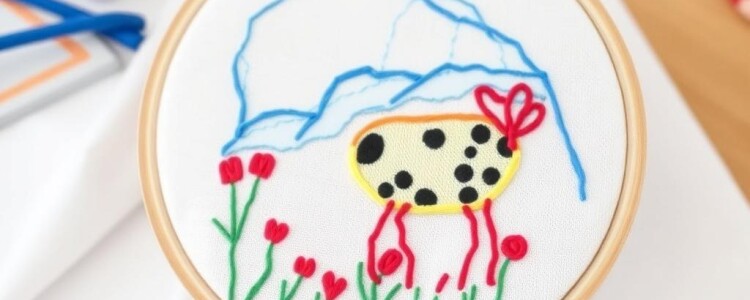
Every scribble, sun, and lopsided smile your child pins to the fridge carries a moment that will never repeat. Turning children’s art into embroidered keepsakes offers a way to honor those moments with texture and time-tested craft. This article walks through the why and how in careful, practical steps so you can move from a crayon drawing to an object that feels deliberate, loved, and lasting.
Why embroidery makes children’s drawings worth preserving
Paper fades, crayons smear, and piles of drawings accumulate faster than you can sort them. Embroidery transforms a two-dimensional doodle into something tactile and durable, lending permanence to fleeting creativity. A stitched line resists time: threads can be rehung, washed carefully, and handed down, while the artifact carries not just image but the evidence of care.
Beyond durability, embroidery adds a new layer of authorship. You or a maker interpret the original marks—the density of a line, the choice of color—so the piece becomes a collaboration between child and crafter. That collaborative act often deepens the emotional value for parents and kids alike.
Finally, embroidered keepsakes are versatile. Small hoops sit on shelves, pillows live on couches, and quilted panels become story-rich bedding. Each format invites different interactions; a framed hoop sits in a hallway and a pillow becomes part of daily life. That flexibility helps ensure the art moves from storage into living memory.
Choosing the right artwork to stitch
Not every drawing translates equally well to thread. Look for bold, clear lines and strong, distinct shapes—these read best when simplified for stitching. A scribble can be charming, but if the lines overlap too densely or the image relies on nuanced shading, consider simplifying or tracing a dominant motif.
Color use matters, too. If a drawing features a vivid palette, you can either match thread colors closely or reduce the palette for a cleaner, more modern look. Sometimes a single-color embroidered line on neutral fabric amplifies the original character better than attempting an exact, multicolor replica.
When in doubt, pick pieces with emotional resonance rather than technical perfection. A shaky drawing of Grandma that your child signed with great pride will be more treasured than a visually flawless landscape you rescued from the recycling bin. The story behind the art is as important as the art itself.
Preparing artwork for embroidery
Preparation begins with a high-quality photograph or scan of the original. Natural, even lighting and a flat, glare-free surface produce the cleanest image. If the original is crinkled, smooth it under a heavy book for a few hours before photographing to avoid distorted lines.
Once you have a digital copy, simplify the image. Use tracing paper, a lightbox, or a basic graphics editor to reduce noise, select the main lines, and remove background marks that won’t translate to stitches. Simplifying early saves hours of tedium during stitching and preserves the drawing’s essential character.
Decide on scale at this stage. Enlarging a small doodle too much can reveal imperfections, while shrinking a large drawing can obscure detail. Measure the intended final surface—hoop size, pillow panel, or quilt block—and scale the traced design to fit comfortably with a margin for seam allowances or framing.
Hand embroidery techniques that honor childlike lines
Hand stitching gives a human touch that echoes the original drawing’s spontaneity. Certain stitches replicate the look of a marker or crayon particularly well: backstitch for continuous lines, running stitch for delicate, intermittent marks, and satin stitch to fill small solid shapes. Use uneven stitch lengths purposely to mimic a child’s unsteady hand.
Experiment with thread weights and types. Two strands of cotton floss yield a modest, sketch-like line, while heavier perle cotton creates bolder outlines. Metallic or silk threads add shine but can overpower naive charm; reserve them for accents like a sun’s rays or a sparkling eye. Choosing thread is a form of translation: decide whether to stay literal or to interpret.
Consider texture as language. French knots can represent dots, freckles, or flower centers precisely, while a whipped backstitch softens edges and adds depth. Layering stitches—backstitch for the outline, a loose filling stitch inside—gives a lively, dimensional result that honors the original scribble without becoming rigid.
Stitching for emotion: letting the drawing breathe
Resist the urge to overwork every inch. A child’s drawing feels alive because of negative space and confident, imperfect marks. When stitching, allow blank fabric to play a role; it will make the stitches pop and keep the piece from feeling overwrought. This restraint often requires deliberate un-embroidering, which is a skill in itself.
Follow the natural rhythm of the drawing. If your child used quick, arresting strokes, mirror that speed in your stitches with slightly longer, less precise lines. Conversely, gentle, careful drawings benefit from shorter, tighter stitches. Matching rhythm preserves the original tempo that made the image special.
A small anecdote: I once embroidered my daughter’s stick-figure family and intentionally left one figure slightly off-center because that’s how she drew them. The asymmetry felt true and made the piece more meaningful at home than anything symmetrical would have.
Machine embroidery and digitizing children’s art
Machine embroidery is powerful when reproducing many items or when you need crisp, repeatable results. Digitizing software converts a bitmap of the drawing into stitch commands, but the automated process rarely gets the childlike nuance right without intervention. Expect to tweak underlays, stitch density, and satin widths to maintain the drawing’s personality.
Work with a skilled digitizer or learn basic digitizing principles: simplify shapes, convert fine lines to single- or double-run stitches, and use fill patterns sparingly. For frail-looking lines, convert them to narrow satin stitches or single-line running stitches if the machine supports them. The goal is to retain the freehand feel, not to standardize the drawing into an industrial logo.
Machine embroidery shines for projects like a dozen personalized totes or a series of ornaments. If you plan a single cherished object—a hoop piece or heirloom quilt block—hand embroidery often captures warmth and variation better than a commercial digitized file.
When to choose hand vs. machine: a quick comparison
Both methods have virtues and limitations. Handwork offers irregularities and human warmth, while machine work provides speed and precision. Consider the intended function, quantity, and the kind of finish you want.
| Feature | Hand embroidery | Machine embroidery |
|---|---|---|
| Finish | Organic, textured, variable | Uniform, clean, sharp |
| Time | Slower, meditative | Faster, efficient for multiples |
| Best for | Single keepsakes, heirlooms | Gifts in quantity, items needing durability |
Use this table as a starting guide; specific tools and skill levels will alter the balance. Your preference for texture versus precision should determine the method more than assumptions about difficulty.
Tools, fabrics, and threads: a practical shopping list
Gather a simple toolkit before you begin: embroidery hoop, needles in multiple sizes, scissors with a sharp point, and an array of threads. Include a mechanical pencil or erasable fabric marker for transferring lines and a small seam ripper for corrections. A good light and magnifier make long sessions easier on the eyes.
Fabric choice affects how the stitches read. Cotton, linen, and even-weave fabrics are traditional choices because they hold stitches well and photograph nicely. For a child’s bold drawing, a medium-weight linen gives a nice tactile base that sits well in a hoop. For pillows or quilts, pre-wash your fabric to prevent later shrinkage and puckering.
Select thread types thoughtfully. Six-strand cotton floss is versatile and color-rich; dividing strands controls line weight. Perle cotton resists fraying and gives a cleaner, bolder line. If you expect frequent washing—say, a baby blanket—use polyester embroidery thread for strength and colorfastness.
Transferring the design to fabric
There are several reliable ways to move a traced design onto fabric: tracing with a lightbox, using transfer paper, printing directly onto water-soluble stabilizer, or drawing freehand with a washable marker. Each method has trade-offs in permanence and visual fidelity, so choose according to your project’s needs.
For delicate lines, I like using water-soluble stabilizer printed with the traced image. It sits on the fabric, guides stitches precisely, and dissolves away in water afterward, leaving only thread. This approach eliminates visible pencil marks and is especially handy for slick fabrics where markers don’t behave.
If you prefer a looser, more playful outcome, trace the design directly onto fabric with a lightbox and a removable fabric pen. This method encourages small corrections and lets you embrace imperfection. Remember to test any transfer method on a scrap piece to ensure removal and visibility behave as expected.
Scaling and compositional choices
How large should the final piece be? Let the intended display determine scale. A 4-inch ornament benefits from simplified shapes and larger stitches, while a 10-inch hoop can capture more detail. Always leave margins for framing or seams and consider negative space as part of the composition.
Composition also covers how multiple drawings are combined. A quilt allows many drawings to coexist, but ensure each panel has breathing room or a unifying border. For group portraits or collages, reduce each drawing to its strongest element so the overall design reads clearly at a glance.
When combining art from siblings or multiple ages, balance the weight of lines and colors. Group similar palettes together or introduce a neutral framing color to harmonize disparate styles. Thoughtful composition turns assorted sketches into a cohesive piece instead of a cluttered archive.
Color matching and creative reinterpretation
Exact color matching can be satisfying but isn’t required. Threads rarely match crayons perfectly, and that mismatch can be a creative opportunity. Choosing complementary or tonal threads can elevate a naive drawing into a sophisticated keepsake. Think of color as mood; warm thread hues can make a drawing feel cozy, while bright neons emphasize playfulness.
If you aim to match precisely, bring the original drawing to a craft store or order thread swatches online. Natural light provides the truest sense of color—avoid judging hues under warm indoor bulbs. Keep a record of thread brand and number for future repairs or matching projects.
Alternatively, use limited palettes to achieve a polished result. Restricting the design to three or four thread colors often improves readability and gives the piece visual unity. This approach works especially well for items meant to be displayed among home textiles.
A detailed step-by-step project: from crayon drawing to embroidered pillow
Below is a project blueprint you can follow at home to make a small pillow featuring a child’s drawing. It assumes basic hand-embroidery skills and a straightforward sewing machine finish. The steps are deliberately paced so a beginner can follow without feeling rushed.
- Choose a drawing and photograph or scan it for a clean image.
- Trace or simplify the image to emphasize main lines and shapes; scale to a 7-inch finished panel.
- Print the traced version onto water-soluble stabilizer or trace onto fabric using a lightbox.
- Hoop the fabric with medium tension and begin outlining with backstitch or running stitch, matching thread weight to desired line thickness.
- Fill any solid areas with satin or long-and-short stitch as needed, leaving negative space intentionally.
- Once stitching is complete, rinse away stabilizer if used, then press gently from the back with a cloth over the stitches.
- Sew the pillow panel to a backing fabric with a 1/2-inch seam allowance, leaving an opening for stuffing or insert.
- Insert a removable form or stuffing, hand-stitch the opening closed, and pin or hang happily.
Each step offers room for personalization: use a vintage fabric for the backing, add piping in a matching color, or embroider a date and child’s name on the reverse. These small details convert a stitched drawing into a family heirloom.
In my own experience, this project took about six to eight hours from start to finish for a simple design—most of that time was stitching. Breaking the work into evening sessions made it manageable and joyful rather than overwhelming.
Finishing techniques: hoops, frames, and functional items
Presentation matters. An embroidery hoop is an immediate, intimate way to display a drawing; the wooden rim suggests craft and domestic warmth. Paint or stain the hoop to match your decor, but avoid heavy finishes that can off-gas delicate threads. Another option is to mount the embroidered piece behind glass for long-term protection.
Pillows and quilts invite touch and daily use, but they require sturdy finishing: reinforced seams, strong thread, and the right backing fabric. For frequently handled items, consider machine-stitching seams and using polyester-filled cushions for resilience. Quilting multiple embroidered blocks ties the narrative together while providing structural support.
Smaller keepsakes—pins, ornaments, and patches—make excellent gifts. Back an embroidered patch with felt and add a snap or loop for easy display. Whatever format you choose, think through how the item will be used and select materials that match that use to avoid surprises down the road.
Care and conservation for embroidered keepsakes
Proper care preserves color and fiber integrity. Store textile keepsakes away from direct sunlight to prevent fading and avoid humid basements that encourage mold. Clean gently: spot-treat with a mild detergent or hand-wash when necessary, and always air-dry flat to avoid distortion.
For pieces containing delicate or non-colorfast threads, test a hidden area before washing and consider professional textile cleaning for heirloom quilts. When framing behind glass, use UV-filtering glass and an acid-free mount to protect both fabric and thread from chemical degradation.
Document care instructions with the item; future family members will appreciate knowing how to maintain the piece. A small sewn-in tag listing the year, child’s name, and cleaning notes adds provenance and practical guidance.
Gifting, selling, and sharing—ethical considerations
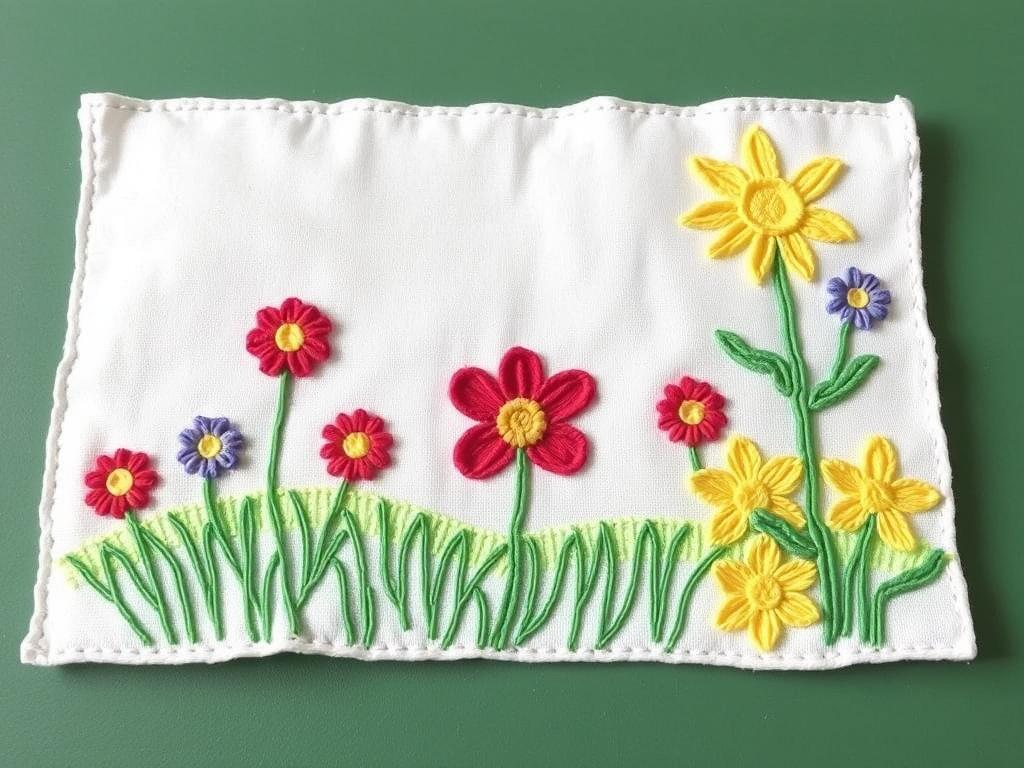
Turning a child’s art into objects for sale or public display raises questions worth addressing. If you plan to sell embroidered versions of your child’s work, consider the child’s privacy and emotional comfort. Some children are delighted by the attention; others may feel exposed. Ask permission when appropriate and keep the child’s dignity front and center.
When gifting to family members, include a small note about the date and occasion. A handwritten caption—“Emma, age 4—Grandpa’s house”—adds narrative weight and becomes part of the keepsake’s story. Gifts that explain the origin of the art are more likely to be cherished rather than boxed away.
If you plan to publicly exhibit or market embroidered pieces inspired by children’s art—whether your own child’s or submissions from others—obtain consent and clarify copyright expectations. Respectful collaboration protects relationships and preserves the emotional honesty that makes the pieces special.
Teaching kids to embroider their own art
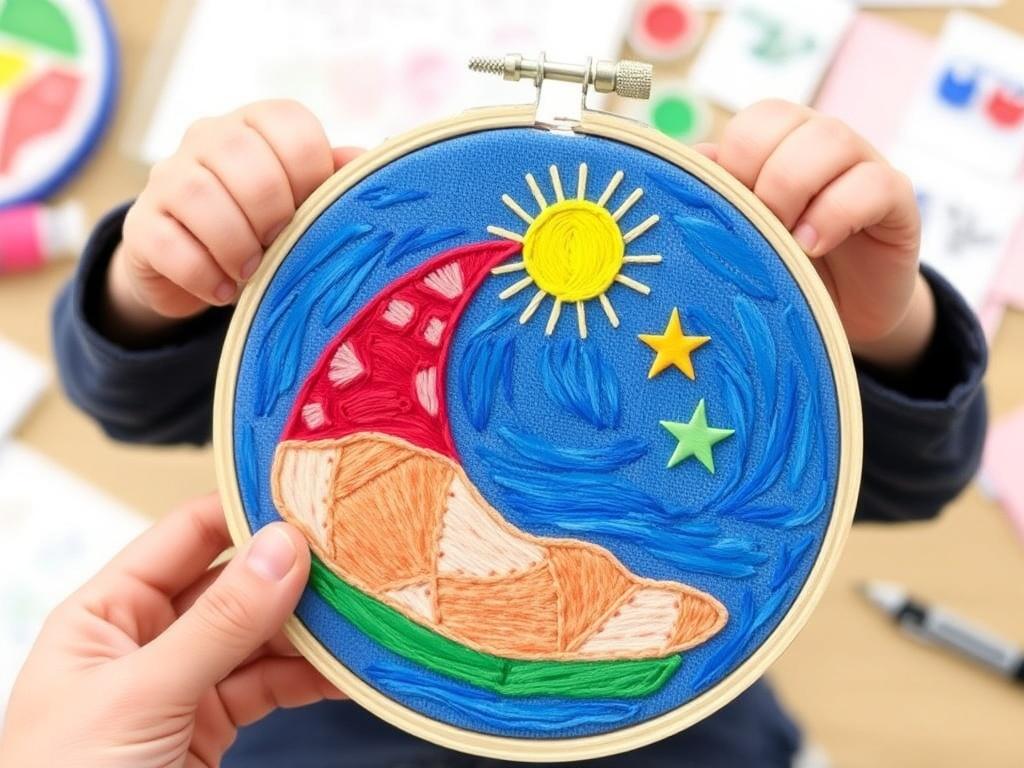
Involving children in the embroidery process deepens their connection to the finished object and teaches patience and fine motor skills. Start with simple exercises: large running stitches on burlap or felt let small hands see instant progress. Use blunt-tipped needles and child-safe scissors for safety and confidence.
Choose projects suited to age and attention span. Younger children enjoy single-line tracings or adding a few stitches to a pre-embroidered outline, while older kids can learn backstitch, chain stitch, and basic satin fill. Celebrate the attempt more than uniformity; a slightly crooked stitch often becomes part of the story.
Teaching also creates new artifacts. A stitched self-portrait done entirely by a child becomes a different kind of keepsake—one that carries the direct imprint of the child’s developing skills rather than an adult’s interpretation. These pieces make vivid time capsules for family memory.
Working with professionals and online services
If you prefer outsourcing, many small businesses specialize in transforming children’s drawings into embroidery. Look for makers with clear portfolios and client reviews that show sensitivity to the original art. Request examples of similar projects and ask about materials, turnaround time, and revisions.
When sending originals, package them flat and protect from moisture. Provide a brief note about which elements matter most to you—color, proportion, signature details—so the maker can prioritize those features. Clear communication reduces the need for costly reworks and ensures the finished piece reflects your priorities.
Pricing varies widely based on size, complexity, and whether the work is hand-stitched or machine-produced. Expect custom hand embroidery to command higher prices due to labor intensity. Decide in advance what you value most—authenticity, speed, price—and choose a maker accordingly.
Common mistakes and troubleshooting
Even experienced stitchers encounter pitfalls. Puckered fabric, disproportionate scaling, and lost detail are common issues when translating art to fabric. Prevent puckering by properly tensioning the hoop, using stabilizer for fragile fabrics, and avoiding overly dense stitches in small areas.
If detail disappears after stitching, consider a redo at a larger scale or reinterpreting small elements as simple accents—dots, knots, or beads. Be willing to edit the design; sometimes losing a little literal detail enhances the emotional honesty of the piece. Remember that embroidered art doesn’t have to be photorealistic to be authentic.
When color shifts unexpectedly after washing, it usually signals that threads weren’t colorfast. Test threads before committing to a project and pre-wash any fabrics or trims to avoid later surprises. Keeping extra thread from the original run helps with future repairs or matching.
Documenting and storing originals alongside keepsakes
It’s wise to preserve original paper drawings even if you’ve created an embroidered version. Originals retain the spontaneous texture of crayon and marker and can be archived flat in acid-free sleeves. Photograph each piece at the time of digitizing so you have both a high-quality digital record and the textile object.
Label everything with date, child’s name, and any story relating to the drawing. These small metadata notes become invaluable for future reminiscence and can increase the sentimental value of the item. Store both originals and textiles in a cool, dark, and dry place to prolong their life.
For large collections, consider a digital catalog with thumbnails, dates, and short descriptions. It makes choosing pieces for embroidery or display easier and prevents duplicates. A modest spreadsheet with a photo column goes a long way toward organizing a family’s creative archive.
Creative variations: beyond single-figure reproductions
There’s no rule that embroidered keepsakes must be literal translations. Consider stitching patterns inspired by a child’s color choices, converting multiple drawings into a repeating motif for fabric, or abstracting textures into quilted blocks. These variations allow the original spirit to live in new formats.
Try creating installed art by embroidering a series of panels that tell a visual story—each panel a different age or theme. Arrange them chronologically to watch a child’s visual language evolve. Such works become living exhibitions you can rotate through your home.
Another creative route is to pair embroidered elements with photography or journaling. Stitch a small motif onto a photo matte or alongside a handwritten note. These mixed-media keepsakes merge image, text, and touch into a rich, multi-sensory memory object.
Time, cost, and planning for your project
Plan realistically. A small hoop can take anywhere from two to ten hours depending on detail, while a quilt made of multiple embroidered blocks may take months. Schedule segments—transfer one evening, stitch over several weekends—to keep momentum without fatigue. Time invested influences the intimacy of the final product.
Cost varies by materials, whether work is hand-stitched or machine-made, and if you hire a professional. For a DIY hand-stitched pillow, budget for fabric ($5–$20), thread ($2–$8 per skein), and stabilizers ($5–$10). Commissioned pieces will cost more for labor; a small custom hoop can range from $60 to several hundred dollars depending on complexity and the maker’s reputation.
Get quotes if you plan to commission work and ask about expected turnaround times, especially before holidays or gift-giving seasons. Planning ahead reduces stress and ensures the keepsake arrives when you need it.
Stories that stick: real-life examples of embroidered keepsakes
I once helped a friend translate a toddler’s chaotic crayon rocket into a stitched mobile for a nursery. Instead of reproducing every crayon mark, we isolated the rocket silhouette and echoed the original scribbles with scattered running stitches to suggest motion. The result felt faithful to the playfulness while being tidy enough for a baby space.
Another family commissioned a quilt of twelve embroidered panels—one for each month of their child’s first year. Each panel featured a single drawing representing a milestone. The quilt now travels with the child and becomes a portable timeline of growth and exploration, stitched in cotton and memory.
These projects show how thoughtful adaptation—rather than slavish copying—often yields the most meaningful results. The aim is emotional fidelity: preserving the feeling behind the art rather than producing an exact replica of the lines on paper.
Resources and next steps
Begin with one small project to build confidence: a hoop, a simple drawing, and a weekend of stitching will teach more than hours of planning. Local stitch groups, community centers, and online tutorials offer supportive environments to learn stitches and get feedback. Don’t underestimate the value of community knowledge when you first start.
If you prefer professional help, search for makers who specialize in custom embroidery of children’s art. Request portfolios and talk about preservation methods. A good maker will ask about the story behind the drawing and suggest materials and formats suited to your lifestyle and display goals.
Finally, keep a sense of play. The best embroidered keepsakes retain the spontaneity and joy of the original drawing. Approach the work with curiosity and care, and you’ll create an object that feels alive, useful, and quietly profound.
Turning children’s art into embroidered keepsakes is both craft and storytelling. Each stitched line holds an afternoon in a child’s life, and each finished item becomes a way to touch that afternoon years later. Start small, be intentional, and let the art lead you—sometimes the most meaningful keepsakes are the ones that allowed the drawing to breathe rather than trying to own every tiny detail.