There is a particular kind of satisfaction that comes from stitching fabric around a small paper template and watching dozens of little shapes click together into a larger design. That satisfaction is exactly what draws people to English paper piecing, a hands-on technique that blends precision with the pleasure of slow, portable work. If you want a quilting method that rewards patience and offers endless creative possibilities, this approach is worth a closer look.
what is English paper piecing?
English paper piecing (EPP) is a hand-sewing method where fabric is temporarily basted around lightweight paper templates, then the fabric-covered templates are whipstitched together along their edges. The papers serve as precise guides, ensuring consistent shapes and crisp seams that are difficult to achieve by freehand cutting or machine piecing.
The technique dates back centuries and has roots across Europe and America, but its modern revival owes a lot to quilters who appreciated its portability and precision. While often associated with hexagons and traditional motifs like Grandmother’s Flower Garden, EPP works with many shapes—diamonds, triangles, tumblers, and more—opening the door to both historical patterns and contemporary designs.
why quilters are drawn to this method
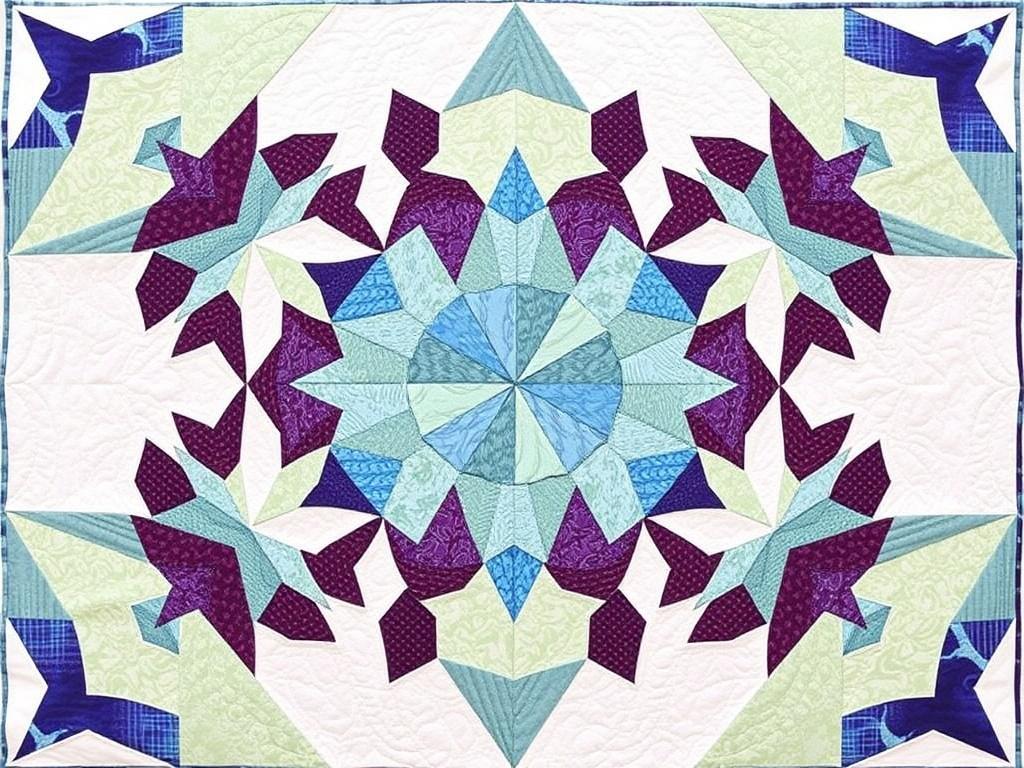
At a basic level, EPP solves a common problem: how to make perfectly matched shapes without constant trimming and re-cutting. The paper holds the fabric in the exact shape needed, so once you stitch, your seams and points are more predictable. That predictability is a huge draw for stitchers who love precision.
Beyond accuracy, the method is wonderfully portable. Everything you need can fit into a small bag: templates, fabric pieces, a needle, and some thread. For people who commute, travel, or enjoy stitching in relaxed settings, EPP turns otherwise idle time into productive, creative moments.
essential tools and materials

You don’t need a basement full of gadgets to get started, but a handful of specialized items will make a world of difference. A small, well-chosen kit provides the control and comfort that let the technique shine.
At minimum, gather: paper templates (pre-cut or homemade), sharp fabric scissors or a rotary cutter for cutting fabric slightly larger than the templates, fine needles (betweens or sharps), cotton thread (single strand or doubled, depending on preference), and a basting method (thread or low-tack glue).
recommended supply checklist
- Paper templates: store-bought cardstock or freezer paper works well.
- Needles: size 8–10 sharps or milliners are popular for EPP.
- Thread: cotton or polyester; many prefer light-colored thread to avoid showing on seams.
- Glue stick or thread for basting: choose what feels fastest and most secure to you.
- Small scissors and a seam ripper: for snipping threads and correcting small mistakes.
- Fabric scraps: pre-wash if needed, cut roughly to leave a 1/4″–3/8″ seam allowance beyond the template.
choosing templates and shapes
Start with straightforward shapes. Hexagons are the classic entry point because they tessellate naturally and teach seam-matching without too much corner wrestling. Diamonds and equilateral triangles follow closely and help you understand how points meet in different orientations.
When you’re ready for variety, explore irregular shapes like lozenges, stars, or curved pieces for kaleidoscopic effects. The beauty of EPP is that shapes can be combined in countless ways—two or three template sizes can produce rich patterns, and mixing scales gives quilts visual depth.
basic techniques, step by step
Learning the core techniques—basting, whipstitching, and joining—will let you complete simple motifs and then expand into larger projects. Break each step into a few deliberate actions, and the process becomes rhythmic and almost meditative.
First, cut fabric roughly 1/4″ to 3/8″ larger than your paper template. Fold the fabric edges over the paper and secure the folds with your chosen basting method. Finally, whipstitch adjacent fabric edges together by sewing through the folded fabric, catching only a thread or two so the seam is neat and nearly invisible.
thread basting vs. glue basting
Thread basting is the traditional route: use long running stitches to gather the fabric around the paper, pulling evenly until flat and smooth. This method gives a secure, reversible hold and requires only needle and thread. It’s slightly slower but ideal for delicate fabrics or when you plan to reuse templates.
Glue basting uses a water-soluble or washable glue stick to tack fabric to the paper. It’s faster and favored by many for small shapes or when speed is important. Use low-tack glue and little of it; too much glue can harden or show through lightweight fabrics.
whipstitching and joining seams
Whipstitching is a simple, quick stitch that joins two fabric-wrapped templates along their edges. Keep stitches small—about 1/8″ apart—and take only a thread or two from each folded edge for an invisible seam. Consistent stitch length leads to flat, stable joins.
When joining multiple edges, start with a few strategic seams to anchor the shape, then work outward. For precision points, flatten the seam allowances slightly and bring the needle out exactly where fabrics meet. Pull gently to snug the seam without puckering.
designing with precision and personality
EPP is both forgiving and exacting: forgiving because tiny variations can add charm, and exacting because the papers encourage consistent geometry. That gives designers a way to blend disciplined structure with expressive fabric choices.
Color and print choices carry a lot of weight in EPP. A simple hexagon field stitched from tone-on-tone fabrics will read differently than a patchwork of vibrant florals. Consider value (light-to-dark scale) when planning—contrasting values create strong shapes, while close values yield a subtle, blended effect.
planning layout and color flow
Work on a paper mockup or use fabric reference photos to plan how colors will travel across a design. For complex layouts, place completed shapes on a design wall (or tape them to a large sheet of paper) to test arrangements before sewing them together.
Try a few rules of thumb: alternate warm and cool fabrics to avoid color clumping; use a few anchor colors to tie the quilt together; and think of negative space as a deliberate design element that gives the eye a place to rest.
advanced motifs and combining scales
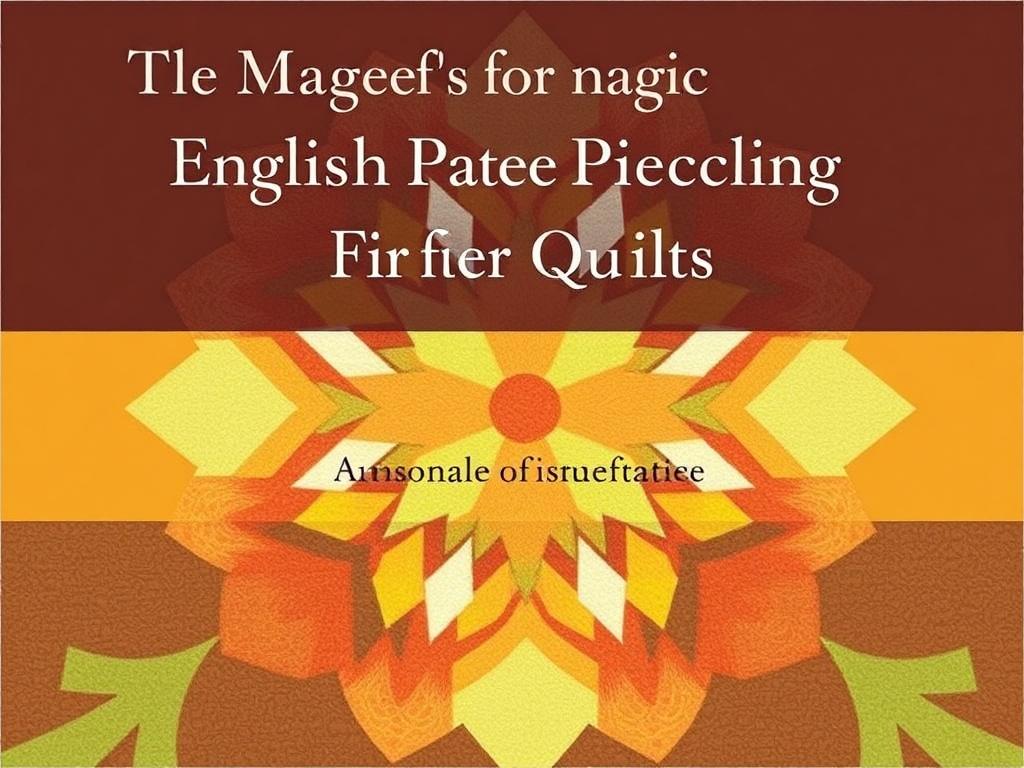
Once you’re comfortable with the basics, you can create striking, layered designs by mixing template sizes and shapes. A familiar move is to surround a small hexagon with larger diamonds or triangles to form a compound motif. This allows for dynamic centers and dramatic points.
Grandmother’s Flower Garden is the archetypal cluster-based motif: a small hexagon center, ringed by six hexagons, then a second ring. The pattern scales by enlarging hexagon sizes or combining centers of contrasting fabric. Another advanced idea is to inset curved EPP pieces into pieced backgrounds for a softened geometric look.
combining machine and handwork
Many quilters blend EPP with machine piecing. For example, use machine-stitched sashing and borders to frame delicate EPP centers. Machine quilting over a field of EPP blocks can add texture while preserving the hand-stitched seams. The key is to stabilize the EPP pieces before machine work—use a lightweight interfacing or gentle basting to the backing to keep shapes steady.
Machine applique also pairs well with EPP; stitched hexagon blossoms can be appliqued to a pieced background for a mixed-technique quilt that highlights the best of both approaches.
pressing, removing papers, and assembling the top
Pressing matters in EPP as in any other quiltmaking. Press seams gently with a dry or slightly damp iron, using a pressing cloth with delicate fabrics. Avoid excessive steam right over paper templates to prevent warping or glue softening.
Remove the papers after several surrounding seams are secure—when the structural integrity no longer depends on the papers. Use tweezers or a gentle push from the fabric side to tease the paper loose. For reusable templates like freezer paper, iron them back onto a stiff sheet to flatten and store for future projects.
quilting an English paper pieced top
Quilting an EPP top requires attention to both texture and durability. Since many EPP blocks have raised seam allowances, choose quilting designs that respect those contours. Echo quilting around motifs highlights their form, while dense all-over quilting can flatten the texture if you want a smoother finish.
For backing and batting, standard choices apply: cotton batting for a traditional hand-quilted look, or a polyester blend for more loft. When machine quilting, stitch slowly and use a walking foot to feed layers evenly. If you plan to hand-quilt, baste thoroughly so the top stays stable under needle and thread.
small projects to build confidence
Before diving into a full bed-sized quilt, make small projects that teach scale, seam-matching, and finishing techniques. A pincushion made from a seven-hexagon flower teaches joining points and finishing edges. A mug rug or table runner built from strips of hexagons or diamonds gives practice in layout and edging.
- Pincushions or brooches—quick, portable, and forgiving.
- Mug rugs or placemats—good for practicing layout and mixing fabrics.
- Handbags and pouches—great for integrating EPP with zippers and linings.
- Baby quilts—smaller than bed quilts but emotionally satisfying and practical.
These projects provide tangible rewards and build muscle memory for accurate basting and stitching.
tips from experience: stitchers’ shortcuts and habits
Over years of stitching, you learn little habits that shave time and keep work neat. I stack templates and cut several layers of fabric at once for consistent allowances. I also label groups of templates with a colored pin to speed layout assembly for multi-colored motifs.
Clip corners lightly when the fabric allowance is thick; it reduces bulk where points meet. And store thread snippets and small basting threads in a tiny resealable bag so they’re not lost inside your project bag. These small routines add up to smoother afternoons of stitching.
troubleshooting common problems
Puckering is often caused by pulling the thread too tightly when joining seams. Relax your tension and test on a scrap assembly to find the sweet spot where seams lie flat without gaps. If points are blunt, check your basting: fabric should be wrapped snugly around the paper without excess fabric tugged into the seam.
When points don’t match, press seams toward a consistent direction as you stitch adjacent seams, and clip tiny notches in the inner seam allowances as needed to allow them to sit flat. For stubborn misalignments, unpick the seam and reset the join—repair is a normal part of handwork and an opportunity to refine technique.
caring for finished EPP quilts
Because many EPP quilts use fine or heirloom fabrics, gentle care prolongs their life. Hand-washing in cool water with mild soap is safest for small quilts. For larger quilts, machine washing on a gentle cycle in cool water is usually fine if seams were stitched securely and a stable backing is used.
Air drying preserves loft and prevents shrinkage; if you machine dry, use a low-heat setting and remove while slightly damp. Store quilts in breathable cotton bags rather than plastic to avoid trapped moisture and potential yellowing over time.
where to find patterns, guilds, and inspiration
The EPP community is active and welcoming. Local quilt guilds often have EPP-focused handwork circles, and online platforms are full of patterns, photo tutorials, and supportive groups. Instagram and Pinterest are rich with project photos, while sites like Etsy and pattern sellers offer downloadable templates and printed kits.
Look for books that present both technique and full projects; many modern authors balance clear instruction with fresh patterns. Joining a local or online sew-along is another way to learn—working with others keeps momentum and introduces new approaches you might not discover on your own.
pricing and budgeting for a project
EPP can be economical or luxurious depending on fabric choices. If you’re using scraps, costs are minimal: paper templates (or printable templates), thread, and a few notions. Buying specialty fabrics or large quantities of premium cotton will raise the budget, naturally, but you can produce beautiful results on a modest outlay.
For larger quilts, calculate enough yardage for borders and backing early in the process. Template cardstock is inexpensive and reusable; investing in durable templates pays off if you plan multiple projects using the same shapes.
lessons learned from a small project
Some years ago I made a compact runner of interlocking diamonds for a holiday table. The project fit neatly into a travel project bag and accompanied me on trains and coffee dates for a few months. The smallest diamond started as a joke—a tester of color contrast—then became the spark of the whole design.
The deliberate pace taught patience: rather than racing to a finish, I focused on matching seams and maintaining even tension. The finished runner gathered comments at holiday dinners and taught a practical lesson—handwork invites conversation and connects people to the quiet labor behind a beautiful object.
mixing modern and traditional aesthetics
EPP doesn’t have to look vintage. Pair geometric EPP motifs with bold, modern prints or high-contrast solids for a contemporary feel. Alternatively, use tiny vintage florals and muted tones to create a gentle, old-fashioned quilt. The method is flexible enough to accommodate both directions.
Consider scale: tiny hexagons create a highly detailed, almost mosaic look, while larger shapes read as graphic forms. Mixing sizes within a single piece creates visual tension and can make a quilt distinctive.
resources and pattern formats
Patterns come in printable PDFs, pre-cut template packs, and full kits. Printable PDFs are convenient: you can print to scale, check the measurement lines, and adjust size by printing at different scales. Pre-cut packs save time and are perfect for beginners who want to jump right in.
If you use printed papers, keep a small binder or envelope labeled with the pattern name and size for each project. This makes repeating or scaling a favorite pattern simple and reduces the chance of misplacing templates.
community stories: how EPP connects people
One of the most rewarding aspects of EPP is the social life it creates. Stitchers at farmers markets, in waiting rooms, and at coffee shops often trade tips, admire fabrics, and share techniques. Quilting bees and modern social groups gather around portable EPP projects, and those gatherings often end with shared supplies and new friendships.
Several friends I’ve met through local sewing circles started as casual acquaintances around a small hexagon cluster. Over time these relationships grew into collaborations on larger quilts and shared displays at community shows. That sense of shared craft and mutual encouragement is as much a part of the practice as needle and thread.
trends and variations to watch
Recently, makers have been pushing EPP into surprising directions: large-scale geometric quilts with photographic prints, appliqued EPP motifs on wearable items, and EPP combined with slow-dye techniques like shibori. The method adapts well to experimental fabric choices and mixed-media approaches.
Designers are also producing simplified patterns for people who want the look of hand piecing with fewer, larger pieces—an appealing compromise for new stitchers who want a dramatic finished piece without years of work.
quick reference table: methods and when to use them
| Method | Best for | Notes |
|---|---|---|
| Thread basting | Delicate fabrics, reusing templates | Secure and reversible; slower but precise |
| Glue basting | Small motifs, speed and travel | Fast; use low-tack glue and small amounts |
| Pre-cut plastic templates | Repeated shapes and long-term use | Durable; worth the investment for frequent EPP |
practical finishing touches
Edge finishing matters. Many EPP quilts look best with a narrow binding that echoes a color from the quilt’s field. For a softer finish, consider a flange binding or a hand-stitched facing that preserves the quilt’s edge without the weight of a wide border.
Label your work and include a small note about the technique and fabrics used; future caretakers will appreciate the provenance, and you’ll be documenting your own evolving practice.
getting started today
To begin, pick a small shape and make a handful of test pieces in different fabrics. Practice the basting technique you prefer, then join a few into a simple motif. Build confidence with small projects, and gradually plan a larger piece when you feel steady with seam accuracy and tension.
And if you’re hesitant about starting because it feels slow, remember that part of the appeal is the pace. The technique invites attention and rewards the time invested with beautifully controlled results.
a final thought on stitches and patience
English paper piecing makes a quiet promise: small, deliberate actions accumulate into something larger than their parts. It teaches patience without asking for perfection and gives precise control without demanding industrial tools. Whether you want a small handwork habit to carry through your day or are planning an ambitious quilt, the method offers both solace and craft.
Try one hexagon, then another. Let each seam teach you something new, and let the slow assembly become part of the pleasure. The pieces will fit together, and along the way you’ll find a rhythm that is its own reward.