
Sewing Your Own Summer Dress: A Step-by-Step Tutorial is an invitation, not a set of rules—this article will guide you through choosing fabric, taking measurements, fitting, and finishing details so you end up with a dress that fits your life and your body. I’ll walk you through practical techniques, explain why certain choices matter, and share a few small tricks I learned after making dozens of dresses for myself and friends. Expect clear steps, helpful photos you can imagine, and small course corrections to keep you out of common pitfalls.
Why make your own summer dress?
Store-bought dresses often compromise on fit, fabric, or style; sewing your own lets you control all three. When you sew, you can pick a fabric that breathes in heat, choose seams that lie flat, and add pockets or adjustable straps that make the dress genuinely wearable for your daily routine.
Beyond the practical, sewing a dress is a small, satisfying project that teaches transferable skills—measuring accurately, making a muslin, and finishing seams will serve you for the rest of your sewing life. The process also produces a piece of clothing with personality: you own the decisions behind its silhouette and details.
Choosing a pattern and designing your dress
Start with a pattern that matches your sewing level. If you’re fairly new to sewing, look for “beginner” or “easy” labels and simple silhouettes like an A-line or gathered skirt with a basic bodice. Patterns with few pieces and minimal closures will get you to a finished dress faster and with less frustration.
Think about how you want to wear the dress. Do you need pockets for summer outings? Do you prefer a high neckline for sun protection or a V-neck for cooler evenings? Sketch a few small variations on the pattern hack possibilities so you can visualize the final garment and decide if you’ll alter the pattern before cutting fabric.
Choose a pattern size based on your current bust, waist, and hip measurements rather than the size on a pattern envelope. Pattern sizing varies by brand, so always consult the measurement chart and be ready to grade between sizes if your measurements sit between two sizes.
Pattern types and where to find them
Commercial printed patterns from big brands give clear instructions and graded sizes, while independent designers often offer modern fits and niche styles in downloadable PDF formats. If you prefer instant access and smaller print runs, indie PDFs can be printed at home or at a copy shop and taped together; commercial patterns are easier to trace from the sheet and keep for repeated use.
Another option is drafting your own simple pattern from a well-fitting garment. This approach requires basic pattern-making skills but gives the most control over the silhouette. For a first project, however, modify an existing pattern rather than starting from scratch to avoid unnecessary complexity.
Selecting fabric for hot weather
Fabric choice is the most important decision for summer dresses because fiber content, weave, and weight determine breathability, drape, and comfort. Natural fibers like cotton, linen, and rayon are usually best for heat because they breathe and wick moisture away from the skin. Lightweight cotton lawn, cotton voile, chambray, and linen blends all make excellent summer dresses.
Pay attention to fabric drape. A stiff cotton poplin creates structure and works well with boxy or A-line designs, while rayon challis and silk crepe de chine will produce a flowing silhouette that skims the body. Choose a fabric that matches the pattern’s recommended drape for the intended look and movement.
Consider seasonal maintenance when you choose fiber content; linen wrinkles easily but looks relaxed and cool in the summer, while rayon requires more careful washing but hangs beautifully. If you plan to travel a lot, a wrinkle-resistant linen blend or high-quality cotton might be the most practical option.
| Fabric | Recommended uses | Breathability |
|---|---|---|
| Cotton lawn/voile | Lightweight summer dresses, gathers | High |
| Linen | Casual, breezy styles, A-line | High |
| Rayon challis | Flowing, drapey dresses | Moderate |
| Chambray | Shirt-dresses, structured looks | High |
Tools and supplies you need
Gathering the right tools before you begin prevents mid-project delays and gives you professional results. A reliable sewing machine with basic stitches, a pair of sharp fabric shears, and a seam ripper are non-negotiable. Add a walking foot or seam guide if you plan to sew slippery fabrics or want consistent seam allowances.
Other helpful tools include clear plastic rulers, curved and straight pins, tailor’s chalk or a fabric marker, and a good pressing iron with a wool or cotton setting. For finishing, consider bias tape makers, a serger if you have one, or pinking shears to tidy raw edges when a serger isn’t available.
Keep a small kit nearby while sewing: extra needles, backup thread spools matching your fabric, clips for delicate materials, and a small cutting mat for interfacing or small pattern adjustments. Being organized saves time and reduces stress mid-project.
- Sewing machine with new needle (size 80/12 for most lightweight fabrics)
- Sharp fabric scissors and paper scissors
- Seam ripper and measuring tape
- Pins or fabric clips, fabric marker, and clear ruler
- Iron and pressing cloth
Taking measurements and making a muslin
Accurate measurements are the foundation for a well-fitting dress. Measure bust at the fullest point, waist at the narrowest point, and hips at the widest point while standing naturally. Also measure shoulder width, back length from nape to waist, and the desired hem length to ensure proportions are right for your frame.
Making a muslin—that is, a practice version of your dress in inexpensive fabric—is one of the best habits a sewist can cultivate. Use calico or broadcloth to test size and fit; fit adjustments are easier on a muslin because you can pin and change seams freely without risking your fashion fabric. Fit the muslin thoroughly: check shoulder seams, ease across the bust, waist placement, and skirt fullness.
If your pattern needs grading between sizes, make those adjustments on the paper pattern before cutting your fashion fabric. Use pivoting or slash-and-spread techniques to transition smoothly between sizes, and remember to blend curves where necessary to avoid sharp angles on the finished garment.
Common muslin fitting points
When fitting the muslin, pay attention to gaping at the neckline, pulling at the armhole, and the way the shoulder seam sits. Gaping often means too much ease or insufficient darting; pulling suggests you need more ease, a different dart position, or adjustments to shoulder slope. Adjustments made at this stage save time later and create a far better finished garment.
Pin along seams and mark with chalk or safety pins where fabric needs to be taken in or let out, then transfer those changes back to the pattern. It’s tempting to skip this step, but a muslin is the quickest route to a dress you’ll reach for repeatedly during the summer.
Preparing and cutting your fabric
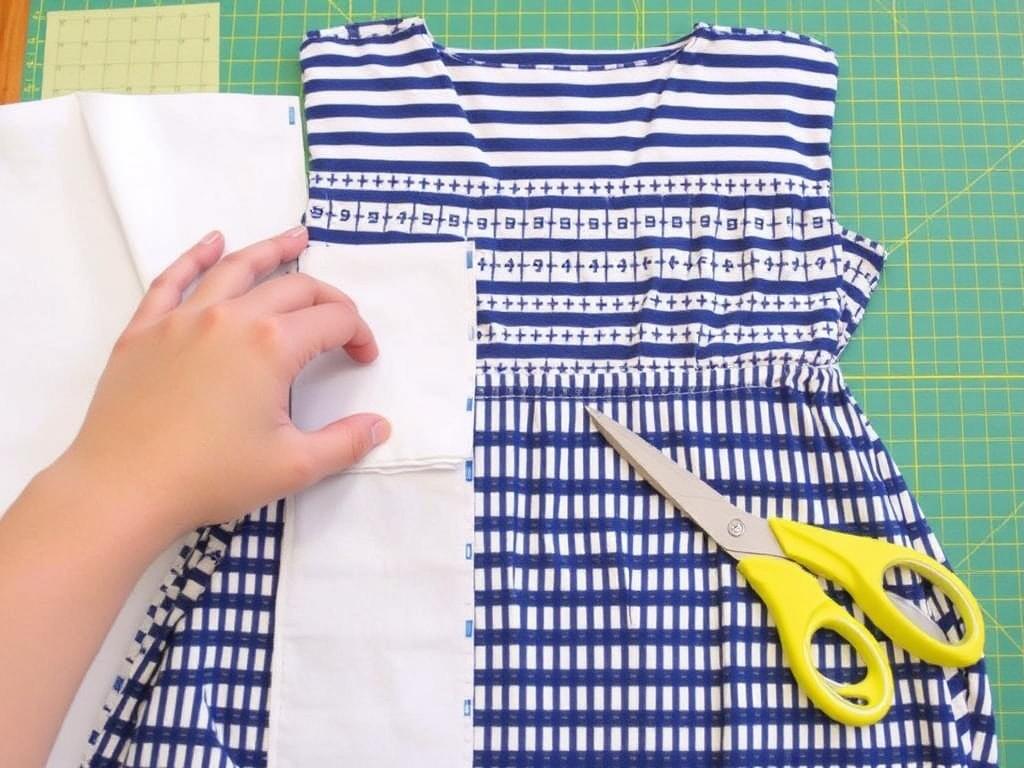
Wash and press your fabric before cutting to pre-shrink natural fibers and remove factory sizing that can affect drape. Use the same detergent and water temperature you’ll use for future washing to replicate eventual care conditions. After laundering, press the fabric flat, taking care not to distort directional prints or nap if present.
Lay out pattern pieces on the fabric according to the grainline indicated on the pattern; the grainline must run parallel to the selvage edge for proper hang. Use pattern weights or pins to secure pieces and transfer markings with tailor’s tacks or a fabric marker. Cut carefully with fabric scissors, making sure not to lift the fabric too high while cutting, which can cause inaccurate edges.
Label pieces with small scraps of paper pinned or clipped to them so you don’t mix up front and back bodice pieces or mirror images. If your pattern includes notches or clip marks, transfer those precisely—they’re essential for matching seams and easing during construction.
Sewing the bodice
Assemble the bodice first when the pattern permits, because it defines the fit across shoulders and bust. Start by sewing darts or princess seams according to the pattern instructions, pressing each seam toward the appropriate direction for smooth shaping. Use stay-stitching along curved edges like necklines and armholes to prevent them from stretching out of shape during construction.
Apply interfacing only where needed—collars, facings, and button plackets often benefit from a lightweight fusible interfacing to maintain structure. Match the interfacing weight to your fabric: too heavy will weigh down a lightweight cotton, while too light will not support a buttonhole or collar. Test interfacing on a scrap first to ensure hand and drape remain acceptable.
When attaching facings or linings, understitch the facing to prevent it from rolling to the outside of the garment. Pin carefully, stitch close to the seam allowance, and press the facing under so that it lies flat against the inside of the bodice for a clean finish.
Installing darts and shaping
Darts convert flat fabric into curves that contour the body; sew them slowly and press them toward the center or down depending on original pattern guidance. Trim or grade seam allowances near intersecting seams and clip curves to reduce bulk when you turn or press the garment. Accurate dart placement will dramatically improve the fit across the bust and waist.
For bust fitting, consider small adjustments like shifting the dart apex a quarter inch to align with the fullest part of your bust. It’s a subtle change but one that improves the line of the fabric and avoids unsightly pulling across the chest. Transfer any dart and seam changes back to the pattern for future use.
Attaching the skirt and finishing the waist
If you have a gathered skirt, distribute fullness evenly by marking quarter points on both bodice and skirt and matching them as you sew. For pleated or paneled skirts, press pleats precisely and baste them before final stitching to make sure they stay aligned during assembly. A stable waistline makes the difference between a polished look and a sloppy one.
Choose a waist finishing method that suits the design: a faced waist for a clean interior, a waistband for a tailored look, or elastic for casual comfort and ease of wear. Fuse interfacing to the waistband if you want structure, and understitch facings to prevent rolling. If you’re adding a lining, attach it before the final hem to hide internal seams and finishings.
Topstitching at the waist or along a seam can add visual interest and help the seam lay flat, especially on heavier fabrics. Use a slightly longer stitch length for topstitching and test tension on scraps to avoid puckers and skipped stitches.
Closures: zippers, buttons, and elastic waists
Choosing a closure affects both function and aesthetics. Invisible zippers give a smooth front or back, exposed zippers add an edgy detail, and buttons create a vintage or cottagecore vibe. Elastic waists are forgiving with sizing and perfect for pull-on summer dresses that prioritize comfort over fitted tailoring.
Installing a zipper requires accurate seam allowances and a steady hand; press the seam open first and baste in the zipper before using a zipper foot for the final stitch. For button closures, interfacing the button placket helps prevent sagging, and using a fine needle avoids large holes in delicate fabrics. If you’re new to zippers, practice with scraps until your stitching is straight and the zipper teeth lie flat.
| Closure | Best for | Pros | Cons |
|---|---|---|---|
| Invisible zipper | Fitted dresses | Seamless look | Requires precision |
| Buttons | Casual/vintage styles | Decorative options | Time-consuming |
| Elastic | Pull-on, casual | Comfortable, adjustable | Less tailored fit |
Straps, sleeves, and necklines
Straps can be simple or complex—bias-cut straps are soft and comfortable, while shaped straps with interfacing hold structure better on fuller shoulders. If you want adjustability, add D-rings or slider hardware commonly found on swimwear; this small detail makes a huge difference in wearability across seasons and bodies.
Sleeve choices impact ventilation and movement. Cap sleeves and flutter sleeves add summer charm while keeping shoulders covered, and short set-in sleeves offer a cleaner, more structured look. For sleeveless dresses, finish armholes with either facings, bias binding, or a lining to keep the edge neat and comfortable against the skin.
Neckline finishing should match your comfort level; a facing or bias binding hides raw edges, whereas a narrow hem offers simplicity on ultra-light fabrics. If you anticipate heavy wear, understitch the facing to lock it to the seam allowance so it won’t roll to the outside.
Hemming and final finishing touches
Hem choices affect how a dress moves and where it sits on the body. A narrow double-fold hem works well on lightweight fabrics and gives a crisp edge, while a blind hem or hand-stitched slip stitch creates an invisible finish on drapey garments. For a casual look, a raw edge with a narrow serger finish can be stylish and breathable in hot weather.
Press the hem carefully, using steam and a pressing cloth appropriate to the fabric. If your fabric is slippery or difficult to manipulate, baste the hem by hand before machine stitching to ensure even length all around. Walk the hem with pins or clips, checking the dress on your body to see if the length flatters your proportions before final stitching.
Finish raw edges with a serger, zigzag stitch, or bias binding depending on available tools and desired aesthetics. Neat edge finishes increase the garment’s lifespan and make the inside look as good as the outside, which matters when you want to wear a handmade dress regularly.
Pressing and professional-looking seams
Pressing is the unseen work that makes homemade garments look tailored. Press every seam flat as you sew rather than waiting until the whole dress is assembled; this prevents built-up bulk and helps seams sit correctly. Use a tailor’s ham for curved areas like darts and bust seams to preserve shape while pressing.
For a crisp look, finish seams neatly and press them toward the same side unless pattern instructions advise otherwise. Topstitching and understitching are small finishing techniques that keep facings and seams from rolling and create clean visible lines. Good pressing transforms even a simple dress into something that looks professionally made.
Fitting adjustments and troubleshooting common issues
Even a careful muslin can leave small fit issues when the fashion fabric behaves differently. If the neckline gapes, take a small tuck at the shoulder seam and re-shape the armhole if necessary. If the bust area pulls, consider either a full-bust adjustment or shifting the darts so they point to the correct apex for your shape.
Uneven hems are a common problem, especially with circular or bias-cut skirts; counteract this by hanging the dress squarely and checking length after a blast of steam, or use an adjustable hem on the sewing machine to ease out slight mismatches. If the zipper puckers, unpick and baste the seam more evenly, and press the fabric away from the zipper teeth during final stitching.
When sleeves fit too tightly, add small wedges to the underarm seam or choose a different sleeve pattern that allows for more movement. Keep a list of small fixes you apply and mark them back on your paper pattern so future copies start from the improved baseline rather than repeating the same corrections.
- Gaping neckline: add shoulder tuck or adjust facing
- Bust pulling: full-bust adjustment or dart repositioning
- Hem uneven: baste and steam, then press or adjust
- Zipper puckering: re-baste and press, check tension
Embellishments and personalization
Embellishments let your dress tell a story or align with your wardrobe mood. Simple additions like patch pockets, a self-fabric belt, or contrast piping can elevate a basic pattern into something unmistakably yours. Embroidery or lace trims add a handmade touch and can be used to emphasize design lines or hide small fitting corrections.
When adding embellishments, think about maintenance and weight. Heavy beading will affect how the dress hangs and how you launder it, while lightweight trims tend to be more practical for everyday wear. Test trims on scrap fabric first to see how they react to pressing and washing so you don’t accidentally create a delicate piece that can’t survive a summer outing.
I once added deep patch pockets to a lightweight cotton sundress for a festival; the pockets added functionality and became the dress’s signature detail. They required reinforcing the pocket corners and shortening the hem slightly to keep balance, but the result was a dress I wore and washed dozens of times that season.
Care, storage, and wearing tips
Care instructions depend on fabric choice: linen and cotton often tolerate machine washing but may benefit from line-drying to prevent shrinkage, while rayon often requires gentler handling and low-heat drying. Always wash a sample swatch the same way you’ll care for the finished dress to confirm behavior after laundering before wearing it out.
Store summer dresses on wide hangers or folded in breathable fabric storage to prevent shoulder marks and fabric yellowing. Rotate wear and give dresses a rest between uses to extend life, and mend small snags or loose threads promptly; a quick repair keeps a handmade dress from becoming neglected in the closet.
Time and cost estimate
Time investment varies by complexity: a simple sundress can be cut and sewn in an afternoon with basic tools, while a lined, button-front dress with shaped collars may take a weekend or longer. Factor in time for laundering fabric, making and fitting a muslin, and pressing at each stage—those tasks add hours but reduce future adjustments and regrets.
Costs depend mostly on fabric quality and whether you purchase specialty notions. A basic cotton dress can be made for $20–$40 in materials, while premium linens, silks, or unique trims raise the price but create a more durable and luxurious piece. Consider cost per wear when deciding whether to splurge on a fabric; a well-made dress you’ll reach for all summer is worth a higher initial investment.
Resources: patterns, classes, and communities
Patterns and tutorials are widely available from commercial pattern companies, indie designers, and free online resources. Local sewing schools and community centers often run summer dress workshops that combine pattern-fitting guidance with hands-on machine time, which can be invaluable if you prefer learning in person. Online sewing communities on forums and social platforms provide project photos, fitting tips, and encouragement that make the learning curve less lonely.
When selecting online resources, prioritize clear step-by-step photo tutorials and reputable pattern reviews. Look for community project galleries so you can see how the pattern behaves on different body types; that visual feedback helps set expectations and informs necessary adjustments before you cut into your good fabric.
Step-by-step condensed checklist
Use this ordered list as your quick reference on sewing day. These steps condense the full process into an efficient workflow so you can approach your project methodically and avoid backtracking. Complete each step before moving to the next to keep the build logical and manageable.
- Choose pattern and fabric; prewash and press fabric.
- Take accurate measurements and compare to pattern chart.
- Cut a muslin to test fit; adjust paper pattern as needed.
- Lay out pattern pieces on fabric, transfer markings, and cut.
- Sew bodice pieces, darts, and facings; press seams as you go.
- Attach skirt to bodice, finish the waist with chosen method.
- Insert closure (zipper/button) and refine fit with a final try-on.
- Finish seams, apply embellishments, and press carefully.
- Hem and check final fit; make small corrections if necessary.
- Wash or steam before wearing to settle seams and relax fabric.
Keep this checklist on your sewing table for a simple reference and mark off each step to stay organized. It’s surprisingly satisfying to see the list shrink as the dress comes together.
Real-life example: my gingham sundress
On a hot July weekend I made a gathered gingham sundress from a simple pattern with a square neckline and wide straps. I chose cotton lawn for breathability and used a muslin to adjust the length and move the waistline up a half inch to flatter my torso proportions. The resulting dress was light, practical, and had two deep side pockets I could actually use.
The project taught me two important lessons: pattern recommendations for fabric matter more than personal impulse, and small fitting tweaks—like relocating a dart or shifting a waist seam—make more difference than fabric choice alone. The gingham dress became my most-worn summer piece that year and lived through multiple wash cycles without losing its shape because I reinforced stress points during construction.
Common mistakes and how to avoid them
One frequent mistake is cutting fabric on the wrong grain, which can skew the entire garment’s hang. Prevent this by aligning the pattern’s grainline arrow precisely with the fabric’s selvage edge and rechecking before you pin. Another common issue is skipping the muslin; fitting on the real fabric can be costly and discouraging, so treat the muslin as an investment rather than optional busywork.
Rushing through finishing steps, like understitching facings or pressing seams, leaves a garment looking homemade in a way you probably don’t intend. Take the time to press and finish neatly—the extra twenty minutes per seam pays off in the dress’s longevity and everyday appeal.
Making a summer dress is a practical creative act: it gives you control over fit and fabric, teaches valuable sewing techniques, and results in a garment that’s tailored to your life. With careful planning, a well-executed muslin, and attention to finishing, you can create a dress that becomes a seasonal favorite rather than a one-off experiment. Pin the pattern, pick a lovely fabric, and enjoy the slow satisfaction of building something by hand—then wear it often.